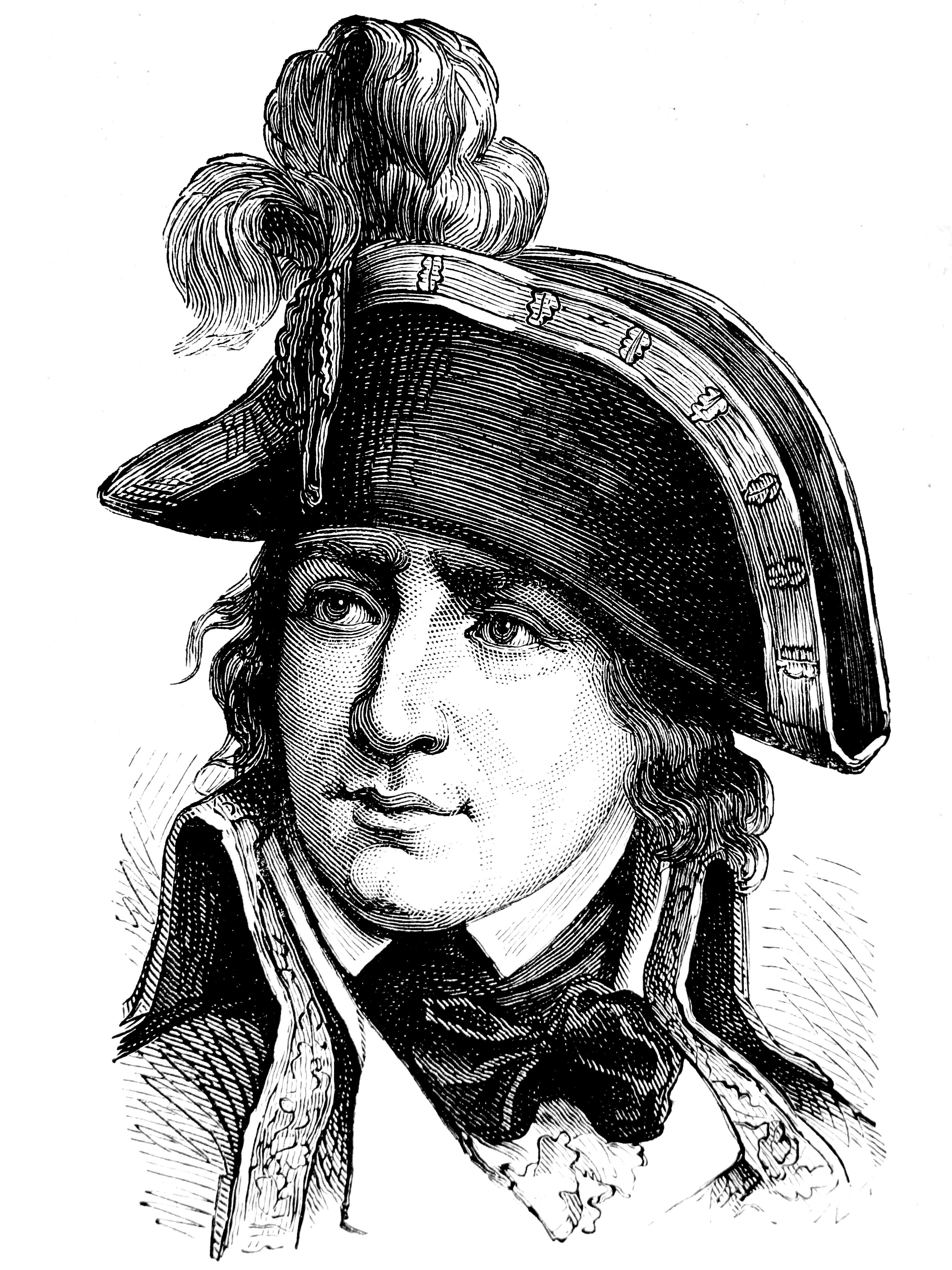
Battle of Courtrai (1794)
It started at three in the afternoon and was decided by ten that night, on flat fields north of a Flemish wool town the French still called Courtrai. The Republican Army of the North had been in revolution for five years, in retreat for two, and on the offensive for about three weeks. Now its soldiers - some of them barefoot, most of them hungry, all of them watching for the political commissar at their backs - were grinding an Austrian veteran named Clerfayt out of his position near Lendelede. By darkness on 11 May 1794, the Habsburgs had lost their second-to-last grip on the road from Lille to Brussels. Belgium would not belong to a Holy Roman Emperor again.
Carnot's Map
The strategy belonged to Lazare Carnot of the Committee of Public Safety, the bespectacled engineer whose nickname back in Paris was the Organiser of Victory. For the spring of 1794 he sketched a double envelopment of the Austrian Netherlands. The Army of the North under Jean-Charles Pichegru, 100,000 strong on its western wing, would strike at Ypres, Ghent, and finally Brussels, while another 100,000 thrust east toward Liège and Namur. Counting reserves, Pichegru commanded 227,703 men. The risk, as professional officers pointed out, was that the Allies could mass on one French wing and crush it before the other could come around. The Allies, who genuinely outnumbered the French regulars in quality if not in quantity, never managed to do it.
Mouscron and the Captured Plans
By late April Souham's 30,000-man division had taken Courtrai. The Allies counterattacked on 26 April and shattered a relief column heading toward Landrecies, capturing its commander Chapuy and - this is the part that mattered - capturing Pichegru's personal copies of his campaign plans. Coburg, the Allied commander, ought to have used them. Instead, he rushed reinforcements to the wrong sector and pulled Clerfayt's 8,000 men back toward Tournai. On 29 April, Souham caught the badly outnumbered Clerfayt at Mouscron and broke him, taking 2,000 casualties out of him and twenty-three guns. The Coalition garrison at Menin walked out that same night. Supply wagons headed for Brussels turned around and bolted east in what was, by every contemporary account, a panicked retreat.
The Duke of York's Reconnaissance in Force
Prince Frederick, Duke of York and Albany - second son of King George III, twenty-nine years old, and not yet the Grand Old Duke of the nursery rhyme - had reached Tournai by 3 May with the remains of his corps. The Allied plan was simple. Clerfayt would cross the Lys downstream of Courtrai and attack from the north. York would advance west from Tournai and cut the town off from its supply base at Lille. They thought they faced 24,000 French. They were facing 40,000 to 50,000. On 10 May, York's cavalry handled Bonnaud's division at the Battle of Willems with what every history calls skill, and discovered the size of the army he was fighting. He pulled back to Tournai before he was destroyed in detail. That left Clerfayt out on the north bank of the Lys, alone.
Lendelede, Three to Ten
On 10 May Clerfayt had pushed Dominique Vandamme's brigade back to the outskirts of Courtrai and could have taken the town. He stopped instead, a hesitation that contemporary commentators called characteristic. By 11 May, Souham had turned his whole division back. The brigades of Daendels and Winter reinforced Vandamme in the suburbs. Macdonald and Malbrancq crossed the Lys at Menin and marched northeast, looking to take Clerfayt in the flank. The fight began at three in the afternoon. By six the Austrians had been cleared from the suburb. Clerfayt's cavalry broke Daendels' brigade in a sharp counterstroke, but Malbrancq came up just in time, and the line of battle drifted north to Lendelede, four miles out, where Lieutenant Field Marshal Wenckheim was killed. By ten o'clock Clerfayt acknowledged defeat and slipped away under cover of darkness toward Tielt. Sources put the losses at roughly 1,200 to 1,500 on each side - small numbers by the standards of the war that was coming, large enough by the standards of 1794.
What Courtrai Decided
The next day a Hesse-Darmstadt rear guard tried to slow the French pursuit at Ingelmunster and lost forty-seven dead and two cannons before a British brigade arrived to discourage further chase. The historian Fortescue, never gentle on the Allied generals, called Clerfayt's attack feeble and the Austrian strategists blind to what concentration of force could have done. Coburg, instead of pressing his right wing as Phipps thought he should have, swung east toward Tournai for the larger battle of Tourcoing a week later. He lost that one too. By summer's end Belgium belonged to France, and it would belong to France in some form for the next twenty years. Among the brigade and division commanders of that long afternoon outside Lendelede, a quiet Scotsman named Macdonald was about to become a Napoleonic marshal, and a hot-tempered Frenchman named Vandamme - never given that rank despite his battlefield record - would become one of Napoleon's most feared and controversial generals. The Revolution had needed officers, and on 11 May 1794, between three in the afternoon and ten at night, it grew several of them up at once.
From the Air
50.833°N, 3.267°E, in the fields north of Kortrijk in West Flanders. The main day-two fighting drifted up to Lendelede, about 6 km north of the city. Cruise at 2,000-3,000 ft for the best feel for the gently rolling agricultural ground the armies fought over. Nearest airports: Kortrijk-Wevelgem (EBKT, ~5 km west) and Lille-Lesquin (LFQQ, ~28 km southwest). Ostend-Bruges (EBOS) lies ~50 km northwest. Flat Flemish farmland with the Lys/Leie River running east-west through the centre of the area.