Battle of Dak To
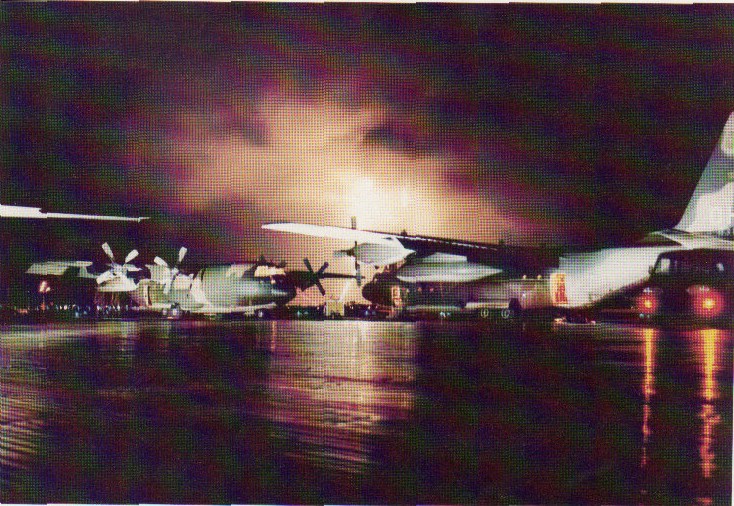
On the night of November 12, 1967, forty-four rockets slammed into the airfield at Dak To. Three days later, a mortar round struck two steel containers of C-4 plastic explosive, and the resulting detonation sent a mushroom cloud above the valley, knocked soldiers off their feet more than a mile away, and left craters forty feet deep. Engineer Lieutenant Fred Dyerson thought the enemy had gotten hold of nuclear weapons. They had not. But what was unfolding in the triple-canopy highlands of Kon Tum Province was devastating enough: a battle that would kill or wound nearly two thousand American soldiers and an unknown number of North Vietnamese, fought across ridgelines so steep and jungle so thick that most troop movements could only happen on foot.
The Valley Floor
Dak To sits in a flat valley surrounded by waves of ridgelines that rise to peaks as high as 4,000 feet, stretching west and southwest toward the tri-border region where South Vietnam, Laos, and Cambodia meet. In 1967, this was some of the most difficult terrain the American military operated in. Double- and triple-canopy rainforest blocked the sky. Bamboo groves with stalks eight inches thick filled every clearing. Helicopter landing zones were scarce, which meant that reinforcements and resupply depended on soldiers carrying everything up the ridges themselves. Daytime temperatures hit 95 degrees Fahrenheit; at night they could drop below 55. The 4th Infantry Division, under Major General William Peers, held responsibility for defending western Kon Tum Province, and throughout the middle of 1967, Peers watched as North Vietnamese forces paid increasing attention to the area, probing with spoiling attacks and building fortifications that indicated long-term plans.
A Defector's Warning
On November 3, Sergeant Vu Hong of the North Vietnamese 6th Regiment defected to the South Vietnamese. What he revealed transformed American understanding of what they faced. The People's Army of Vietnam had moved approximately 6,000 troops into the Dak To area, organizing them into a full division. The 66th Regiment was southwest of Dak To, preparing the main assault. The 32nd Regiment blocked potential counterattacks from the south. The 24th Regiment held positions northeast to prevent reinforcement. The 174th Regiment waited in reserve to the northwest. Supporting them all was the 40th Artillery Regiment. As American and South Vietnamese troops pushed into the surrounding ridgelines, they found what General Peers later described: nearly every key terrain feature was heavily fortified with elaborate bunker and trench complexes, some prepared as much as six months in advance. The North Vietnamese had not come for a raid. They intended to stay.
Twenty Days on the Ridgelines
The fighting that followed was relentless. On Hill 724, three companies of the 3rd Battalion, 8th Infantry fought off simultaneous attacks. On Hill 1338, six kilometers from the Dak To base, American troops spent two days climbing the steep slope into the most elaborate bunker complex yet discovered, every fortification connected by field telephones. On Hill 882, three companies of the 1st Battalion, 503rd Airborne advanced with a dozen civilian news correspondents in tow. When the lead company crested the hill and found bunkers wired together, the North Vietnamese opened fire from prepared positions. PAVN troops poured small arms, machine gun, and mortar fire onto the Americans and launched ground assaults. The fiercest fighting came on Hill 875, where paratroopers of the 173rd Airborne Brigade were pinned down for days. Relief forces from the 4th Battalion, 503rd took until nightfall to reach them through sniper fire and impossible terrain. When both battalions finally took the crest on November 23, after a full day of airstrikes and artillery bombardment that stripped the hilltop bare, the North Vietnamese had already withdrawn, leaving behind charred bodies and abandoned weapons.
The Cost and What Came After
By the end of November, the North Vietnamese had pulled back into their sanctuaries in Cambodia and Laos. The numbers told a grim story on both sides: 376 American soldiers killed or missing and 1,441 wounded. General Westmoreland cited 1,400 PAVN casualties, while his deputy estimated between 1,000 and 1,400 North Vietnamese dead. Three members of the 173rd Airborne Brigade received the Medal of Honor posthumously: Major Charles J. Watters, Pfc. John A. Barnes III, and Pfc. Carlos Lozada. The 173rd Airborne Brigade earned the Presidential Unit Citation for its actions, but the brigade and two battalions of the 4th Infantry Division were effectively combat-spent. Westmoreland declared the enemy's return was nil. The official North Vietnamese history framed it differently, claiming significant casualties inflicted on American forces. What neither side fully grasped at the time was that Dak To was a prelude. The apparently suicidal North Vietnamese willingness to absorb massive losses only made sense in the context of what was coming: two months later, the Tet Offensive erupted across South Vietnam, and an isolated Marine outpost at Khe Sanh came under siege by three North Vietnamese divisions.
From the Air
Located at 14.65°N, 107.80°E in the Central Highlands of Vietnam, western Kon Tum Province. The valley floor is surrounded by ridgelines reaching 4,000 feet. The tri-border region of Vietnam, Laos, and Cambodia lies to the southwest. Nearest major airfield: Pleiku (VVPK), approximately 50 km to the south. The terrain is heavily forested with double and triple canopy. Recommended viewing altitude: 5,000-8,000 feet to appreciate the surrounding ridgelines and the isolation of the valley.