Battle of Dombas
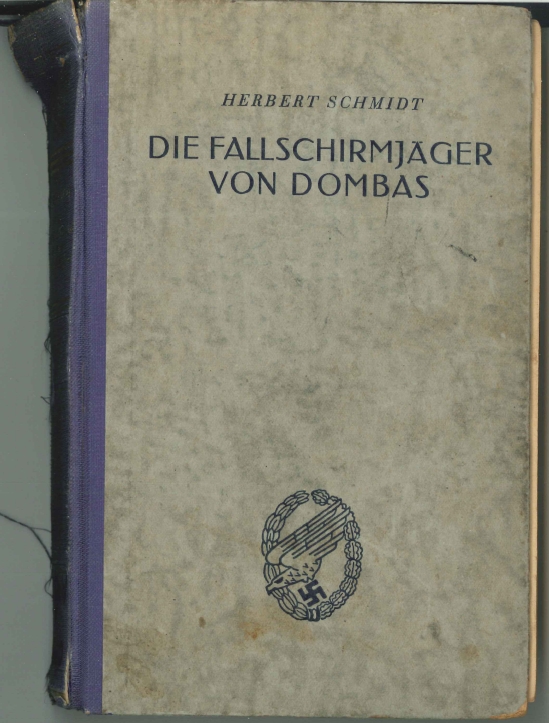
The mission was built on a lie. On April 13, 1940, Generaloberst Nikolaus von Falkenhorst received orders from Berlin to seize the railroad junction at Dombas by paratrooper assault. The reason: a report that the Allies had landed at Andalsnes. The report was false -- those landings would not happen for several more days. But 185 men of the 1st Company, 1st Battalion, 7th Flieger Division were already loading into fifteen Junkers Ju 52 transports at Fornebu Airport outside Oslo. By nightfall on April 14, they would be scattered across a hostile Norwegian mountainscape in hail and sleet, outnumbered and cut off from resupply, with a king and a nation's gold reserves unexpectedly within their reach.
Fifteen Planes Into the Storm
At around 17:00 on April 14, the transports lifted off into terrible weather. An earlier reconnaissance flight over Dombas had seen nothing through the cloud cover. The drop was chaotic. One Ju 52 made an emergency landing on Lake Vanern in Sweden, where it later broke through the ice and sank. Seven aircraft were hit by ground fire and brought down. Many paratroopers died in the crashes or were killed and captured by Norwegian patrols shortly after landing. The survivors, under Oberleutnant Herbert Schmidt, found themselves fragmented across unfamiliar terrain in deteriorating weather, with no prospect of reinforcement. Schmidt, commanding from what remained of his 185-man force, had to improvise a defense with 22 MG34 machine guns and whatever light weapons his scattered troops had managed to recover from their supply containers.
The Gold and the King
The paratroopers at Dombas had no idea what they had landed near. Norway's entire gold reserve -- evacuated from Oslo on April 9 -- was sitting in a vault in Lillehammer when the German attack began. As soon as word of paratroopers spread, the Central Bank rushed the gold onto a train bound for Andalsnes, where it was evacuated aboard British cruisers and Norwegian fishing boats. Even more remarkably, King Haakon VII and Crown Prince Olav were at the village of Dovre, barely 30 minutes from the nearest German positions. Members of the Dovreskogen Rifle Club -- local civilian marksmen -- escorted the royal family to safety. The attack had inadvertently accelerated two evacuations that might otherwise have been delayed, possibly long enough for advancing German forces to seize both.
Five Days on the Mountainside
On April 15, the paratroopers managed to blow up the Dovre Line railroad in three places, briefly fulfilling their core mission. Norwegian work crews repaired the damage within a day. Meanwhile, Norwegian infantry units converged on the Dombas area, though intelligence about the German force was scarce. Kaptein Eiliv Austlid, under direct orders from government minister Trygve Lie, led 41 men in a hasty assault to secure an escape route for the royal family and the Norwegian cabinet. By April 17, the surviving Germans had retreated to the Lindse farms, a hillside position with stone barns overlooking both the railway and the main road. Schmidt, wounded, was carried there on a door by Norwegian prisoners. The paratroopers fortified the buildings with sandbags and planking, holding 15 military personnel and 40 civilians as prisoners. But surrounded and without resupply, their position was hopeless.
Surrender at Lindse
On April 18, Norwegian forces closed the ring. Battalion I/IR 11 pressed from the north while No. 1 Company, IR 5 advanced from the south, supported by a 40mm anti-aircraft gun positioned at Dovre Train Station and turned against the farm buildings. The Germans surrendered on April 19. The five-day battle had cost 21 German dead and roughly 40 wounded, against 20 Norwegian dead and 20 wounded. Around 150 Germans became prisoners of war. The captured soldiers were shuffled between improvised prison camps -- schools in Kristiansund, a camp at Bruhagen on Averoya -- as Norwegian authorities tried to organize their transfer to Britain. In the chaos of the Allied evacuation from Andalsnes in late April, the prisoners were left behind and eventually freed by advancing German forces.
Afterlives of the Fallen
The battle's aftermath scattered widely. Norwegian authorities organized 415 volunteers from 13 local rifle clubs into anti-paratrooper ski patrols across the Osterdalen mountains -- only 100 had uniforms, the rest just armbands. The weapons captured from the Germans at Dombas were stored at Tretten rather than distributed to Norwegian troops, and the Germans recaptured them on April 23. Most of the freed paratroopers volunteered to jump into the Narvik front in northern Norway, where many died fighting under Leutnant Mossinger alongside General Eduard Dietl's mountain troops. Herbert Schmidt received the Knight's Cross of the Iron Cross on May 24, 1940 for his leadership at Dombas. He was killed by the French Resistance in 1944. German dead from the battle were buried in mass graves by the Norwegian military, later moved to a German War Graves Commission cemetery at Alfaset in Oslo.
From the Air
Located at 62.01N, 9.23E at the vital railroad junction of Dombas in the Gudbrandsdal valley. The Dovre Line railway and E6 highway are visible running through the valley. The Lindse farms -- site of the German last stand -- sit on a hillside overlooking both the railway and the road. Nearest airports: Molde Airport Aro (ENML) approximately 65 nm west, and Oslo Airport Gardermoen (ENGM) approximately 150 nm south. The wide mountain valley and rail junction are clearly identifiable from altitude. The terrain rises steeply on both sides, making the tactical significance of the junction immediately apparent from the air.