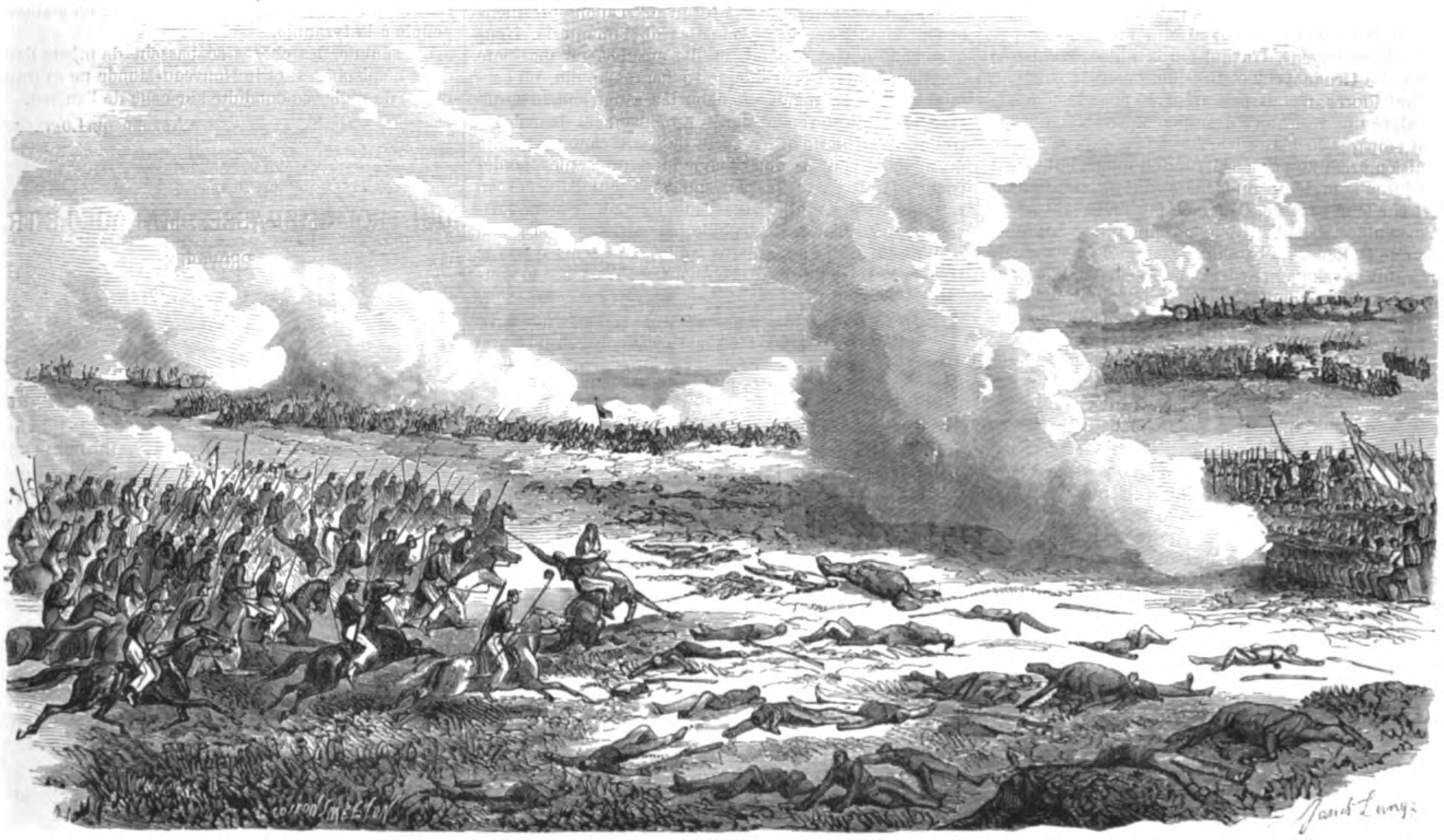
Battle of Estero Bellaco
The soldiers were eating lunch. It was noon on May 2, 1866, and the allied vanguard -- four Uruguayan battalions, six Brazilian infantry units, and a scattering of Argentine cavalry -- had settled into their camp on the southern edge of the great marsh called Estero Bellaco. The name translates roughly as "tricky swamp," and at that moment it earned it. Paraguayan troops burst through three passes in the marsh simultaneously, overwhelming the outposts before anyone could reach a weapon.
The Trap in the Reeds
Marshal-President Francisco Solano Lopez had ordered an offensive reconnaissance south of Estero Bellaco on the morning of May 2. The allied forces had entered Paraguayan territory just two weeks earlier, crossing the Paraguay River on April 16 under General Osorio to attack Fort Itapiru and Paso de la Patria. By April 23, the Paraguayans had withdrawn behind the great marsh, and the allied vanguard under General Venancio Flores camped on its southern edge with more than 8,000 men from all three allied nations. Lopez sent 4,500 infantry south, reinforced to a total force of 6,000 men with four pieces of artillery, to test the allied position. The vanguard's commander, the Spanish-born mercenary Leon de Palleja, had his Uruguayan battalions -- the Florida, Veinticuatro de Abril, Independencia, and Libertad -- deployed alongside Brazilian and Argentine units. Many of Palleja's soldiers were themselves European mercenaries: Spanish, Italian, and even Swiss volunteers fighting under the Uruguayan Colorado banner.
A General Nearly Lost
The Paraguayan cavalry hit first, crashing through the marsh passes and sowing chaos among the Argentine and Uruguayan forces before they could form ranks. General Flores himself nearly became a prisoner of war. Caught in the initial confusion of the skirmish, the Uruguayan president-turned-general escaped capture only by sheer luck, fleeing on horseback as Paraguayan riders closed around him. The allied camp dissolved into pandemonium. Units mixed together, officers lost contact with their men, and the Uruguayan battalions took devastating casualties as they tried to hold ground against an enemy that had materialized from the reeds with no warning.
The Reckless Pursuit
What saved the allies was Brazilian discipline and Paraguayan overconfidence. General Osorio's Brazilian rearguard held firm and began feeding reinforcements into the collapsing vanguard. Twelve reserve battalions arrived to stabilize the line. But Colonel Jose Eduvigis Diaz, commanding the Paraguayan assault, made a fateful decision. His reconnaissance mission had already succeeded -- his troops had ambushed the enemy and thrown them into confusion. Instead of withdrawing with his gains, Diaz ordered a pursuit directly into the bulk of the allied army. Colonel Elizardo Aquino led the charge and slammed into troops that had recovered their composure and their weapons. Casualties mounted rapidly on both sides. On the far side of the marsh, Diaz repelled a Brazilian flanking attempt at Paso Sidra twice with the bayonet, forcing them to retreat.
Victory by the Numbers
The final accounting told a story of brutal symmetry. The Paraguayans suffered approximately 2,000 killed and wounded, with another 300 taken prisoner. The allies lost nearly 2,000 men as well, mostly wounded, with the Uruguayan troops absorbing the majority of allied deaths. But the Paraguayans achieved something the raw casualty figures do not capture: they seized four pieces of artillery and several carts loaded with modern weapons, a haul that alleviated the chronic shortage of materiel in Lopez's camps. For an army that would soon be reduced to casting its own cannon from melted church bells, those captured rifles and guns were worth far more than the ground temporarily gained.
A Letter Home
General Flores wrote one line to his wife after the battle that captured the bitter recriminations among the allied commanders: "In the future my vanguard will be composed of Argentines." The Estero Bellaco was a preview of what lay ahead. Three weeks later, on the same marshy ground, the two armies would collide again at Tuyuti in the bloodiest battle South America has ever witnessed. The lessons of May 2 -- that the Paraguayans could strike through terrain the allies considered impassable, that surprise could neutralize numerical superiority, that this war would not be decided quickly -- were paid for in blood on the banks of a tricky swamp in the department of Neembucu.
From the Air
Located at 27.18S, 57.88W in the Neembucu Department of southwestern Paraguay, near the Argentine border. The battlefield sits on the southern edge of the Estero Bellaco marsh, a large sedge wetland visible from altitude as a dark green expanse between patches of higher ground. The terrain is extremely flat with extensive marshland and scattered dry ridges. Nearest airport: Pilar Airport (SGPI) approximately 45 km southwest. The Paso de la Patria crossing point on the Paraguay River is visible to the south. Best viewed at 3,000-5,000 ft AGL.