Battle of Fyrisvellir
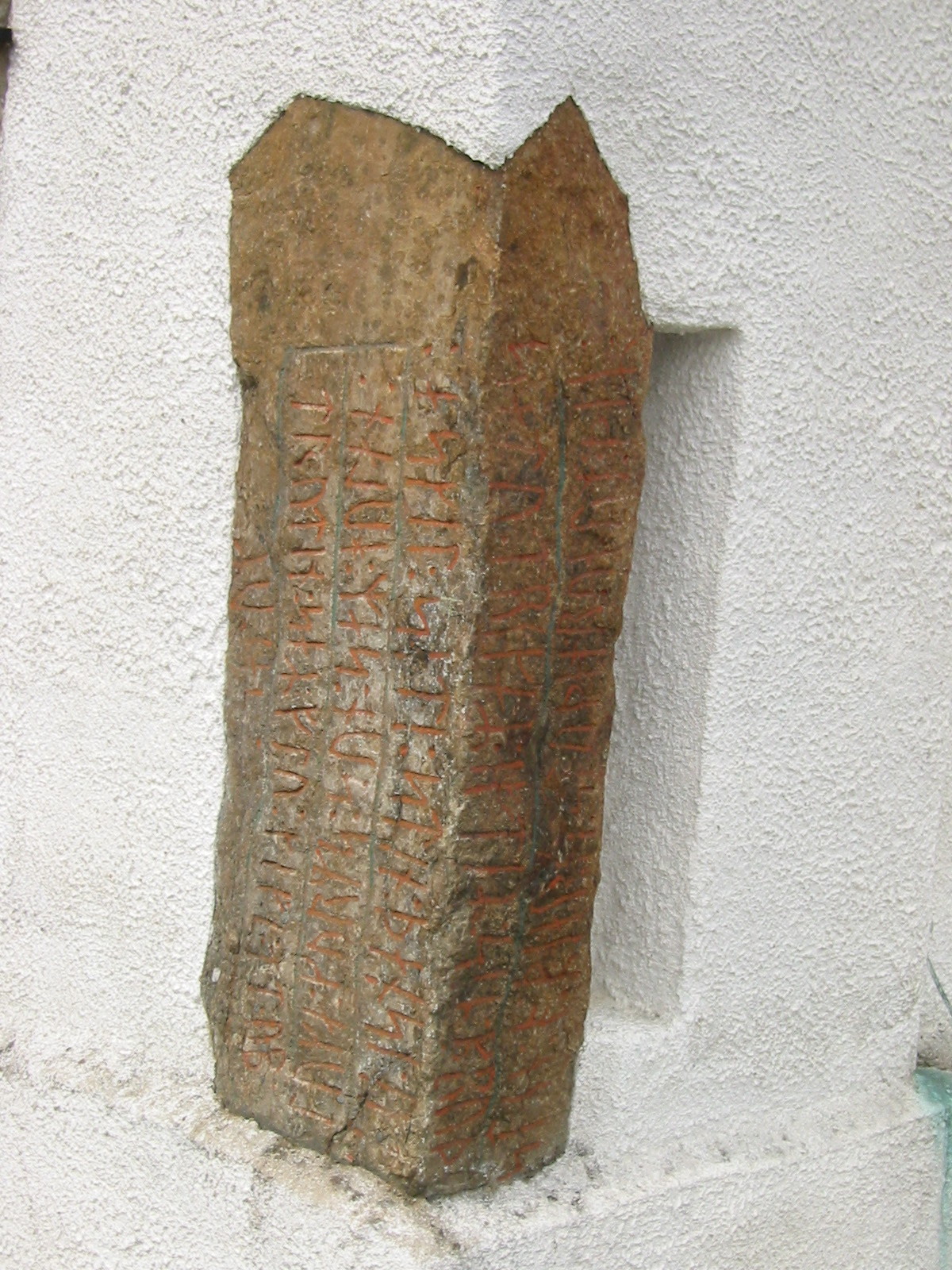
"He did not flee at Uppsala." These words, carved into runestones scattered across Scandinavia over a thousand years ago, commemorate warriors who fell on the Fyrisvellir plain in the 980s. The inscription appears on the Sjörup Runestone in Skåne, honoring Ásbjörn, who "slaughtered as long as he had a weapon." This was no ordinary battle. According to Norse sagas, it was the clash that gave King Eric his epithet: the Victorious.
Blood Feud Across the Sea
The roots of the battle lay in royal murder and denied inheritance. Styrbjörn the Strong was nephew to King Eric, his father Olof Björnsson having died by poisoning - with Eric widely suspected as the killer. When the Swedish Thing denied Styrbjörn his father's crown, the dispossessed prince didn't retreat. He became ruler of the Jomsvikings, the legendary mercenary brotherhood, and began building an invasion force. His method was brutal: pillaging Denmark until King Harald Bluetooth sued for peace, then demanding 200 Danish ships and the king himself as tribute. By the time Styrbjörn's armada entered Lake Mälaren, it numbered over 1,200 longships. Sweden had never faced such a threat.
Ships in Flames
When Styrbjörn reached the waterway to Uppsala, he found it blocked - Torgny the Lawspeaker had advised King Eric to drive stakes into the shallows. Unable to sail further, Styrbjörn made a decision that would define the battle: he burned his own ships. There would be no retreat. His warriors had two choices - victory or death. The Jomsviking host marched overland toward Uppsala, and when the Swedes tried to stop them in the forest, Styrbjörn threatened to burn that too. The defenders fell back. On the Fyrisvellir plain, the two armies finally met. The fighting lasted two full days without either side gaining advantage, even as reinforcements swelled Eric's ranks.
Odin's Bargain
The sagas tell a darker story of the second night. Styrbjörn sacrificed to Thor, seeking divine favor, but a red-bearded figure appeared in his camp - angry, declaring defeat was foretold. Eric, meanwhile, went to Odin's temple and made a grimmer bargain: victory in exchange for his own life, promised to the god after ten years. A tall man in a low-slung hat appeared and gave Eric a reed, telling him to shoot it over the enemy army while speaking the words "Óðinn á yðr alla" - May Odin have you all. The next morning, Eric obeyed. As the reed flew, it became a javelin. Styrbjörn's forces were struck blind. Then came the avalanche.
Stones That Remember
Modern historians debate whether the battle happened as the sagas describe - or at all. But the runestones are real. The Hällestad stone commemorates Tóki Gormsson, "a faithful lord" who did not flee. The Högby stone names Asmund, who "fell on the Föri." Archaeological evidence supports violence at this place and time: two noblemen found in Uppsala ship graves bear sword wounds to their skulls, their dental isotopes indicating they traveled from western Scandinavia or Britain - perhaps specifically to fight at Fyrisvellir. Whatever the truth behind the divine intervention, something terrible happened on this plain in the late 900s, and the memory was carved in stone across half a continent.
Victory's Price
After the battle, King Eric climbed one of Uppsala's royal mounds and offered a reward for poetry celebrating his triumph. An Icelandic skald named Þórvaldr Hjaltason composed verses on the spot and received a golden bracelet. Eric had earned his epithet. But Odin's bargain, if the sagas speak true, hung over him. The Victorious king had ten years left. The plain where the Jomsvikings burned and bled is now modern Uppsala, a university city of bicycles and research institutes. But beneath the streets, the bones remain, and across Scandinavia, the runestones still declare: he did not flee.
From the Air
The Fyrisvellir plain lies beneath modern Uppsala, Sweden, at 59.87°N, 17.61°E. The royal mounds of Gamla Uppsala, where Eric supposedly made his bargain with Odin, rise just north of the city and are visible from altitude. The flat terrain that made this ideal cavalry and infantry ground is now urban development. Uppsala Arlanda Airport (ESSA) lies 30nm southeast. Best viewed in clear weather at 2,000-3,000 feet when following the course from Lake Mälaren northwest toward the old royal seat.