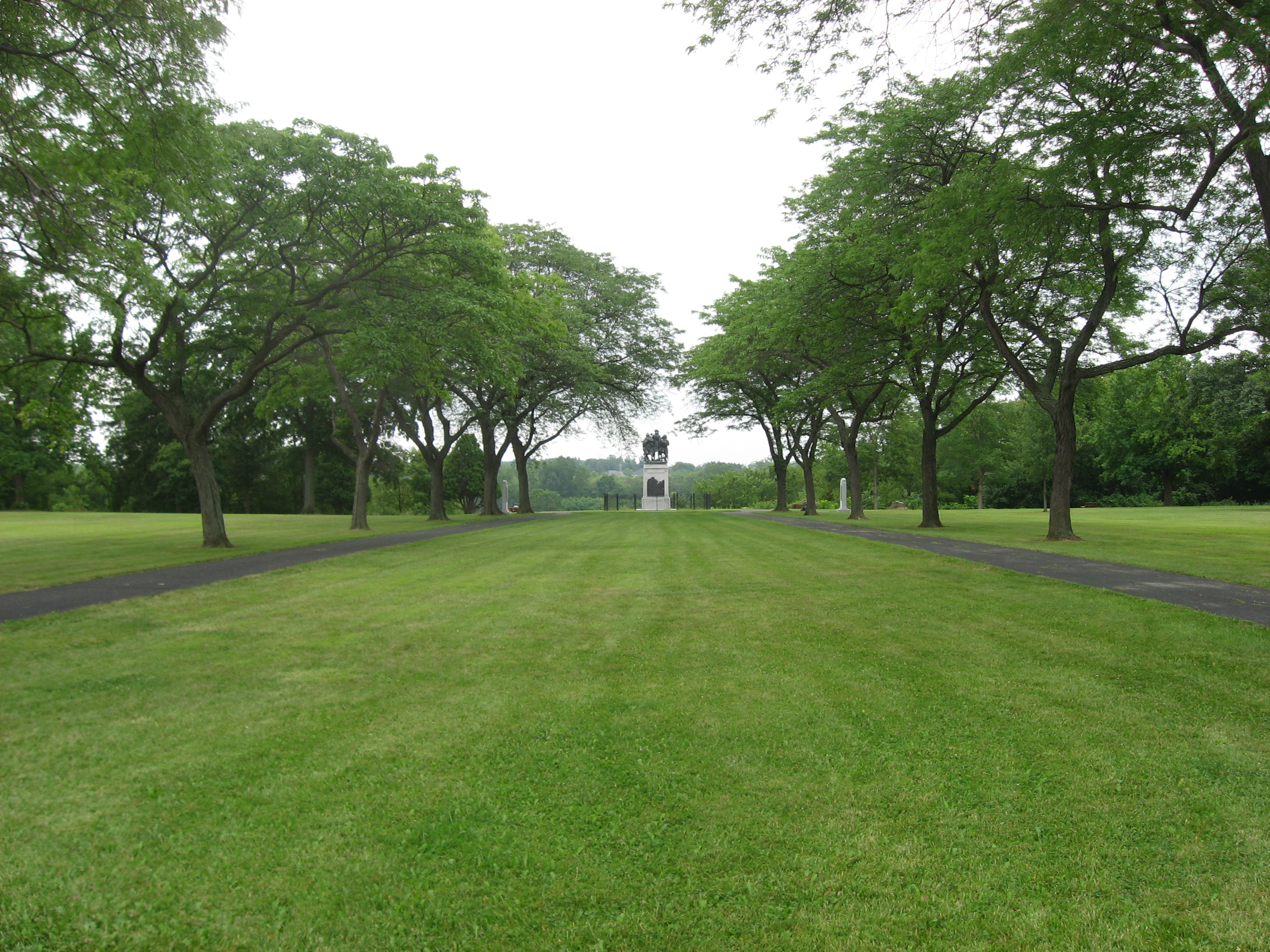
Battle of Fallen Timbers
Little Turtle called him "the Chief who never sleeps." The Miami war chief had watched two American armies march into the Ohio wilderness and get destroyed - Harmar's expedition in 1790 and St. Clair's catastrophic defeat in 1791, the worst loss the United States Army would ever suffer at the hands of Native Americans. But Major General Anthony Wayne was different. He drilled his Legion of the United States for two years, built forts methodically, and never stopped advancing. On August 20, 1794, Wayne's force met the Northwestern Confederacy among trees toppled by a tornado along the Maumee River in what is now Maumee, Ohio. The battle lasted barely an hour. It changed the future of the Northwest Territory forever.
The Chief Who Never Sleeps
After St. Clair's devastating loss in 1791, President George Washington handpicked "Mad" Anthony Wayne to build a force that could succeed where others had failed. Wayne commanded about 2,000 men in the Legion of the United States, supported by Choctaw and Chickasaw scouts. He moved deliberately, wintering at Fort Greeneville and dispatching 300 men to build Fort Recovery on the exact site where St. Clair's army had been destroyed, recovering the lost cannons from the frozen ground. The British, alarmed by Wayne's advance, built Fort Miami on the Maumee River to block him. Before marching, Wayne sent a final peace offer to the confederacy. Little Turtle urged negotiation, warning that Wayne was unlike previous American commanders. Blue Jacket mocked Little Turtle as a coward, seized command, and prepared for battle. Little Turtle agreed to follow, but as a subordinate - no longer the leader.
One Hour Among the Fallen Trees
Wayne departed Fort Recovery on August 17, 1794, pushing north with his Legion and roughly 1,000 mounted Kentucky militia under General Charles Scott. Native American scouts noticed something troubling: Wayne's army marched only until early afternoon, then stopped to build fortified camps every night - no easy target for a surprise attack as Harmar and St. Clair had been. Wayne built Fort Adams, then Fort Defiance, named after Scott's boast: "I defy the English, Indians, and all the devils of hell to take it." Near Fort Miami, in a stretch of forest flattened by a tornado, the combined force of Shawnee under Blue Jacket, Ottawas under Egushawa, and warriors from multiple other nations waited among the fallen timber. The battle was fierce but brief - barely an hour of fighting before Wayne's disciplined bayonet charges scattered the confederacy. The Native fighters retreated toward the British Fort Miami, expecting sanctuary. The gates stayed shut.
The Gates That Stayed Shut
After the battle, Wayne's army camped for three days within sight of the British fort. When the British commander Campbell demanded to know Wayne's intentions, Wayne replied that the sound of their muskets had already answered the question. Wayne knew he could not take the fort - his howitzers were too light and his supplies too thin for a siege. Instead, he rode alone to the walls and slowly, deliberately inspected the fort's exterior, an act of pure audacity. The British garrison debated whether to fire on him but, already at war with France and lacking orders, Campbell refused to provoke the Americans. Wayne's Legion burned nearby Native villages, destroyed crops, and torched the trading post of British agent Alexander McKee within sight of the fort. The British watched and did nothing. Wayne had proven his point: the United States controlled this territory.
Treaties and Traitors
By December, nations that had fought Wayne were suing for peace. Representatives of the Potawatomi, Ojibwe, Odawa, and Wyandotte sought out the Legion to "bury the hatchet." In the summer of 1795, the confederacy and a U.S. delegation led by Wayne negotiated the Treaty of Greenville, signed on August 3. The treaty opened most of modern Ohio to American settlement, using the site of St. Clair's defeat as a reference point to draw the boundary. Meanwhile, Wayne's own second-in-command, General James Wilkinson, had been secretly undermining him the entire campaign - writing anonymous attacks to newspapers and politicians while being paid as a Spanish spy. Wayne uncovered the treachery when Spanish couriers carrying Wilkinson's payments were intercepted, but before he could bring a court-martial, Wayne died of complications from gout on December 15, 1796, at Fort Presque Isle. Wilkinson escaped justice and rose to command the Army.
Echoes at Turkey Foot Rock
The veterans of Fallen Timbers went on to shape the young republic. William Clark co-led the Lewis and Clark Expedition across the continent. William Henry Harrison, Wayne's aide-de-camp, became governor of Indiana Territory and eventually the ninth President of the United States. Tecumseh, a young Shawnee warrior who watched his older brother Sauwauseekau die in the battle and refused to sign the Treaty of Greenville, spent the next two decades building a new pan-tribal confederacy to resist American expansion - an effort Harrison crushed at the Battle of Tippecanoe in 1811. For decades, Ottawa visitors returned to the battlefield and left memorials at Turkey Foot Rock, marking the death place of a chief who fell in the fighting. In 1999, the site received National Historic Site status after archaeologist G. Michael Pratt proved the actual battlefield was a quarter mile from where everyone had assumed for 200 years, finding musket balls, buttons, and a bayonet in the soil.
From the Air
Located at 41.54°N, 83.70°W near the Maumee River in present-day Maumee, Ohio, just southwest of Toledo. The battlefield site and monument are in a wooded park along the river's south bank. The Maumee River is the primary visual landmark, bending through the area from southwest to northeast. Nearest airports: Toledo Express Airport (KTOL) approximately 12 nm west, and Toledo Executive Airport (KTDZ) approximately 8 nm northeast. The Fallen Timbers Battlefield National Historic Site is managed by the Metroparks of the Toledo Area in affiliation with the National Park Service. The monument is visible in a small clearing near the river.