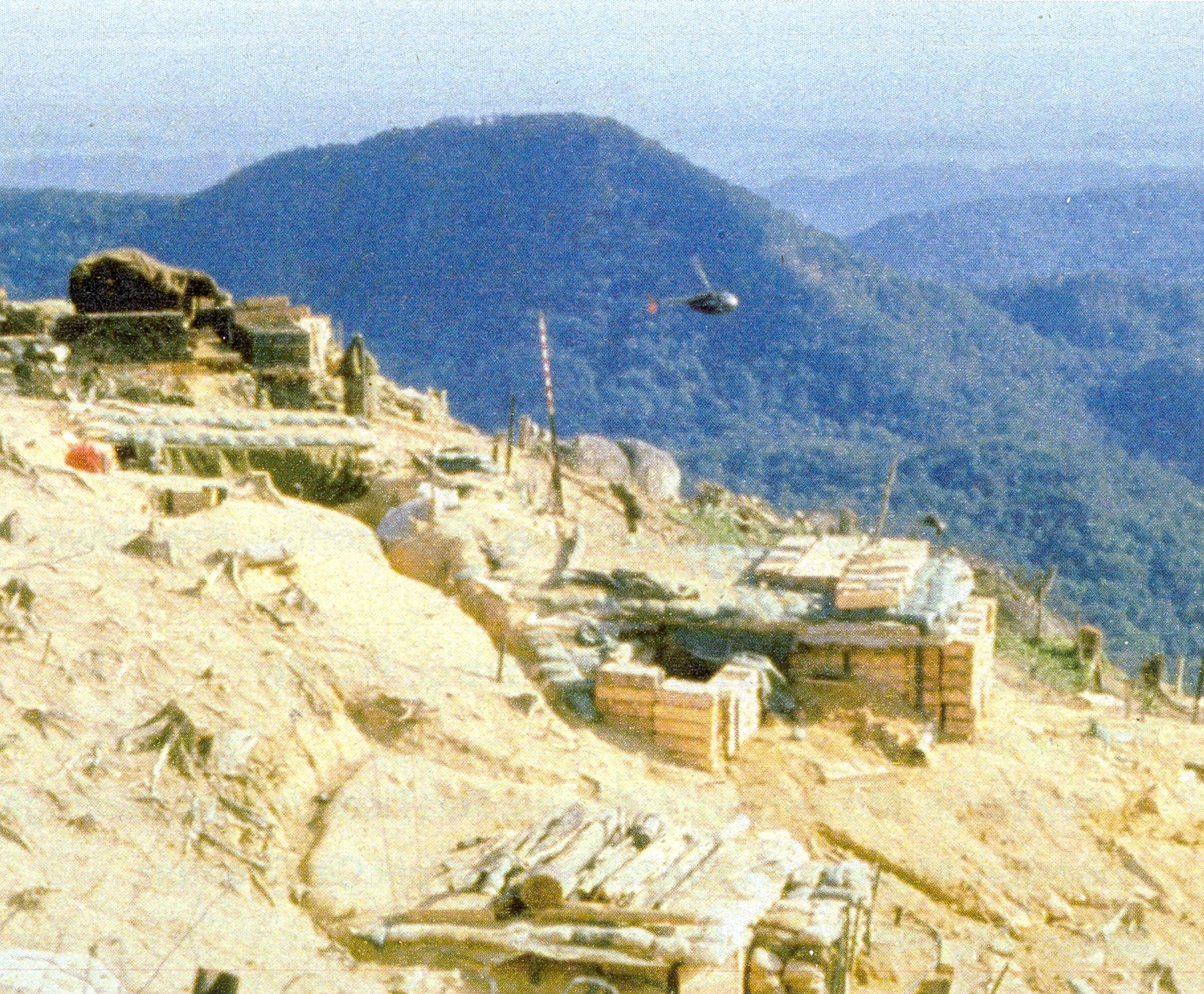
Battle of Fire Support Base Ripcord
The PAVN 324B Division had learned from Hamburger Hill. In the fourteen months since that bloody engagement on a neighboring ridgeline, North Vietnamese commanders had studied how American forces fought -- their reliance on helicopters, their layered firepower, their habit of building remote hilltop firebases connected to the outside world by a single thread of rotor blades. At Fire Support Base Ripcord in the summer of 1970, they planned to cut that thread. What followed was a 23-day siege that became the last major ground battle of the Vietnam War for American forces.
A Hilltop in the A Shau
By early 1970, President Nixon's troop withdrawals had left the 101st Airborne Division as the only full-strength American division remaining in Vietnam. The division was ordered to conduct Operation Texas Star near the A Shau Valley, the same corridor of jungle mountains where Hamburger Hill had been fought a year earlier. On March 12, the 3rd Brigade under Colonel Ben Harrison began rebuilding the abandoned Fire Support Base Ripcord, a cluster of fortified positions perched on a hilltop that depended entirely on helicopter supply lines. The firebase was supposed to support Operation Chicago Peak, a planned offensive to destroy North Vietnamese supply caches deeper in the valley. But the PAVN had plans of their own for Ripcord.
Studying the Achilles Heel
The 324B Division's commander, Chu Phuong Doi, personally led his 1st Regiment on reconnaissance missions around the firebase. His scouts observed the altitude and direction of helicopters entering and exiting Ripcord, mapped the high points where Americans landed troops, and planned fortifications and fields of fire designed to neutralize US mobility. The PAVN had identified something fundamental: the helicopter lifeline that gave American forces their flexibility was also their greatest vulnerability. If you could control the airspace around a firebase with mortar fire and anti-aircraft positions, the base became a trap. Its garrison could neither be supplied nor reinforced nor evacuated. Everything the Americans had built their tactical doctrine around -- rapid redeployment, overwhelming fire support called in from the air -- depended on helicopters getting through.
Twenty-Three Days Under Fire
The siege tightened methodically. On July 10, B Company took a barrage of 38 mixed mortar rounds, killing two soldiers. The attacks escalated through the following week. On July 18, PAVN small arms fire brought down a CH-47 Chinook helicopter from the 159th Assault Helicopter Battalion. The aircraft crashed directly into the ammunition storage area, killing four crew members and destroying six M102 howitzers along with 2,238 rounds of 105mm ammunition -- effectively crippling the firebase's artillery capability in a single catastrophic moment. Mortar barrages continued on July 19, 20, and 21, with D Company enduring nine hours of continuous fire on the 21st alone. On July 22, A Company of the 2/506th lost twelve soldiers in a single engagement during a search-and-clear operation outside the perimeter.
The Last Major Battle
Over 23 days, 75 American soldiers died at Ripcord. Among them was First Lieutenant Bob Kalsu, the only active professional athlete killed during the Vietnam War -- he had been an offensive guard for the Buffalo Bills. Lieutenant Colonel Andre Lucas, who commanded the defense, was posthumously awarded the Medal of Honor. The base was ultimately evacuated and closed, its positions abandoned to the jungle. Who won at Ripcord depends on whom you ask. Colonel Harrison maintained that PAVN losses crippled their offensive capability for two years, delaying the Easter Offensive from 1971 to 1972. Military historians Shelby Stanton and Lewis Sorley counter that the PAVN achieved exactly what they set out to do: force the Americans to close the firebase and withdraw.
Lessons Written in the Mountains
Ripcord was a battle that encapsulated the final phase of American involvement in Vietnam. The 101st Airborne -- the Screaming Eagles -- fought with the same tenacity they had shown at Hamburger Hill, Dak To, and a dozen other engagements in these mountains. But the strategic context had shifted beneath them. Troop withdrawals were accelerating. The American public had turned against the war. The firebases that once projected power into enemy territory now looked like what the PAVN saw them as: isolated garrisons at the end of vulnerable supply lines. Today the hilltop where Ripcord stood has returned to jungle, indistinguishable from the surrounding ridges of the A Shau. The Ripcord Association, formed by veterans of the battle, keeps the memory alive through quarterly publications and reunions -- ensuring that the 75 soldiers who died on that hilltop are not forgotten along with the firebase itself.
From the Air
Located at 16.446N, 107.191E in the mountainous terrain west of Hue, near the A Shau Valley and approximately 2 km from the Laotian border. The firebase site sits on a hilltop in heavily jungled mountain terrain typical of the Annamite Range. Phu Bai International Airport (VVPB) near Hue is the nearest significant airfield, roughly 60 km to the east. Da Nang International Airport (VVDN) lies approximately 100 km to the southeast. The terrain is extremely rugged with limited visibility below the canopy. The A Shau Valley runs northwest-southeast and is visible from higher altitudes as a corridor between mountain ridges.