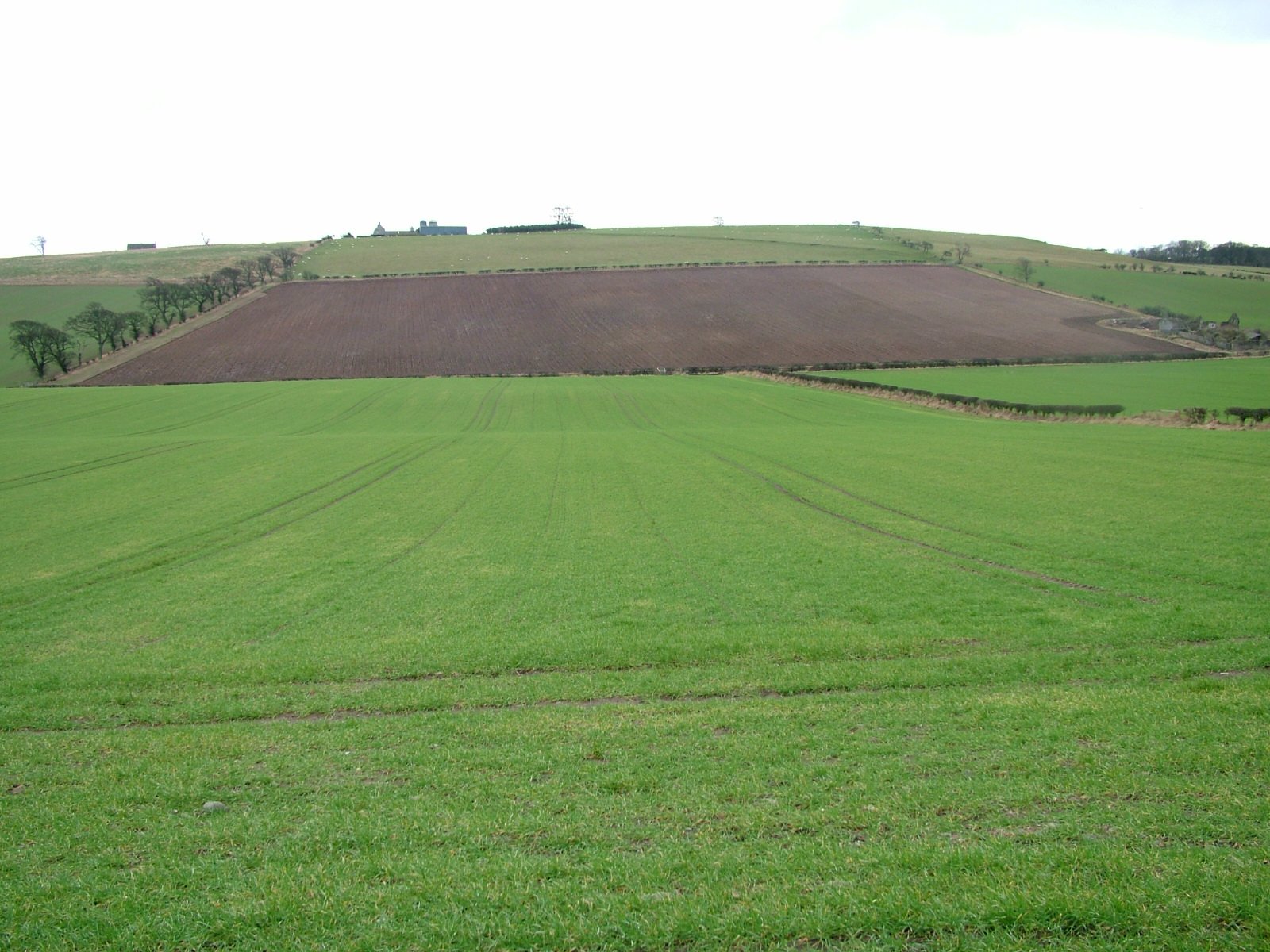
Battle of Flodden
The pipe tune is called "The Flowers of the Forest," and when it is played at Scottish memorials, everyone knows what it means. "The flowers of the forest are all wede away" -- all withered, all gone. The song mourns the men killed at the Battle of Flodden on 9 September 1513, when James IV of Scotland became the last monarch in the British Isles to die in combat. In terms of troop numbers, it was the largest battle ever fought between England and Scotland. In terms of consequences, it was Scotland's Agincourt in reverse -- a catastrophe that killed the king, destroyed the nobility, and left a seventeen-month-old infant on the throne.
An Alliance Honoured
James invaded England to honour the Auld Alliance with France. Henry VIII was on the continent besieging Therouanne, and Louis XII needed a diversion. The Treaty of Perpetual Peace that James and Henry VII had signed in 1502 was already fraying -- cross-border raids, the killing of the Scottish privateer Andrew Barton, and Henry VIII's claim to overlordship of Scotland had poisoned relations. Pope Leo X threatened James with excommunication for breaking his treaties, and Cardinal Bainbridge carried it out. None of it stopped the Scottish king. He mustered an army of roughly 42,000 men on the Burgh Muir of Edinburgh, sent his fleet to join the French, and crossed the River Tweed near Coldstream around 22 August with the largest Scottish army ever to invade England.
The Castles Fall
The invasion began well. James's artillery, including heavy siege guns known as the Seven Sisters, battered down Norham Castle in six days -- a fortress that had resisted Scottish attacks for centuries. Etal and Ford castles fell next. But James made a critical error: he had sent most of his experienced artillerymen with the fleet to France. The men left to serve the guns on land were less skilled, and when the decisive battle came, this deficiency would prove fatal. Meanwhile, the Earl of Surrey marched north from Pontefract, gathering forces as he went. At Durham Cathedral he received the banner of Saint Cuthbert, which the English had carried to victories against the Scots in 1138 and 1346.
The Flanking March
James positioned his army on the commanding heights of Flodden Edge, protected by marshes on one side and steep slopes on the other. Surrey challenged him to come down and fight on the plain at Milfield, but James refused, reportedly saying "it was not fitting for an Earl to seek to command a King." This left Surrey with a dilemma: a frontal assault uphill would be suicidal, but refusing battle would bring disgrace. The solution was audacious. On 8 September, advised by a local man with intimate knowledge of the terrain, Surrey moved his entire army east across the River Till, north up the old Roman Devil's Causeway, and around behind the Scottish position. James countered by abandoning Flodden and occupying nearby Branxton Hill, but in doing so he moved onto ground that had not been reconnoitred.
Pikes Against Bills
The battle began around 4 pm on 9 September in wet, windy weather. The Scottish artillery, hastily positioned on unfamiliar ground and shooting downhill, performed poorly. The English field guns -- lighter, faster, and easier to handle -- found their targets. When the Scottish pike columns advanced down Branxton Hill, they hit an area of waterlogged ground that broke up their formations. The eighteen-foot pikes, devastating when used by disciplined ranks in open terrain, became unmanageable in the mud. The Scots dropped them and reached for swords and axes, only to find themselves outreached by the English bills -- heavy polearms that could hook, slash, and stab at close quarters. James himself fought in the front rank, a medieval gesture of honour that cost him his overview of the battle and, ultimately, his life. His body was found surrounded by his personal bodyguard, the Archers' Guard from the Forest of Ettrick -- the original flowers of the forest.
The Flowers Are All Wede Away
The casualties were staggering. Nearly every noble family in Scotland lost a member at Flodden. Among the dead were an archbishop, two bishops, eleven earls, fifteen lords, and hundreds of knights and lairds. The Scottish ambassador later explained the disaster to Denmark in blunt terms: James had moved downhill onto marshy ground from a favourable position, and the Scots had placed their officers in the front line in medieval style, where they were killed, while the English generals stayed with the reserves in the Renaissance manner. With no officers left to coordinate a retreat, the army simply dissolved. The battlefield at Branxton looks much as it did in 1513 -- the burn and marsh that hampered the Scottish advance are now drained, but the contours of the hills are unchanged. A monument erected in 1910 stands near the village, and each year the Scottish town of Coldstream marks the anniversary with a traditional horse ride to the field.
From the Air
The Battle of Flodden battlefield is at approximately 55.636N, 2.148W near Branxton village in Northumberland, close to the Scottish border. The terrain -- Branxton Hill, Flodden Edge, and the valley between -- is agricultural land with contours clearly visible from the air. The 1910 monument is near Branxton. The River Till, which Surrey's army crossed in the flanking march, runs to the east. Best viewed at 2,000-4,000 ft AGL. Nearest ICAO: EGNT (Newcastle) approximately 45nm south, EGEO (Edinburgh) approximately 55nm north.