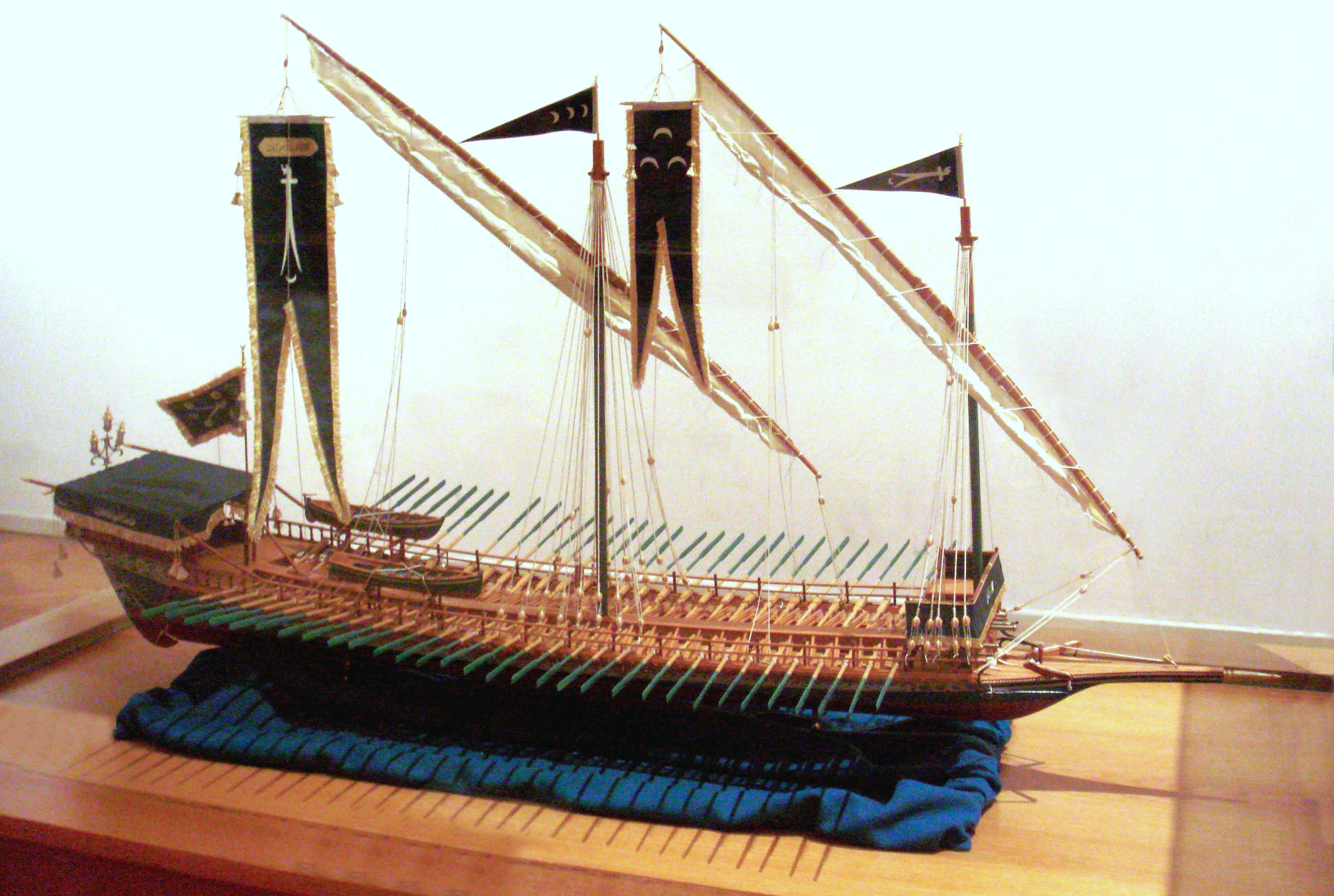
Battle of Formentera
Aydin Reis had a problem. It was October 1529, and his fifteen Barbary ships were loaded with passengers, enslaved people, and plundered goods from raids along the coast of Valencia. He was ferrying Moriscos from Spain to Algeria, and his fleet was in no condition to fight. When scouts warned him that a Spanish galley squadron was waiting near Ibiza, Aydin made for Algiers -- but the wind refused to cooperate. Forced to shelter along the coast of Formentera, he watched the Spanish fleet arrive and realized he could not run. So he did the only thing left. He attacked.
A Corsair Called Devil Hunter
The Ottomans knew Aydin Reis as Caccia Diavolo -- "Devil Hunter" -- a name that reflected both his reputation and the terror he inspired along the Spanish and Italian coasts. In 1529, he was operating from Algiers, recently conquered by the Ottoman-backed Barbary corsairs, raiding Christian shipping lanes and extracting Moriscos -- Muslims who had been forcibly converted to Christianity and now sought passage to North Africa. The Spanish armada was distracted, most of its strength committed to escorting Emperor Charles V to Genoa. Aydin exploited the gap, raiding Valencia and sacking settlements on Ibiza. But four Barbary fustas brought unwelcome news: the captain of the galley squadron of Granada had returned from Genoa and was hunting him with eight war galleys.
The Trap That Reversed
Desperate to avoid battle, Aydin dumped his non-combatants and cargo on Formentera and ordered his fleet to flee. The Spanish commander, Portuondo, gave chase with all the confidence of a man who held numerical parity in warships and superiority in galley type. But confidence undid him. His slave-powered galleys -- many crewed by recently captured French prisoners from the Italian Wars -- could not maintain a consistent pace. The Spanish ships strung out in a ragged line, with Portuondo's flagship pulling ahead of the rest. Aydin saw the gap open between the Spanish vessels and recognized the moment for what it was.
One Ship at a Time
Aydin wheeled his three nearest ships around and fell on Portuondo's isolated flagship. The Spanish commander fought desperately, but outnumbered three to one and separated from his squadron, he was overwhelmed and killed in the defense. Aydin then turned on the rest of the scattered fleet, attacking each galley individually before it could close ranks with the others. The stunned Spanish crews, watching their commander's ship fall, offered resistance that crumbled ship by ship. By the time the engagement ended, seven of the eight Spanish galleys had been captured. Only one escaped. It was a textbook demonstration of how a numerically inferior force could defeat a larger one through tactical patience and an enemy's overconfidence.
Slaves to Algiers
The captured Spanish crews were taken as enslaved people to Algiers, joining the thousands already held in the corsair capital's dungeons and labor gangs. Portuondo's death created a vacancy at the head of the squadron of Granada, filled by Alvaro de Bazan the Elder, who would go on to become one of Spain's most celebrated naval commanders. The Battle of Formentera demonstrated how vulnerable Spanish Mediterranean shipping remained despite the empire's enormous resources. A single Ottoman corsair, operating from a recently captured port with improvised forces, had destroyed an entire galley squadron within sight of Spanish territory. The Balearic Islands, nominally safe waters for Spanish vessels, had proven anything but.
From the Air
The battle occurred off the coast of Formentera, the smallest inhabited Balearic island, at approximately 38.70N, 1.45E. Formentera is visible from altitude as a flat, elongated island south of Ibiza, connected by the shallow strait of Es Freus. Nearest airport is Ibiza Airport (LEIB) on neighboring Ibiza. Formentera has no airport. The island's coastline and shallow surrounding waters are clearly visible from 3,000-5,000 feet AGL. The strait between Ibiza and Formentera, where Aydin's ships sheltered, is roughly 6 km wide.