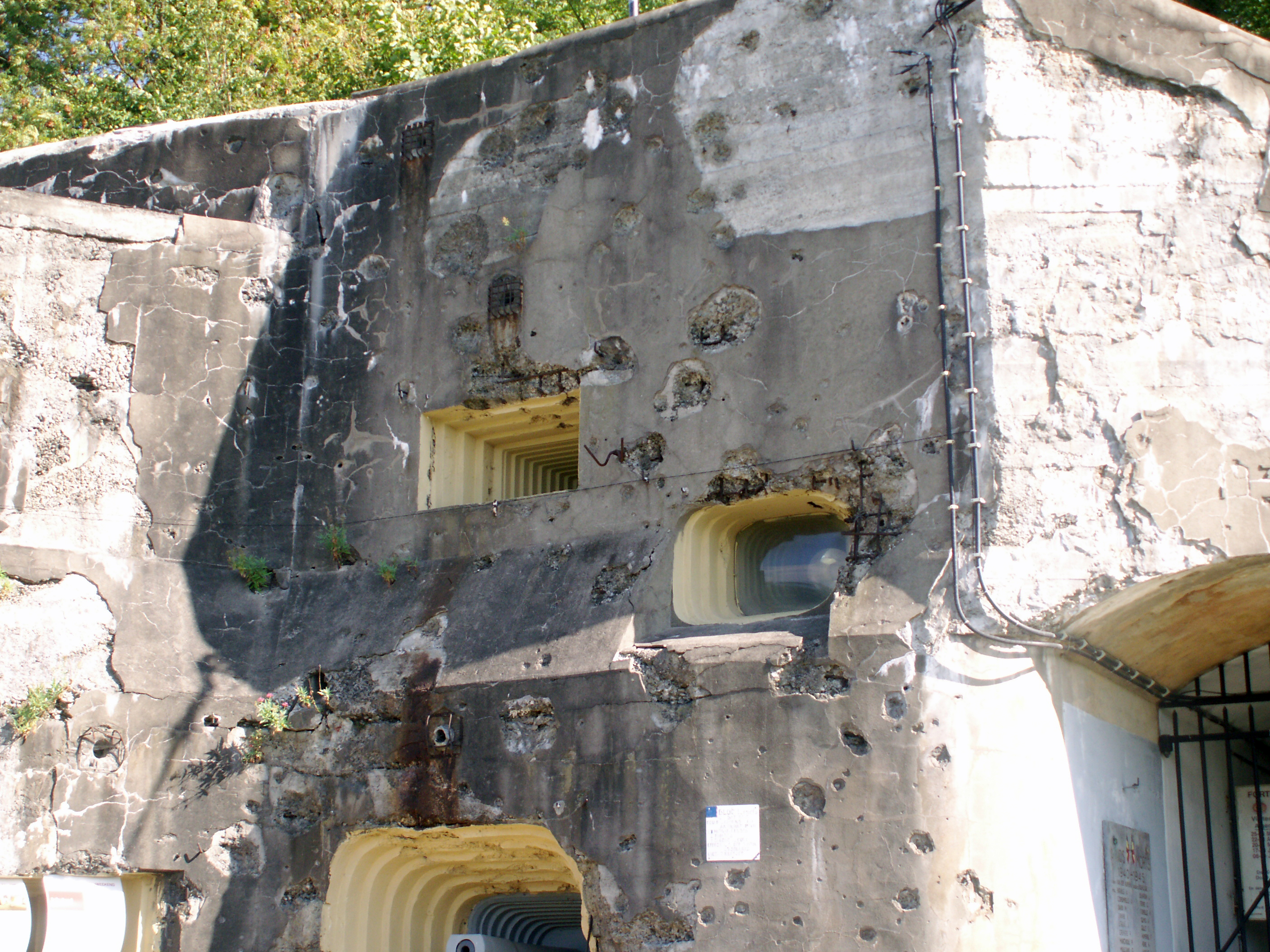
Battle of Fort Eben-Emael: Twenty Minutes That Rewrote Modern War
At 04:30 on 10 May 1940, forty-two motorless gliders cast off above the Cologne plain and began their long, silent descent toward Belgium. Inside one of them, an Oberfeldwebel named Helmut Wenzel listened to wind hiss along the canvas skin and tried not to think about the fact that he was about to lead an assault he had not been promoted to lead. His commander, Oberleutnant Rudolf Witzig, was in another glider entirely - a glider whose tow rope had just snapped over German soil. Group Granite was already understrength, already improvising, and was still an hour away from landing on the roof of the fort that everyone in Europe agreed could not fall.
The Quiet Gliders
Hitler's personal pilot Hanna Reitsch had told him something useful: gliders in flight were nearly silent. The Belgians defending Eben-Emael relied on sound-locator arrays, not radar. If the towplanes released their gliders twenty miles short of the canal, the only thing the defenders would hear was the wind. Fifty DFS 230 transports were quietly assembled. Barbed wire was lashed to the landing skids to shorten the rollout. A scale replica of the fort was built in secret in the Sudetenland for the men to rehearse on. They trained with flamethrowers and with a weapon so classified it had never been used outside Germany: the Hohlladung, a fifty-kilogram shaped charge designed to punch through reinforced concrete and steel turrets. The men were forbidden leave. Their uniforms carried no unit insignia. When training ended each day, the gliders were broken down and carted away in furniture vans.
The Roof
At 05:25, Wenzel's nine remaining gliders skimmed the fortress wall and bellied to a stop on the grass roof. Arrester parachutes snapped open. Men spilled out before the gliders had stopped sliding. Within ten minutes the southern artillery casemate housing three 75mm guns had collapsed under a heavier charge that took the observation dome with it. Objective 12 - a turret with two more guns - was destroyed. A flamethrower drove the gunners out of Objective 13. The hollow charges shocked the Belgians inside, who had never seen the new explosive's effect: a focused jet of molten steel that turned their armored cupolas into bells full of fire. Some of the heavier turrets resisted, requiring two crews and a second assault. Other objectives turned out to be wooden dummies. One retractable cupola at Objective 23 surprised everyone by opening fire and pinning the Germans until Stukas screamed in to silence it.
The Bridges Below
While Granite worked above, three other glider groups landed beside the bridges at Veldwezelt, Vroenhoven and Kanne. Group Steel cut the demolition wires at Veldwezelt before the Belgian defenders could trigger them; Group Concrete did the same at Vroenhoven, parachuting in machine guns at 06:15 to hold against counter-attacks. At Kanne the Belgians won that race. A German mechanized column had arrived twenty minutes early and tipped them off. The Belgians blew their bridge while the gliders were still descending, and Group Iron took the heaviest casualties of the day: twenty-two killed, twenty-six wounded. Three young soldiers died when an anti-aircraft shell tore their glider apart on its final approach.
The Garrison Waiting Below
Inside Fort Eben-Emael, Major Jottrand commanded roughly 750 men of a peacetime garrison of 1,200. Most were Belgian reservists, conscripts called up after the invasion of Poland the previous September. They were trained as artillerymen, not as infantry, and the doctrine they had rehearsed assumed an attack from the land side - days of bombardment, time to mobilize, the chance to fight a delaying action. The doctrine had no answer for what was happening on the roof above their heads. They could hear the explosions through 4 metres of concrete and reinforced steel. They could not see the attackers. The only route up was a single spiral staircase. By the time Witzig himself flew in on a replacement glider that afternoon, the men inside were sealed in a fortress whose own guns had been turned to scrap above them. Twenty-three of them died in the fighting; fifty-nine were wounded. At 12:30 on 11 May, after a relief column finally fought through to the main entrance, Jottrand surrendered.
Twenty Minutes That Echoed
Group Granite lost six men killed and nineteen wounded. The fort that engineers said could hold for months had been gutted in roughly the time it takes to walk to the corner shop and back. The bridges its guns were meant to protect were already in German hands; the 18th Army's tanks rolled across them and into Belgium before lunch. Hitler personally decorated every paratrooper involved. After the war, General Kurt Student wrote that he had studied every battle of every front and could find nothing - by friend or foe - to compare with what Koch's assault group had done in those first hours. The lesson armies took home was sobering. The era of the impregnable concrete fortress had ended in a single morning, replaced by something cheaper, faster, and able to fall from the sky.
From the Air
The battle site sits at 50.797N, 5.681E, on the Belgian-Dutch border 10km south of Maastricht and 20km northeast of Liege. From the air, Fort Eben-Emael appears as a roughly triangular plateau atop the marl ridge cut by the Albert Canal - the deep channel running northwest from the Meuse is the clearest landmark. The captured bridge sites lie just east at Vroenhoven and Veldwezelt; the Kanne crossing the Belgians blew is immediately south. Nearest airports: Maastricht-Aachen (EHBK) 15km north, Liege (EBLG) 25km southwest, Brussels (EBBR) 90km west.