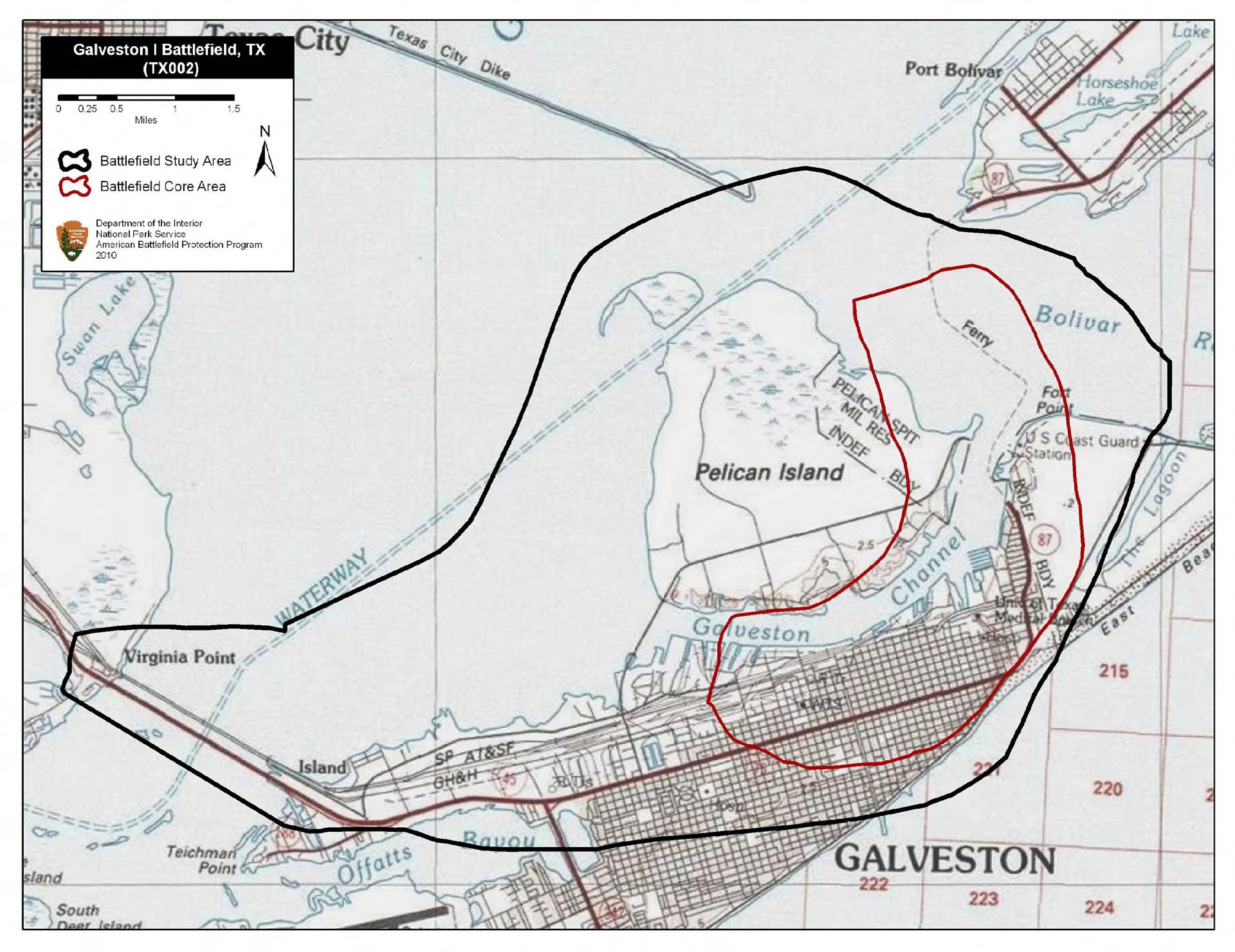
Battle of Galveston Harbor (1862)
Both sides were flying flags of truce when the shooting started. On the morning of October 4, 1862, five Union warships under Commander William B. Renshaw approached Galveston Harbor with orders from Admiral David Farragut to capture the port if practicable. A single vessel, the sidewheel steamer Harriet Lane, entered Galveston Bay under a white flag to discuss surrender terms. But the Confederate garrison could not find a boat to send a delegation. By the time they did, the Union ship had grown impatient and left. What followed was a chain of miscommunications, a warning shot misread as hostility, cannon fire exchanged while truce flags still flew, and a verbal ceasefire agreement that each side interpreted differently. Nobody died. And the Confederates walked out of Galveston with every cannon they could carry.
A Blockade That Could Not Hold
When President Abraham Lincoln declared a naval blockade of Confederate ports in April 1861, Galveston was the most significant harbor on the Texas coast. But blockading it proved difficult. The shape of Galveston Bay required at least two ships to be effective, and the Union simply did not have enough vessels. In December 1861, the British warship HMS Desperate visited Galveston and reported no Union naval presence whatsoever -- a finding that threatened the blockade's legal standing under international law, which required blockades to be demonstrably effective. Union Admiral William McKean doubted the British report but had to forward it to the Secretary of the Navy. Blockade runners continued to slip through. By mid-1862, the Union concluded that capturing Confederate ports outright was more practical than trying to patrol them. On May 17, the captain of USS Santee sailed to Galveston and demanded the city surrender, threatening to bombard it on May 23. The threat went unfulfilled. In August, Farragut gave Renshaw the mission: destroy blockade runners and take Galveston.
A City Deemed Indefensible
Galveston Island was connected to the mainland by a single bridge terminating at Virginia Point. Union intelligence believed Virginia Point was heavily fortified. It was not. The island's garrison consisted of a single artillery regiment under Colonel Joseph J. Cook. Confederate Brigadier General Paul Octave Hebert had already concluded that the city could not be defended and had ordered most of the cannons removed from the fortifications. Fort Point, which guarded the northern entrance to Galveston Bay, held a single cannon. Confederate officer Xavier Debray wrote bluntly in a letter that Galveston was 'not defensible.' About 5,000 Confederate troops were scattered across the region -- in Houston, along the rail line, and on the island -- but their defensive works were thin. Confederate naval forces near Galveston were negligible. The stage was set for a confrontation between a Union flotilla with real firepower and a Confederate garrison that knew its position was weak.
The Warning Shot That Started Everything
Renshaw's five ships reached Galveston by early October. On the morning of October 4, Harriet Lane entered the bay under a white flag. Her officers went ashore and met with Cook, who agreed to send negotiators to the Union fleet. But Cook's men could not find a suitable boat and were delayed until 1:00 p.m. By then, Lieutenant Commander Jonathan Wainwright, commanding the Harriet Lane, had lost patience and withdrawn from the bay. When the belated Confederate boat finally appeared, Renshaw's fleet moved into the bay to meet it -- truce flags plainly visible. A Confederate cannon at Fort Point fired a warning shot across the bow of one of the Union ships. The Union interpreted this as a hostile act and returned fire immediately, knocking out the lone cannon at Fort Point. Confederate guns at Galveston opened fire too, though at a range too great to be effective. Renshaw suddenly realized his ships were still flying truce flags while shooting. He ordered a ceasefire. Both commanders, Renshaw and Cook, were now convinced the other side had deliberately violated the truce.
A Truce with Two Meanings
Cook's delegation eventually reached Renshaw's flagship Westfield. Renshaw demanded immediate surrender. The Confederates refused and warned that Renshaw would bear responsibility for any civilian casualties or property damage from an attack. Instead, the two sides agreed to a verbal four-day truce: Union ships would not advance closer to Galveston, and the Confederates would not improve their fortifications. But the verbal agreement had a fatal ambiguity. Renshaw believed it froze the military status quo entirely. Cook believed it permitted him to evacuate men and material from the city. Over the following days, the Confederates removed supplies and cannons from Galveston. Renshaw protested but ultimately accepted Cook's interpretation -- the equipment was of low value, and Renshaw doubted he could stop the removal regardless. When the truce expired, Renshaw fired three signal shots. The mayor and city council of Galveston traveled to Westfield and surrendered. A detachment of 150 Union sailors raised the American flag over a city that no longer had any defenders. The only cannon left behind was the one knocked out on October 4. Several fake 'Quaker guns' -- logs painted to resemble artillery -- stood in the abandoned defenses.
Ninety Days of Union Galveston
The National Park Service records no casualties from the October 4 engagement -- a rarity in Civil War history. But the Union's bloodless capture of Galveston lasted barely three months. On New Year's Day 1863, Major General John B. Magruder launched a combined land-and-sea assault that overwhelmed the small Union garrison. Renshaw was killed when an explosion destroyed his flagship Westfield as he attempted to scuttle it rather than let it fall into enemy hands. The Harriet Lane, the same vessel that had entered the bay under a truce flag in October, was captured by Confederate boarding parties. Galveston returned to Confederate control and remained so for the rest of the war. Today, the battlefield is not a protected site. A 2010 report by the American Battlefield Protection Program noted that the landscape has changed significantly since 1862. But the harbor, the bay, and the low island skyline remain -- the same geography where a warning shot, a missing boat, and a verbal truce with two meanings handed a city back and forth between warring nations.
From the Air
Located at 29.34N, 94.77W in Galveston Harbor and Galveston Bay, Texas. Galveston Island is a long, narrow barrier island clearly visible from altitude, connected to the mainland by the I-45 causeway. Fort Point sat at the northern tip of the island where it guards the bay entrance -- now the site of Fort Point Park. Nearest airports: KGLS (Galveston Scholes International, on the island, 3 nm SW), KHOU (William P. Hobby, 40 nm NW). The bay, harbor channel, and island silhouette are unmistakable landmarks. Best viewed from 3,000-5,000 ft AGL on approach from the east over the Gulf of Mexico.