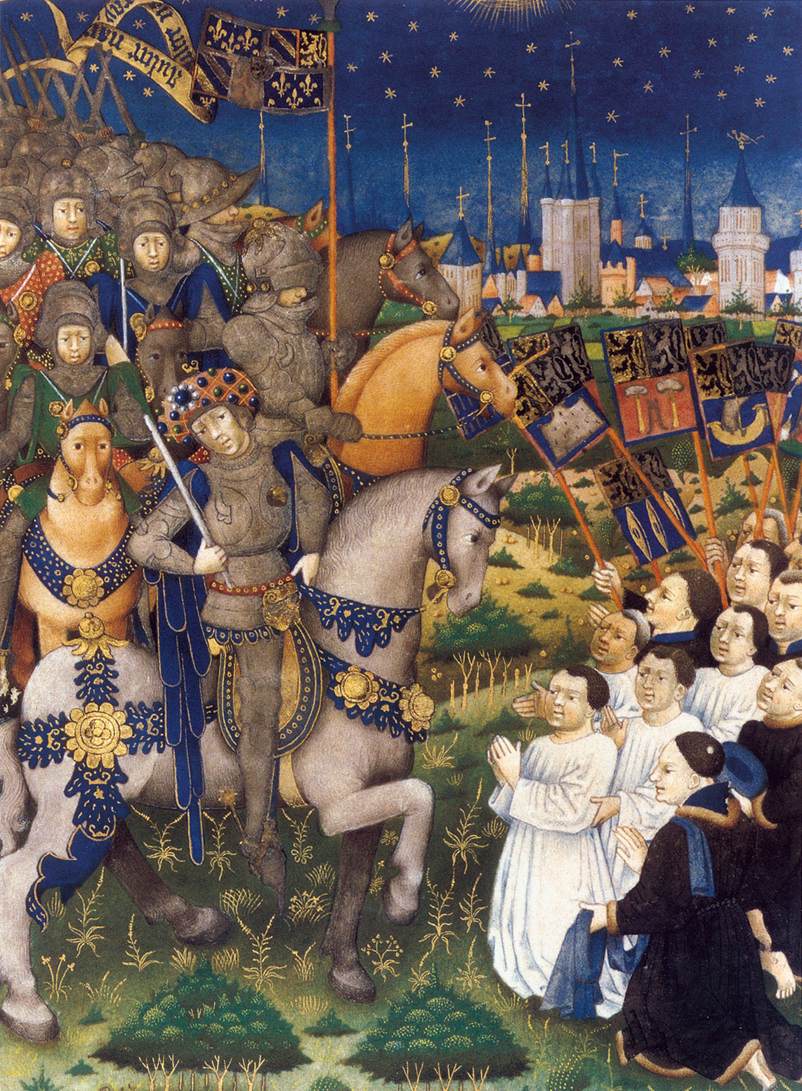
Battle of Gavere
When asked if he would destroy rebellious Ghent after crushing its army at Gavere, Duke Philip the Good of Burgundy is said to have replied: 'If I should destroy this city, who is going to build me one like it?' On July 23, 1453, that sardonic mercy was all that stood between Ghent and obliteration. The battle that earned the duke his leverage was fought at Semmerzake near Gavere, in the County of Flanders, and it ended a revolt that had begun over something as ordinary as salt.
A Revolt Over Salt
Ghent in the mid-15th century was no minor provincial town. It was the richest, most populous, and most powerful city in the Burgundian Netherlands, and it knew its own worth. When Philip the Good proposed a new salt tax, the city refused. When the duke pressed, Ghent declared open rebellion. Salt was essential for preserving food, and taxing it meant taxing survival itself. The stakes were high enough that the citizens of Ghent chose war over compliance, betting that their wealth and military tradition would carry the day against their nominal lord.
Three Fortifications Fall
Philip the Good assembled an army from across his territories, including troops from southern Flanders, and moved methodically against the rebels. Three fortifications guarded the approaches to Ghent: Schendelbeke, Poeke, and Gavere. The first two fell with little resistance, and both garrisons were executed, a brutal message to anyone considering continued defiance. The Burgundian army began bombarding Gavere on July 18, 1453. Five days of artillery fire reduced the fortress, but the relief army from Ghent was already on the march. When the Ghentenaar force arrived on July 23, they did not know the fort had fallen the day before.
When Gunpowder Met Chaos
Philip was ready. His scouts had tracked the approaching army, and he drew up his forces into battle lines. What followed marked a turning point in Burgundian military history: the first artillery exchange ever conducted by the duke's forces. Initially, the Ghent cannon had superior range, forcing Philip to push his guns closer to the enemy. But once the Burgundian artillery found its mark, Ghentenaar morale began to crack. A contemporary source from Ghent itself records that a spark ignited an open sack of gunpowder among their cannoneers, causing an explosion that sent the gun crews fleeing. Seeing the rout begin, the Burgundian army charged.
Victory and Its Limits
Some Ghent soldiers attempted to regroup and counter the Burgundian charge, but their efforts collapsed under the weight of cavalry and infantry pouring into the gaps. Casualties were high, the army shattered, and the road to Ghent lay open. Yet Philip chose restraint. His comment about the city's irreplaceable value was more than wit; it was policy. Destroying Ghent would have eliminated the tax base that made the Burgundian Netherlands so valuable. The city submitted, paid its fines, and life resumed. But the submission proved temporary. Eighty-six years later, in 1539, Ghent would revolt again against another tax under Charles V, Holy Roman Emperor. Some cities never quite learn to kneel.
From the Air
Located at 50.933N, 3.65E near modern-day Gavere in East Flanders, Belgium. The battlefield lies in the rolling farmland between Ghent and the Scheldt River. Nearby landmarks include the town of Gavere and the E17 motorway. Nearest airports: Ghent-Wevelgem (EBKT) 30km west, Brussels (EBBR) 60km east. From altitude, the landscape shows the agricultural patterns that have replaced the medieval fortifications.