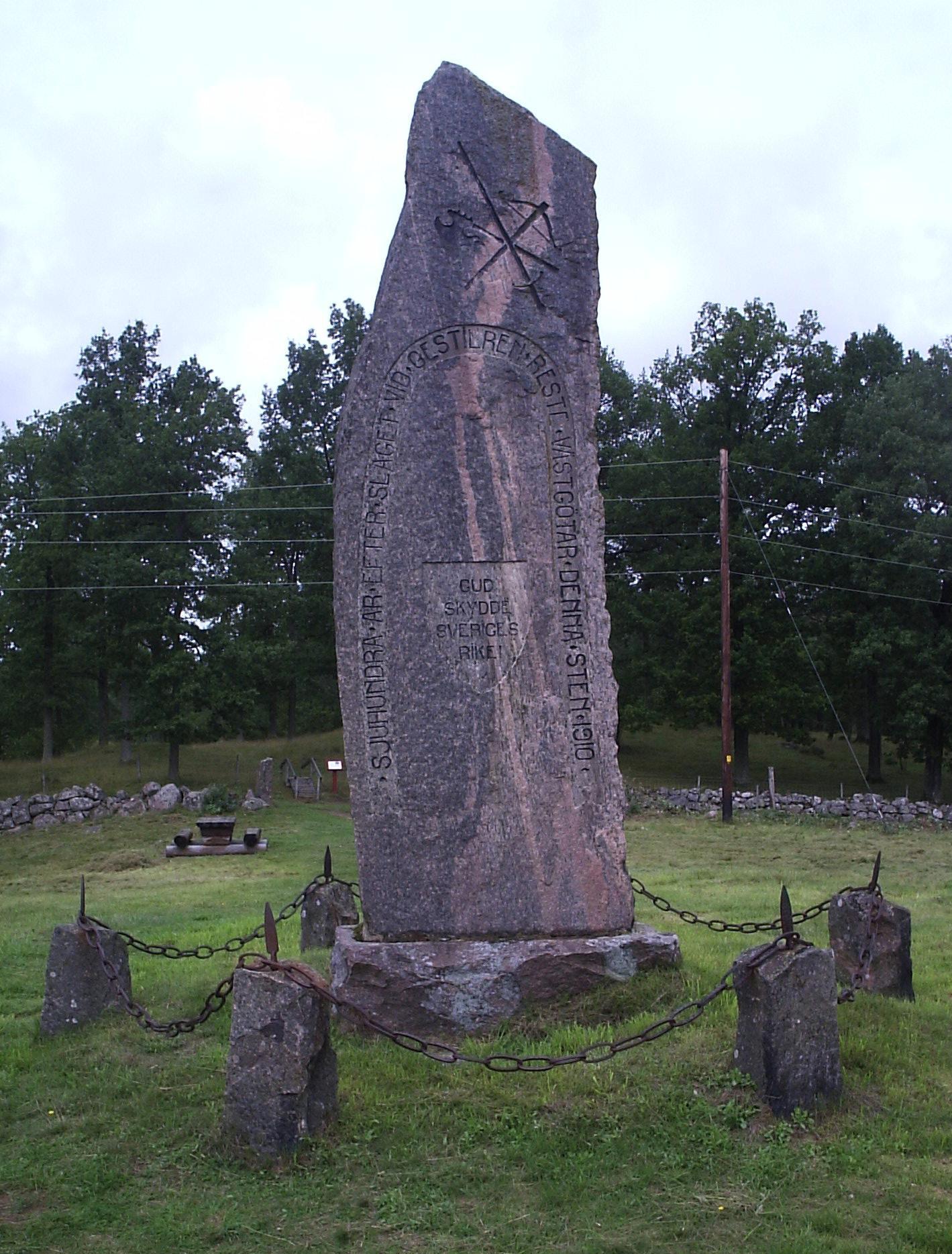
Battle of Gestilren
The medieval chronicle records it with chilling brevity: "The Folkungs took his life; his own brother-in-law did it to him in Gestilren." On July 17, 1210, King Sverker II of Sweden fell in battle, killed by family, ending a war that had torn the kingdom apart for two and a half years. He had come seeking the throne he had lost, backed by Danish forces and papal blessing. He found only death. The exact location of this fratricidal clash remains disputed to this day, with Swedish historians arguing over whether it occurred in Vastergotland, Ostergotland, or even Uppland, but the consequences reshaped the Swedish monarchy for generations.
A King Twice Fallen
Sverker II had grown up in Danish exile before ascending to the Swedish throne around 1195. For twelve years he ruled, strengthening the church and maintaining close ties with the papacy. Then came the reckoning. Eric Knutsson, backed by the Norwegian Birkebeiner faction, gathered support among Swedish nobles who had grown weary of Sverker's reign. By 1208, Sverker was fleeing again to Denmark. He returned that same year with a massive Danish army to reclaim his crown, only to suffer a devastating defeat at the Battle of Lena. A later folksong captures his grim determination after that disaster: "I will terminate my young life, and my blood and spirit spill, before I renounce the royal name." Pope Innocent III himself ordered Eric to restore Sverker, but the victorious king refused.
The Last Invasion
In the summer of 1210, Sverker invaded Sweden for the final time. Denmark once again provided troops, and Sverker's cause still commanded loyalty from some Swedish factions. The armies met at a place called Gestilren on July 17 (though some annals record August 16). The sources reveal almost nothing about the fighting itself. We know that Eric's forces won. We know that Folke Jarl, one of Eric's commanders and likely a son of the powerful Jarl Birger Brosa, fell in the melee. And we know that Sverker died, killed by his own brother-in-law. The war was over. Peace with Denmark came swiftly. King Eric's banner passed to Folke Jarl's nephew Eskil Magnusson, and was later given to the great Icelandic historian Snorri Sturluson in 1219.
Victory of the Folkungs
The battle marked a triumph for the Folkung faction, a loose coalition of Swedish nobles who championed local autonomy against centralized royal power. Their victory at Gestilren checked the influence of both the Danish crown and the Catholic church hierarchy. The Folkungs would remain a potent political force for decades, frequently opposing royal authority until their final defeat at the Battle of Sparrsatra in 1247. Folke Jarl's nephew Birger Jarl, whose descendants would rule Sweden after 1250, may have witnessed Gestilren as a young man. The battle thus connects directly to the dynasty that would eventually consolidate Swedish power. Ironically, this royal house became known as the Folkung dynasty, though historians consider the connection to the original Folkung faction somewhat misleading.
The Lost Battlefield
Where exactly did Sverker die? Swedish historians have debated this question for centuries with remarkable intensity. The traditional location lies in Vastergotland, where a commemorative monument was erected in 1910, exactly seven hundred years after the battle. A 15th-century note in the Westrogothic law codex places the fight "in Gaestilsreen between Dala and Lena," suggesting proximity to the 1208 battlefield. Historian Erik Lonnroth argued the fighting occurred in the gorge between Gerum Hill and Varv Hill, where terrain would have favored defenders against heavy cavalry. Others point to Ostergotland, or claim Gestilren was never a place name at all. Most intriguingly, archivist Lars-Otto Berg found the farm name Gestilren recorded fifteen times in Uppland church records between 1580 and 1630. A 17th-century annotation even mentions "King Sverker's three farms" and claims he was buried "in Gestilren in the Sverker Hill." The mystery endures.
From the Air
Located near coordinates 58.20N, 13.83E in Vastergotland, Sweden, the traditional site of the battle lies between the towns of Dala and Lena. A memorial monument marks the presumed location. This is rolling agricultural terrain with scattered woodlands. Nearest airports include Lidkoping/Hovby (ESGL) approximately 30km west, or Skovde (ESGR) about 25km north. The nearby Battle of Lena site (1208) lies just a few kilometers to the north. Alternative proposed locations include sites in Ostergotland and Uppland.