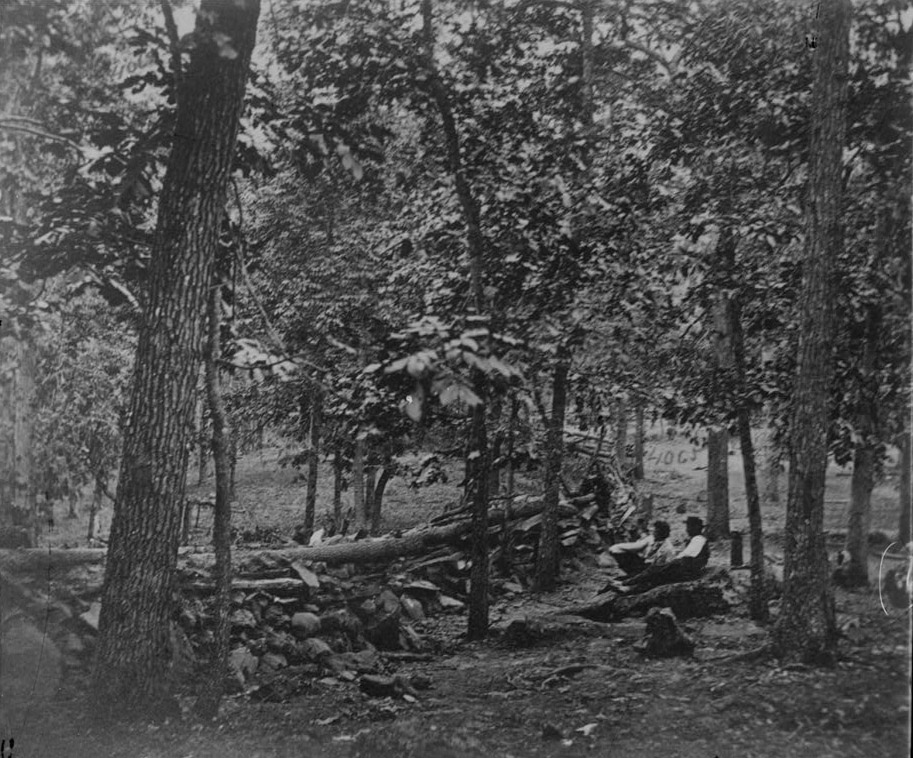
Battle of Gettysburg
The town had no strategic value. Gettysburg was a crossroads where ten roads converged amid the rolling farmland of Adams County, Pennsylvania -- significant for geography, not industry or politics. Yet on the morning of July 1, 1863, a Confederate division marching toward town in search of supplies collided with Union cavalry, and the accident of contact pulled two enormous armies into the most consequential battle ever fought on American soil. Over three days, more than 160,000 soldiers clashed across ridgelines, wheat fields, orchards, and rocky hillsides. When the smoke cleared on the evening of July 3, between 46,000 and 51,000 men lay dead, wounded, or missing. The town of 2,400 residents was left with more than 20,000 corpses to bury.
The Accidental Collision
Neither army planned to fight at Gettysburg. Confederate General Robert E. Lee had pushed north into Pennsylvania, hoping a decisive victory on Union soil would break Northern morale and force a negotiated peace. Union General George Meade, commanding the Army of the Potomac for just three days, was racing to intercept. On July 1, Confederate troops under Major General Henry Heth approached the town from the west, meeting Union cavalry under Brigadier General John Buford, who had positioned his troopers across three ridges -- Herr Ridge, McPherson Ridge, and Seminary Ridge. Buford's men bought precious hours as Union infantry arrived. But by afternoon, 30,000 Confederates had overwhelmed 20,000 Federals. The Union forces fell back through town and dug in on the high ground south of Gettysburg -- Cemetery Hill, Cemetery Ridge, and Culp's Hill -- a defensive position that would prove decisive.
The Ridges Run Red
July 2 saw some of the war's most ferocious fighting. Lee ordered Lieutenant General James Longstreet to attack the Union left flank, launching assaults through the Peach Orchard, the Wheatfield, and Devil's Den that produced staggering casualties. The day's most critical moment came at Little Round Top, a rocky hill anchoring the extreme left of the Union line. Colonel Joshua Chamberlain and his 385 men of the 20th Maine Infantry held the position against repeated Confederate assaults. When ammunition ran low after ninety minutes of fighting -- 130 men already killed or wounded -- Chamberlain ordered a bayonet charge downhill. The unexpected assault broke the Confederate attack and captured scores of prisoners. Had Little Round Top fallen, the Confederates could have enfiladed the entire Union line along Cemetery Ridge.
Pickett's Charge and the High-Water Mark
On the afternoon of July 3, Lee gambled everything on a frontal assault against the Union center. After a massive artillery bombardment from Seminary Ridge, approximately 12,500 Confederate soldiers stepped into the open and marched three-quarters of a mile across exposed ground toward Cemetery Ridge. The attack, forever known as Pickett's Charge, was a catastrophe. Union artillery and rifle fire tore through the advancing ranks with devastating efficiency. Major General George Pickett's division alone lost 2,655 men -- forty-two percent of its strength. Brigadier General James Pettigrew's division suffered worse, losing 2,700 men, sixty-two percent. Nearly half the attackers never returned to their own lines. The stone wall where the Confederate advance crested and broke became known as the "High-Water Mark of the Confederacy" -- the farthest north the rebellion would ever reach.
The Words That Followed
Four and a half months after the guns fell silent, Abraham Lincoln traveled to Gettysburg for the dedication of Soldiers' National Cemetery on November 19, 1863. The main speaker, Edward Everett, delivered a two-hour oration. Lincoln spoke for roughly two minutes. His 272 words -- beginning with "Four score and seven years ago" -- reframed the entire war. The conflict was no longer simply about preserving the Union; it was about fulfilling the promise that all men are created equal. The speech was so brief that photographers failed to capture Lincoln delivering it. Today, more than a million visitors walk the battlefield each year, following the ground where the country's meaning was contested with musket and bayonet, then rewritten with ten sentences.
The Landscape Remembers
Gettysburg National Military Park preserves more than 6,000 acres of the battlefield. Over 1,300 monuments, markers, and memorials stand across the ridges and fields, making it one of the most densely commemorated landscapes on Earth. The terrain itself tells the story: Seminary Ridge still rises to the west, Cemetery Ridge to the east, with the long open ground of Pickett's Charge between them. Little Round Top's rocky face is scarred and weathered. The Peach Orchard has been replanted. From the air, the geometry of the battle reveals itself -- the fishhook shape of the Union line, the sweeping Confederate positions, and that terrible open ground between them that twelve thousand men crossed under fire, most of them for the last time.
From the Air
Located at 39.818N, 77.233W in Adams County, Pennsylvania. The battlefield spans approximately 6,000 acres of rolling terrain south and west of the town of Gettysburg. Key visual landmarks from the air: Seminary Ridge runs north-south on the west side, Cemetery Ridge parallels it to the east, with the open ground of Pickett's Charge visible between them. Little Round Top and Big Round Top are prominent rocky hills at the southern end. The town's distinctive ten-road intersection is visible at the northern edge. Gettysburg Regional Airport (W05) is 2 miles west of town. Nearest commercial airport: Harrisburg International (KMDT), approximately 35nm northeast. The battlefield's 1,300+ monuments create visible patterns among the fields. Best viewed at 2,000-3,000 feet AGL to appreciate the tactical terrain.