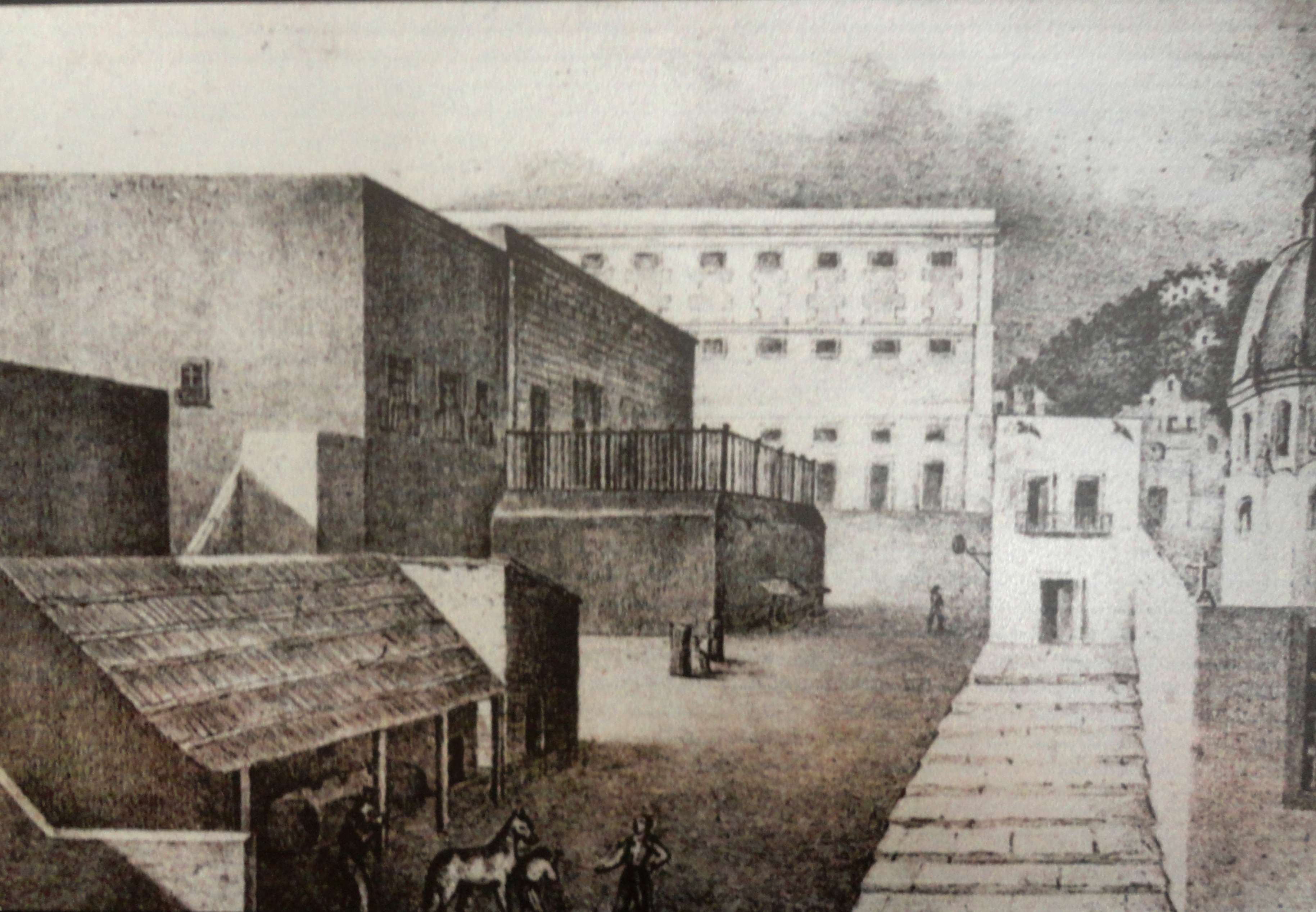
Battle of Guanajuato
By the time French troops reached the outskirts of Guanajuato on December 8, 1863, the city's defenders already knew what was coming. Over the preceding weeks, French forces had swept through central Mexico like a closing fist: Queretaro fell on November 19, Acambaro on November 24, Morelia on November 30. Guanajuato, with its narrow streets cut into mountain ravines and its wealth drawn from some of the richest silver mines in the Americas, was next. The Republican soldiers and local militia who remained to defend it were outgunned, undersupplied, and alone. No reinforcements were coming. What followed was not a rout but a fight -- hours of close combat through streets too narrow for cavalry, barricades thrown up at road entrances, defenders clinging to high ground and public buildings until the mathematics of ammunition and numbers made the outcome inevitable.
An Empire Marches Inland
The battle was one episode in a larger campaign that had been building for nearly two years. France had invaded Mexico in January 1862, seeking to establish a European-backed empire in the Americas. The initial advance stalled spectacularly on May 5, 1862, when Mexican Republican forces defeated the French at Puebla -- a date still celebrated as Cinco de Mayo. But the setback was temporary. Ten months later, a reinforced French army resumed its march, and by June 1863, they held Mexico City itself. The Austrian archduke Maximilian I was installed as emperor of the newly proclaimed Mexican Empire. President Benito Juarez fled the capital, moving the seat of Republican government first to San Luis Potosi and then further north as French control expanded. Marshal Francois Achille Bazaine led the campaign into central Mexico, commanding divisions under Generals Felix Douay and Armand Alexandre de Castagny. The French were pursuing not just territory but Manuel Doblado, the Republican Minister of Foreign Affairs, whose presence in the region gave it political as well as strategic significance.
Hours in the Narrow Streets
Guanajuato's geography made it both defensible and treacherous. The city sits in a deep ravine, its streets climbing steeply up hillsides -- terrain that favored defenders who knew every alley and rooftop. But the Republican forces holding it were a mix of professional soldiers and local militia, short on ammunition and entirely without heavy artillery. The French surrounded the city to cut off escape routes, then opened with artillery bombardment that damaged buildings and defensive positions throughout the center. As the bombardment continued, French infantry pushed into the city, and the battle became a street fight. Mexican defenders held barricades at road entrances and occupied high ground and public buildings, forcing the French to advance building by building. Despite determined resistance, the defenders' inferior weapons and dwindling supplies made each position harder to hold than the last. After several hours of fighting, French troops broke through the main defensive points. With casualties mounting, Mexican commanders ordered a retreat to preserve what remained of their force.
What Guanajuato's Fall Meant
By nightfall on December 8, Guanajuato was in French hands. Marshal Bazaine left Mexican Imperialist General Tomas Mejia in command of the city and continued his advance. San Luis Potosi fell on December 27. Guadalajara followed on January 5, 1864. The Central Mexico Campaign was complete, and the expanding Mexican Empire now controlled the country's most economically vital interior. For the Republican cause, the loss was severe. Guanajuato's mining wealth had been a source of revenue, and its fall disrupted supply lines across the region. Juarez's government, pushed ever further north, began to look like a government in name only. But Mexican resistance did not end with the fall of cities. Guerrilla warfare continued across the countryside, sustained by a population that had never accepted foreign rule.
The Republic Returns
The French hold on Mexico proved fragile. By 1866, the geopolitical calculus had shifted. The United States, having ended its own Civil War in April 1865, began supplying the Mexican Republicans and pressuring France to withdraw. Napoleon III, facing mounting costs and deteriorating European alliances, pulled his troops out. Without French military backing, Maximilian's empire collapsed. Republican forces recaptured cities across central Mexico through 1866 and 1867. The emperor himself was besieged at Queretaro for two months before his capture and execution in June 1867. Guanajuato, the mining city that French artillery had battered into submission less than four years earlier, was Mexican again. The soldiers and militia members who had fought and died in its narrow streets on that December day in 1863 had been part of a resistance that outlasted the empire imposed upon them.
From the Air
Located at 21.02N, 101.25W. Guanajuato City sits in a deep, narrow ravine in the Sierra de Guanajuato mountains -- the distinctive terrain is visible from altitude as a dense urban area packed into steep mountain valleys. The city's colorful buildings climbing hillsides are a landmark. Nearest airport is Del Bajio International Airport (MMLO) in Leon, approximately 30 km to the west. The Alhondiga de Granaditas, a massive grain storage building that served as a fortification in earlier conflicts, is a notable landmark within the city.