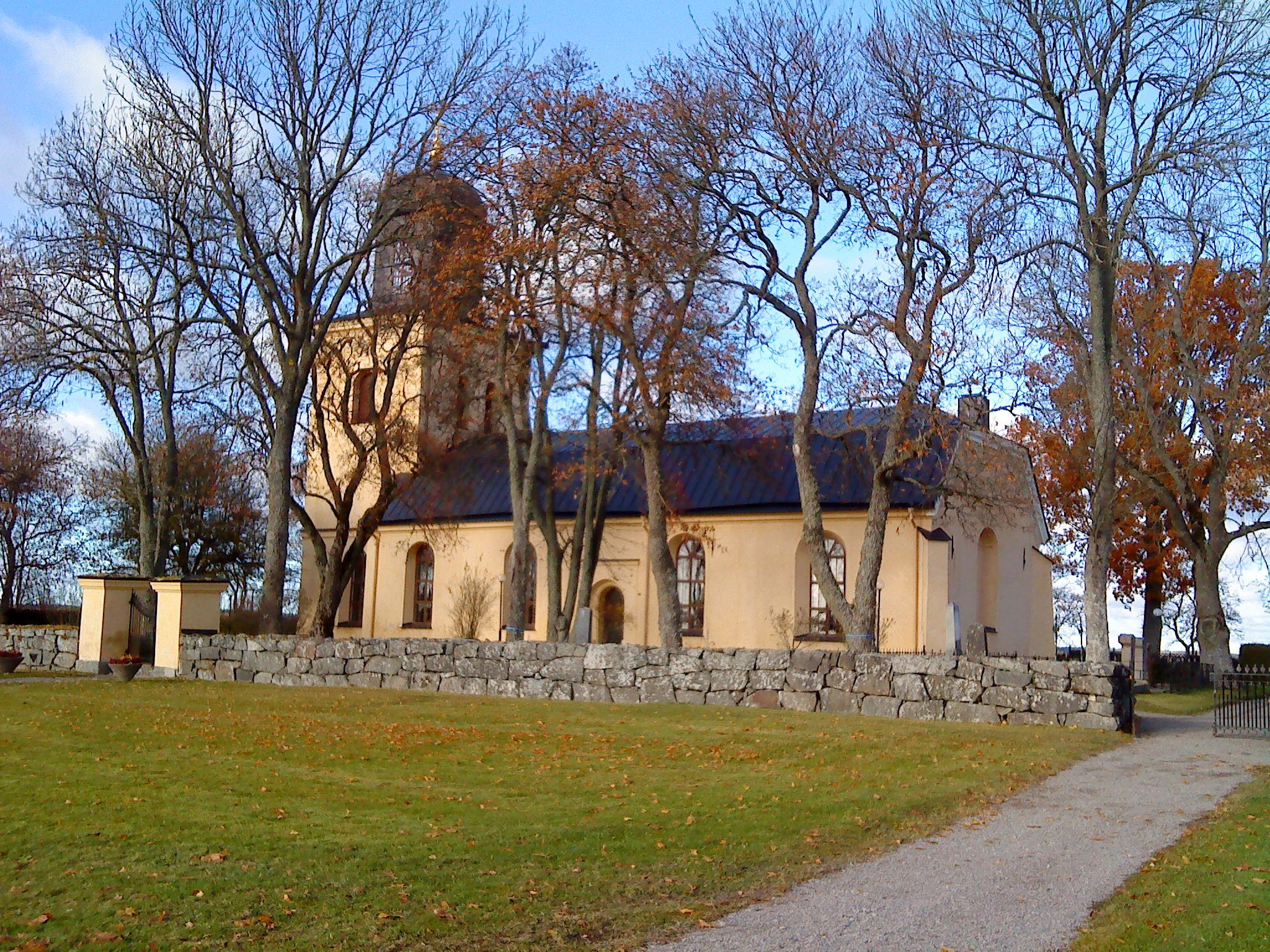
Battle of Haraker
The Danish knights rode north from Västerås on April 17, 1464, confident in their superior numbers and professional training. King Christian I intended to crush the Swedish rebels hiding in Hälla Forest once and for all. What he found instead was a masterfully prepared ambush. Bishop Kettil Karlsson had fortified the forest terrain with a series of defensive positions, transforming the landscape itself into a weapon. By nightfall, between 1,200 and 1,400 Danish soldiers lay dead in the trees, and Christian's army was retreating toward Västerås under cover of darkness. The Battle of Haraker would prove a turning point in Sweden's long struggle for independence from Danish rule.
The Bloodbath's Shadow
The roots of Haraker lay in the horror of Stockholm. King Christian I of Denmark, nicknamed 'the Tyrant' by Swedish nobles, ruled the Kalmar Union from 1457. His rival, the deposed Swedish King Charles Canutesson of the House of Bonde, lived in exile in Danzig, waiting for his moment. In August 1463, Christian imprisoned the Archbishop of Uppsala, Jöns Bengtsson Oxenstierna, and had him brought to Copenhagen. The news ignited rebellion. Peasant militia from Uppland marched on Stockholm, where unionist forces under Lord High Constable Ture Turesson Bielke slaughtered them at Helgeandsholmen on August 21, 1463. The massacre only deepened Swedish resistance.
The Forest Fortress
Kettil Karlsson, Bishop of Linköping, commanded the Swedish separatist army. Rather than meet the Danes in open battle where their heavy cavalry would prove decisive, he chose the terrain carefully. Hälla Forest north of Haraker Church became his fortress. His men constructed a series of fortified positions among the trees, each supporting the next. Hidden positions concealed archers and crossbowmen. The rebels understood that the forest would negate the Danish advantage in mounted knights. When Christian's army arrived, they made camp south of the forest, resting before what they expected would be a straightforward assault on peasant militia.
The Trap Springs
The attack began well for the Danes. Their disciplined troops pushed into the forest, driving back the Swedish defenders. But as they advanced, the trees forced the knights to dismount and fight on foot, surrendering their mobility. The Swedes fell back through the fortified positions, drawing the Danes deeper into the forest. Then fire erupted from a hidden position. Arrows and bolts cut into the Danish flanks from an unexpected angle. The disciplined advance became a confused retreat as men fell to unseen attackers. Swedish forces harried them through the trees until the Danes finally broke into open ground, only to face Kettil Karlsson's heavy cavalry reserve in a devastating charge.
The Price of Defeat
The Diarium Vadstenense, a contemporary chronicle, records that the royal army's losses were significant. Swedish sources claim 1,200 to 1,400 Danish dead, though Christian later wrote to the Hanseatic city of Lübeck minimizing his casualties. The truth likely lies somewhere between. What remains certain is that Christian's army was broken. The survivors retreated to Haraker Church, then fled to Västerås under darkness. Christian abandoned his siege of Västerås Castle and fell back to Stockholm Castle, which the separatists promptly besieged. The initiative had shifted decisively to the Swedish cause.
Seeds of Independence
The aftermath of Haraker reshaped Swedish politics for decades. Jöns Bengtsson Oxenstierna became Regent after Kettil Karlsson's death, though he was soon replaced by Erik Axelsson Tott. Charles Canutesson returned from exile to rule Sweden a third time from 1467 until his death in 1470. Most significantly, a young nobleman named Sten Sture the Elder served as one of the separatist commanders at Haraker. In 1471, he would lead the separatist forces at the Battle of Brunkeberg, a victory that secured Swedish autonomy for most of the remaining decades of the century. The quiet forest north of Västerås, where Haraker Church still stands, witnessed the beginning of the end of Danish domination in Sweden.
From the Air
Located at 59.79N, 16.43E, approximately 20 kilometers north of Västerås in Västmanland, Sweden. Haraker Church remains a visible landmark. The battle site in Hälla Forest lies to the north of the church. Best viewed from 2,000-3,000 feet. The terrain reveals the strategic value of the forested hills against the flatter land to the south where the Danish army camped. Nearest major airport: Stockholm Västerås Airport (ESOW) approximately 20 km south.