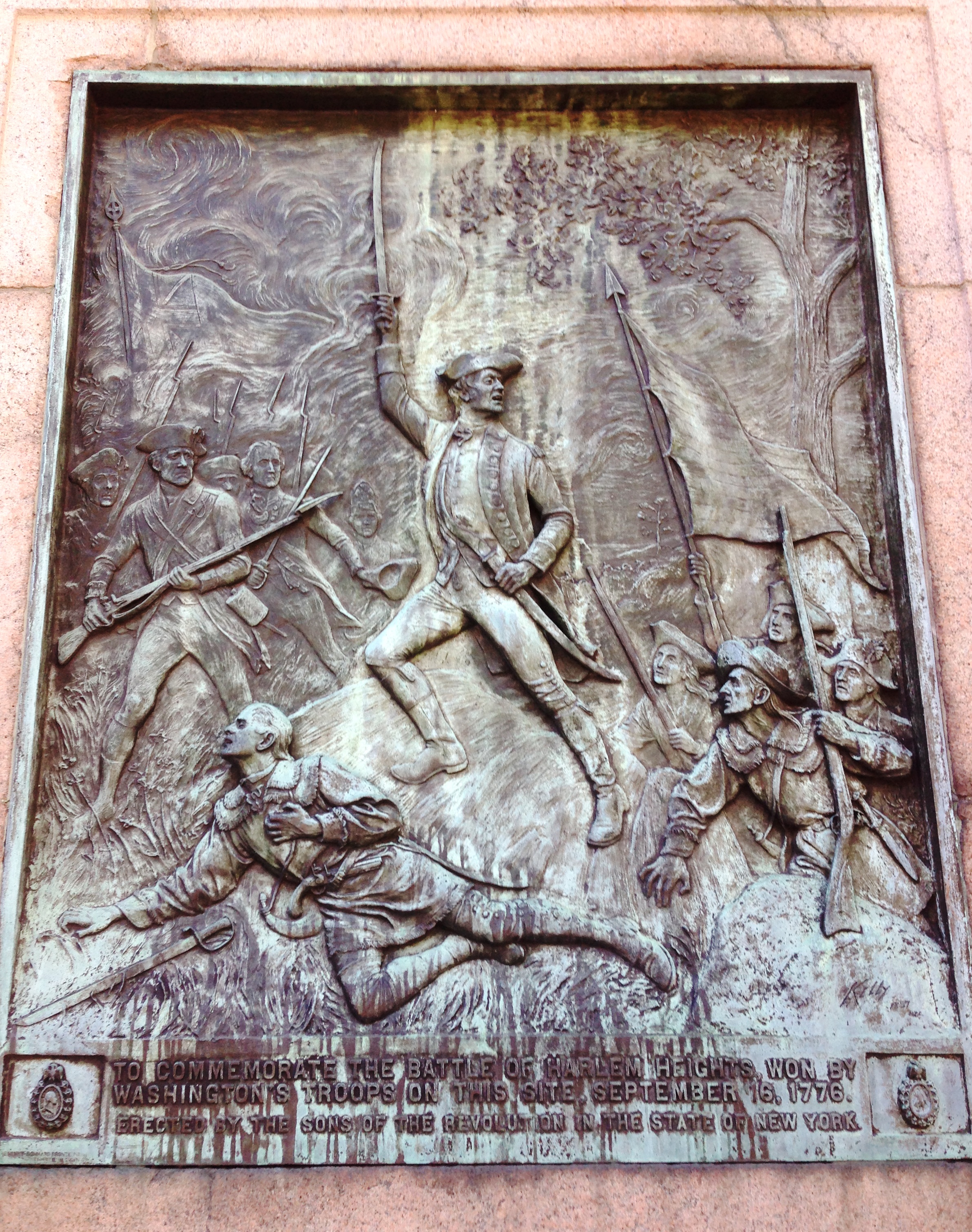
Battle of Harlem Heights
The British buglers played a fox-hunting call. The sound carried across the Hollow Way on the morning of September 16, 1776, a deliberate insult aimed at the retreating American patrol -- the redcoats were telling Washington's men they were prey, not soldiers. Colonel Joseph Reed, Washington's adjutant general, heard the horns and rode back to headquarters seething. What happened next, on the wooded heights of what is now Morningside Heights in upper Manhattan, would become the Continental Army's first real victory of the war.
A Fox Hunt in Reverse
The battle grew from a reconnaissance mission gone wrong. At daybreak, Lieutenant Colonel Thomas Knowlton led 150 rangers south to scout British positions. They stumbled into enemy pickets from Brigadier Alexander Leslie's light infantry brigade, and when the British realized they outnumbered the Americans, they pressed forward hard. Knowlton's men fell back through the woods in good order, losing perhaps ten men in the opening exchange. The British light troops, flushed with confidence from weeks of easy victories, chased the Americans north toward Washington's fortified line on Harlem Heights. They had advanced too far from their own lines without support, and they knew it too late. Washington, watching from the heights, saw the opportunity their overconfidence had created.
The Trap That Almost Worked
Washington devised a flanking maneuver: a diversionary force of 150 volunteers would engage the British head-on in the Hollow Way while a larger force circled around to cut off their retreat. The plan nearly succeeded. The volunteers drew the British down into the valley, and the flanking party swung wide through the woods. But an unidentified officer misdirected the flanking column, and instead of striking the British rear, the Americans hit their flank. The surprise was still devastating. Both Knowlton and Major Andrew Leitch fell with mortal wounds during the assault, yet their troops pushed on without them. The British, suddenly realizing they were caught between two forces, scrambled uphill to a fence line and began a fighting retreat across open farmland to a buckwheat field near where Barnard College stands today.
Buckwheat and Bayonets
Reinforcements arrived for both sides. The British brought up a pair of three-pounder field guns; Washington fed fresh regiments into the fight. For an hour and a half, the two forces hammered each other across the buckwheat field and surrounding woods on Morningside Heights. Washington had initially hesitated to pursue, but watching his men drive the British back yard by yard, he committed more troops to the attack. When the British three-pounders ran dry of ammunition, the redcoats began pulling back toward their main lines. Washington, wary of provoking a full engagement with the British army's reserves, ordered his men to halt. Upon hearing the recall, the American soldiers gave a loud "huzzah" and withdrew in good order -- a disciplined exit that would have been unthinkable days earlier.
The Cost of Confidence
British General Howe officially reported 14 killed and 78 wounded, though a member of his own staff recorded 14 killed and 154 wounded in his diary. Historian Henry Johnston, whose 1897 study remains the most detailed investigation of the engagement, assessed American losses at roughly 30 killed and 100 wounded. The death of Thomas Knowlton struck a particular blow. He had created and led Knowlton's Rangers, the Continental Army's first intelligence unit, operating under Washington's direct orders. A bronze plaque on Columbia University's Mathematics Building, near the spot where Knowlton fell, marks his sacrifice. The battle's true significance was psychological rather than strategic. After the humiliation at Kip's Bay, where panicked Continental soldiers had refused Washington's direct orders to stand and fight, Harlem Heights proved the army could hold its ground against British regulars.
Where the Buckwheat Grew
The battlefield has long vanished beneath the campus of Columbia University and the surrounding streets of Morningside Heights. A month after the engagement, the British outflanked Washington by moving through Westchester County, and the Continental Army abandoned Manhattan entirely, retreating north to White Plains and then west across the Hudson River. Manhattan would remain in British hands until the end of the war. Today, the rocky terrain that once gave Washington his commanding view is carved into academic quadrangles and apartment blocks. The Hollow Way, where American volunteers drew the British into the trap, lies beneath 125th Street. Walk the sidewalks of upper Manhattan and you are walking a battlefield -- one where a demoralized army found its nerve, and a revolution that was faltering learned it could fight.
From the Air
Located at 40.812N, 73.964W in the Morningside Heights neighborhood of upper Manhattan. The battlefield extended from roughly modern-day 125th Street (the Hollow Way) north to 135th Street, between the Hudson River and what is now Morningside Park. Nearest airports: Teterboro (KTEB) 8nm northwest, LaGuardia (KLGA) 5nm east. Columbia University campus and Riverside Church are visible landmarks. Best viewed at 2,000-3,000 ft AGL.