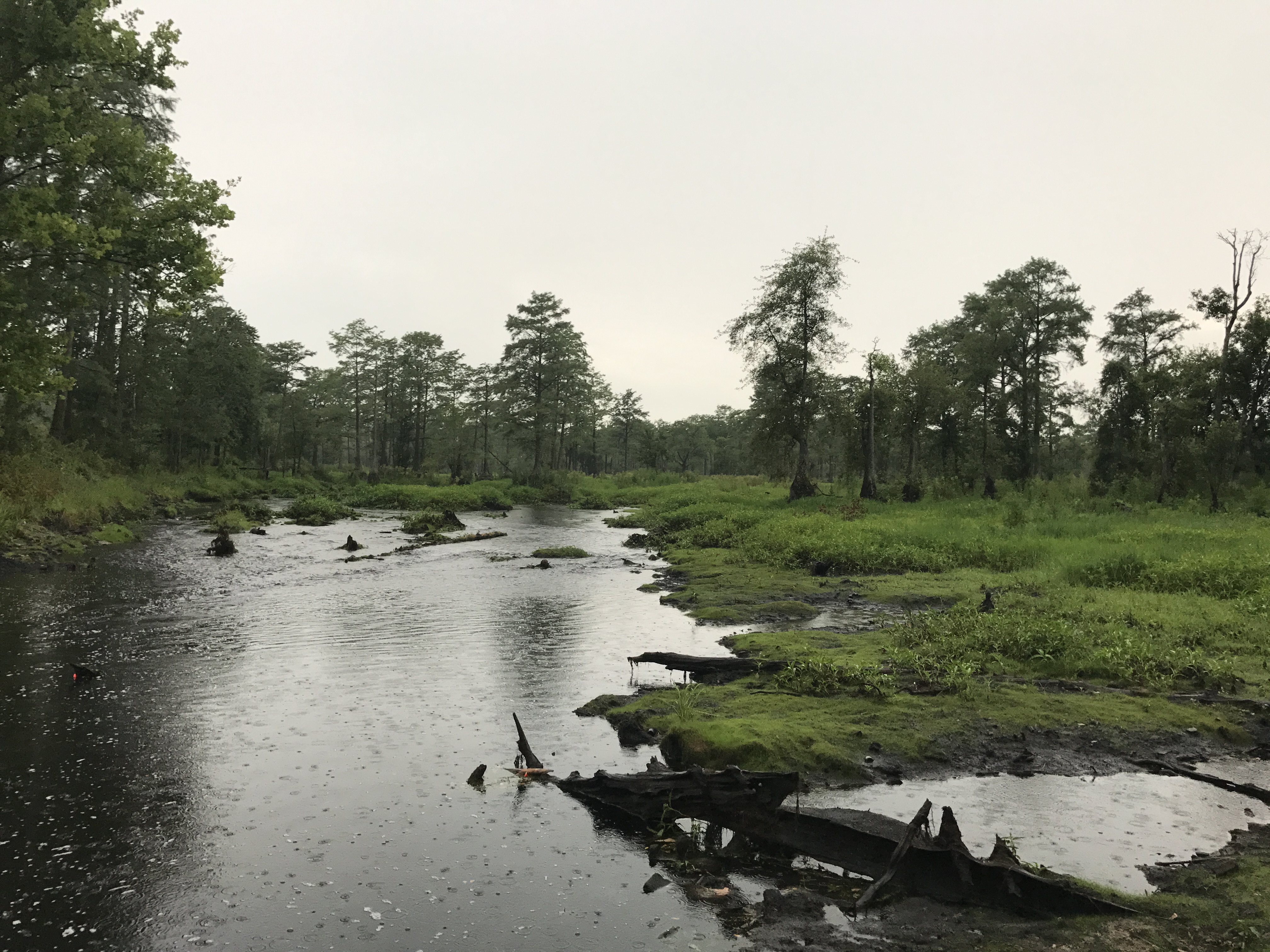
Battle of Hayes Pond
The single lightbulb dangling from a pole was the only thing holding the night together. When a Lumbee marksman shot it out, the cornfield near Hayes Pond plunged into darkness, gunfire cracked across the winter air, and fifty Klansmen discovered what several hundred armed Native Americans thought of their rally. It was January 18, 1958, in Robeson County, North Carolina, and a man named James W. "Catfish" Cole had made the worst miscalculation of his career. Cole, a Ku Klux Klan organizer from South Carolina, had spent weeks driving through the county with a loudspeaker truck, advertising a rally to intimidate the Lumbee people into accepting racial segregation. The Lumbees had a different plan.
A County Like No Other
Robeson County in the 1950s operated under a system of tripartite segregation found nowhere else in the American South. Whites, Black residents, and Native Americans each had their own schools, their own public spaces, their own unwritten rules. The Lumbee people -- descendants of various Native American groups who had survived centuries of colonization, disease, and displacement -- had been part of this landscape since long before the county existed. They spoke English, farmed the lowland fields, attended Protestant churches, and identified themselves through kinship and shared place. North Carolina had formally recognized them under various names since 1885, when the state created a separate school system after the community refused to attend Black schools. By 1958, Congress had just passed the Lumbee Act granting them official recognition, though without the full federal benefits given to other tribes. They were a people who had endured by adapting, but Cole mistook their patience for weakness.
Cross Burnings and a Loudspeaker Truck
Cole's provocation was deliberate and public. On January 13, 1958, he invited a local journalist to watch as Klansmen burned a cross near the home of a Lumbee woman in St. Pauls who was dating a white man, and another in Lumberton near an Indian family that had moved into a white neighborhood. Cole announced through the newspapers and his roving loudspeaker truck that a large rally would follow on Saturday night near Pembroke, the heart of Lumbee country, where he would denounce racial mixing. Robeson County gun stores reported a surge in ammunition sales. The Maxton town commissioners passed a resolution condemning the Klan. Law enforcement pleaded with Cole to cancel. He refused. In a Pembroke barbershop, a group of Lumbee men talked it over and decided they would not wait for the Klan to come to their town. They would go to the Klan instead.
The Night the Light Went Out
Cole chose a leased cornfield near Hayes Pond, just outside Maxton, and set up a portable generator, a public address system, a banner reading "KKK," and a cross to burn. About fifty Klansmen showed up, most of them Cole's followers from South Carolina. What they had not counted on was the gathering in the tree line. Several hundred Lumbees, many carrying rifles and shotguns, encircled the field. They jeered and taunted the Klansmen. Then the single light went dark. The Lumbees opened fire -- into the air, according to most accounts -- and the Klansmen scattered. Cole fled into a swamp. The Lumbees seized the KKK banner, Klan robes, and other regalia, then carried their trophies back to Pembroke in triumph. Police arrived to restore order and arrested one Klansman, James Martin, for drunkenness and carrying a concealed weapon. Not a single person was killed.
Justice in Robeson County
The aftermath played out in two courtrooms. Martin was tried first, before Judge Pro Tem Lacy Maynor -- only the second Native American judge in Robeson County history. Maynor gave Martin a suspended sixty-day sentence and told him plainly: "Your organization has nothing to offer." Martin denounced the Klan for abandoning him in the field. Then Cole himself faced riot charges in the Robeson County Superior Court, where about 350 Lumbees filled the gallery. Cole claimed he had a right to hold his rally. The prosecution argued the Klan had provoked the community with cross burnings and inflammatory speech. The jury convicted both men. Cole received eighteen to twenty-four months in prison. He never organized another public rally in Robeson County.
A Story That Echoed Forward
Newspapers across the country covered the rout, nearly all of them praising the Lumbees and mocking the Klan. Lumbee historian Adolph Dial later said, "Until the Klan thing, people didn't even know there were Lumbees." Yet within the community, most Lumbees saw it simply as self-defense -- neighbors protecting neighbors from hostile outsiders, not a civil rights statement. Folk singer Malvina Reynolds wrote a satirical song about the confrontation in 1958. In 2011, the Lumbee Tribal Council declared January 18 a Tribal Day of Historical Recognition. A state highway marker now stands at the convergence of NC Highway 130 and Maxton Pond Road. And in 2021, when Lumbee politician Charles Graham released a campaign video recounting the battle, it garnered eight million views in three days, becoming the most-viewed congressional advertisement in American history. The cornfield is quiet now, but the story still carries.
From the Air
Located at 34.72N, 79.37W near Maxton, North Carolina, in the flat coastal plain of Robeson County. The Hayes Pond area is rural farmland -- look for the small community of Maxton south of Pembroke along NC Highway 130. The terrain is low and flat with scattered ponds and agricultural fields. Nearest airport: Laurinburg-Maxton Airport (KMEB), approximately 5 nm to the southeast. Fayetteville Regional Airport (KFAY) is about 40 nm to the northeast. Best viewed at 2,000-3,000 ft AGL to see the rural landscape and the small communities of Maxton and Pembroke.