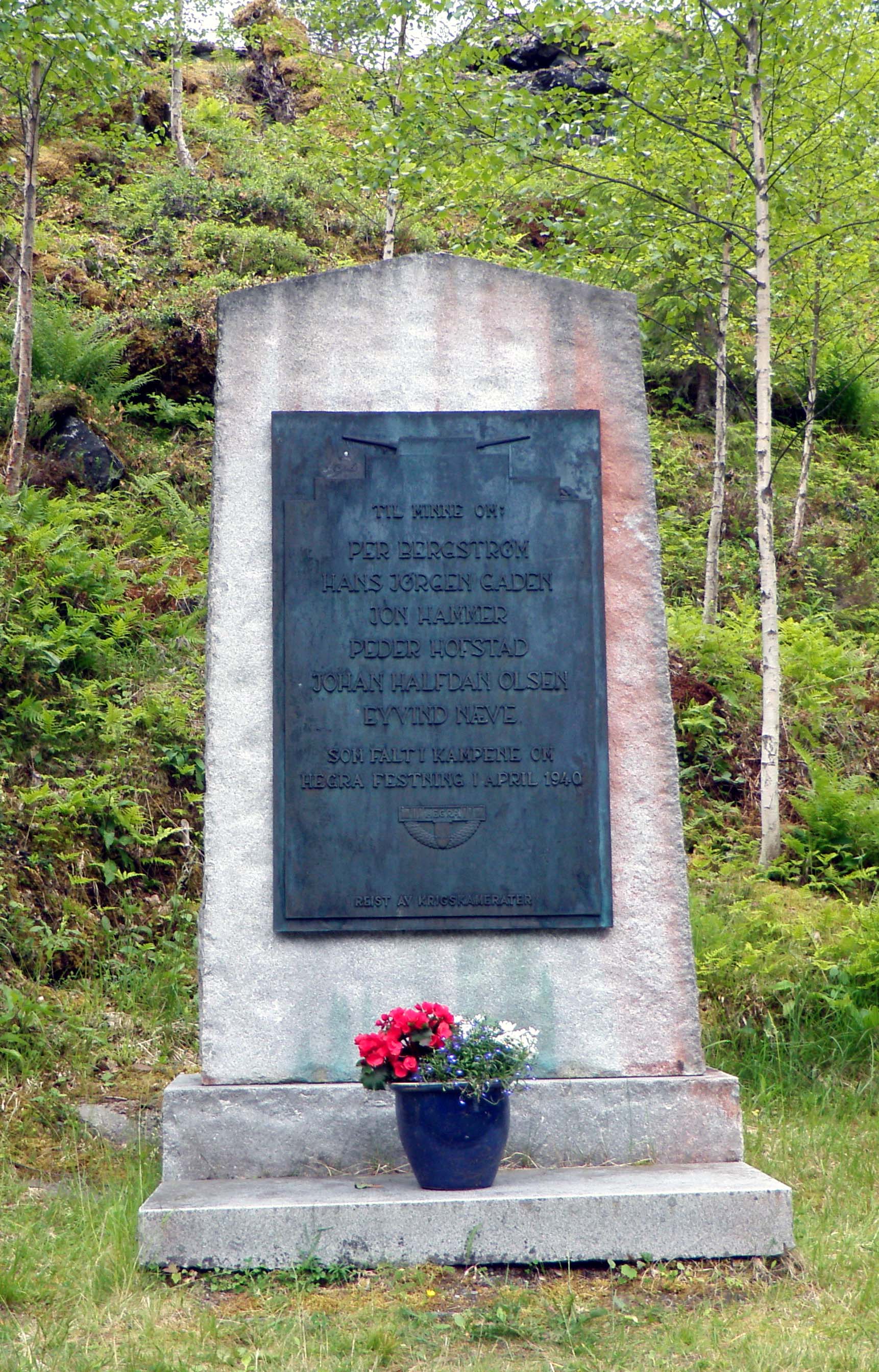
Battle of Hegra Fortress
The fortress at Hegra was not supposed to be a battlefield. It had been mothballed since 1926, used as a summer camp for children, and most recently as an internment site for Finnish soldiers fleeing the Winter War. But on 10 April 1940 -- one day after Germany invaded Norway -- Major Hans Reidar Holtermann led his retreating artillerymen up the mountain to Ingstadkleiva Fort, and what followed was one of the most remarkable small-unit actions of the Second World War. For twenty-five days, 250 volunteers and a civilian nurse named Anne Margrethe Bang held the old fortification against infantry assaults, artillery bombardment, and Luftwaffe bombing, surrendering only after every other Norwegian force in southern Norway had already laid down its arms.
A Fortress Nobody Planned to Use
Holtermann's arrival at Hegra was an improvisation born of necessity. He had been mobilizing Artillery Regiment No. 3 at the army camp near Vaernes Air Station when German troops landed at Stjordal Station on 10 April, approaching the camp by mid-morning. His soldiers were not yet combat-ready, so Holtermann evacuated to the old border fort. By that afternoon, fifty volunteers had gathered. More arrived daily -- local men from Hegra, Stjordal, and Trondheim, along with three Swedes. Holtermann had to turn people away once he reached 250, because he could not arm or equip anyone beyond that number. On 11 April, a patrol slipped back to the German-held Vaernes camp and, finding security remarkably lax, carried off additional weapons, ammunition, and supplies without being detected.
The Guns Speak
When the Germans attacked the Norwegian positions defending Hegra village at dawn on 15 April, the fortress artillery roared to life for the first time. The guns -- four 10.5 cm and two 7.5 cm positional pieces, plus four Krupp field guns the Germans would later describe as Napoleonic -- hammered enemy artillery positions, machine gun nests, and truck convoys pushing toward Sweden. The Norwegians demolished the Hegra road bridge, forcing German infantry to cross the frozen Stjordal River under fire. Five Norwegian soldiers died in the fighting; eight were captured. The following day, a German battalion attempted to storm the mountain fortress but was caught in a blizzard crossing no man's land. Groups of soldiers lost their bearings and began firing on each other. The assault disintegrated before reaching the Norwegian perimeter.
Twenty-Five Days Under Bombardment
After two failed infantry attacks, the Germans shifted to siege tactics: artillery duels, aerial bombing, and aggressive patrols. Inside the fortress, all light came from candles and nine kerosene lamps. On 18 April, two Norwegian doctors negotiated a temporary ceasefire to evacuate nine wounded defenders on ski sleds. The German commander held one doctor hostage to ensure the others returned -- they did, bringing along a released German prisoner as a gesture of good faith. The bombardment intensified through late April. One by one, the fortress guns were knocked out -- a 7.5 cm piece on 23 April, the second on the 24th, a 10.5 cm gun on 30 April. A seaplane dropped a bomb on 25 April that destroyed the buildings outside the walls, sending shrapnel into Hegra village several kilometers away. Over the course of the siege, more than 2,300 shells struck the fortress. Through it all, Anne Margrethe Bang -- a doctor's daughter trained in first aid who had arrived on 14 April carrying a load of medical supplies -- worked alongside two military doctors tending to the wounded.
The Last to Surrender
By early May, the bread had run out, the water supply was damaged, and radio reports brought only bad news. The Allies had retreated from Andalsnes. The Dovre Line had fallen. The Norwegian 4th Brigade in Western Norway had surrendered. On 3 May, Colonel Ole Berg Getz broadcast a message advising all Norwegian forces in Trondelag to lay down their arms. Hegra Fortress was the last remaining pocket of resistance in all of southern Norway. On 4 May, the garrison began destroying its weapons, radios, and documents. The three Swedish volunteers were guided to the border by a ski patrol. At the formal surrender on 5 May, 190 men and one woman marched out of the fortress into captivity. They were force-marched to a prisoner-of-war camp at Berkak. Later that month, Adolf Hitler personally ordered the release of the Norwegian prisoners, acknowledging the defense they had mounted. Post-war Norwegian estimates claimed over 1,100 German casualties, but later research put the figure at 150 to 200 killed or wounded.
From the Air
Located at 63.45N, 11.16E in the Stjordalen valley, Hegra village, Stjordal Municipality. The fortress sits on a hilltop above the village and is identifiable by its cleared perimeter and museum buildings. Best viewed at 2,000-3,000 ft AGL. Nearest airport: Trondheim Airport Vaernes (ENVA), approximately 12 nm west. The Stjordalen valley and E14 highway provide strong visual references. Vaernes Air Station, significant in the battle narrative, is visible to the west.