Battle of Helena
The timing could not have been worse. On July 4, 1863 -- the same day the Confederate garrison at Vicksburg surrendered to Grant after a grueling siege -- over 7,600 Confederate troops attacked the Union-held town of Helena, Arkansas, hoping to relieve pressure on Vicksburg by recapturing this vital Mississippi River port. They did not know Vicksburg had already fallen. What followed was a textbook study in how not to conduct a battle: vague orders, uncoordinated attacks, feuding commanders, and a plan that one historian called "a model of brutal irresponsibility." The aftermath was even uglier. The battle destroyed friendships between Confederate generals and set in motion a chain of recriminations that ended with one general killing another in a duel.
The Reluctant Commander
Lieutenant General Theophilus Holmes, Confederate commander of the District of Arkansas, never wanted this fight. When he first learned the Helena garrison numbered 3,000 to 4,000 men in early June, he judged an assault too costly. He suggested placing an artillery battery along the Mississippi to intercept Union shipping instead. But cavalry reports that the garrison had been weakened changed his mind, and at Jacksonport he met with Major General Sterling Price and Brigadier General John Marmaduke to plan the attack. Holmes was so nervous about failure that he struck a deal with Price -- the more popular general would publicly support the operation if it went wrong. The Confederate columns slogged through swamps and rain toward Helena, losing wagons and animals in the muck. Holmes rightly feared the delay had cost them any element of surprise. Union commander Benjamin Prentiss, a veteran of the surprise at Shiloh, was taking no chances: he ordered reveille at 2:00 am every morning.
Daylight Means Different Things
Holmes ordered the attack to begin at "daylight." His generals interpreted this differently, and the confusion proved fatal. Brigadier General James Fagan's troops struck Battery D first, crashing through four lines of Union defenses before their momentum died in front of the battery at about 7:00 am. But Price, attacking the center, held back his troops because he understood "daylight" differently -- he waited until Holmes personally rode over to explain the order. By then, Fagan's unsupported men were being hammered by crossfire from batteries that should have been under pressure from other Confederate columns. To the north, Marmaduke's dismounted cavalry and Brigadier General Lucius Walker's men accomplished almost nothing. Walker's orders were to "act against the enemy as circumstances may justify" -- so vague that he spent most of the morning skirmishing at long range behind felled trees. The attacks came in sequence rather than simultaneously, allowing the outnumbered Union defenders to shift fire and reinforcements.
Graveyard Hill
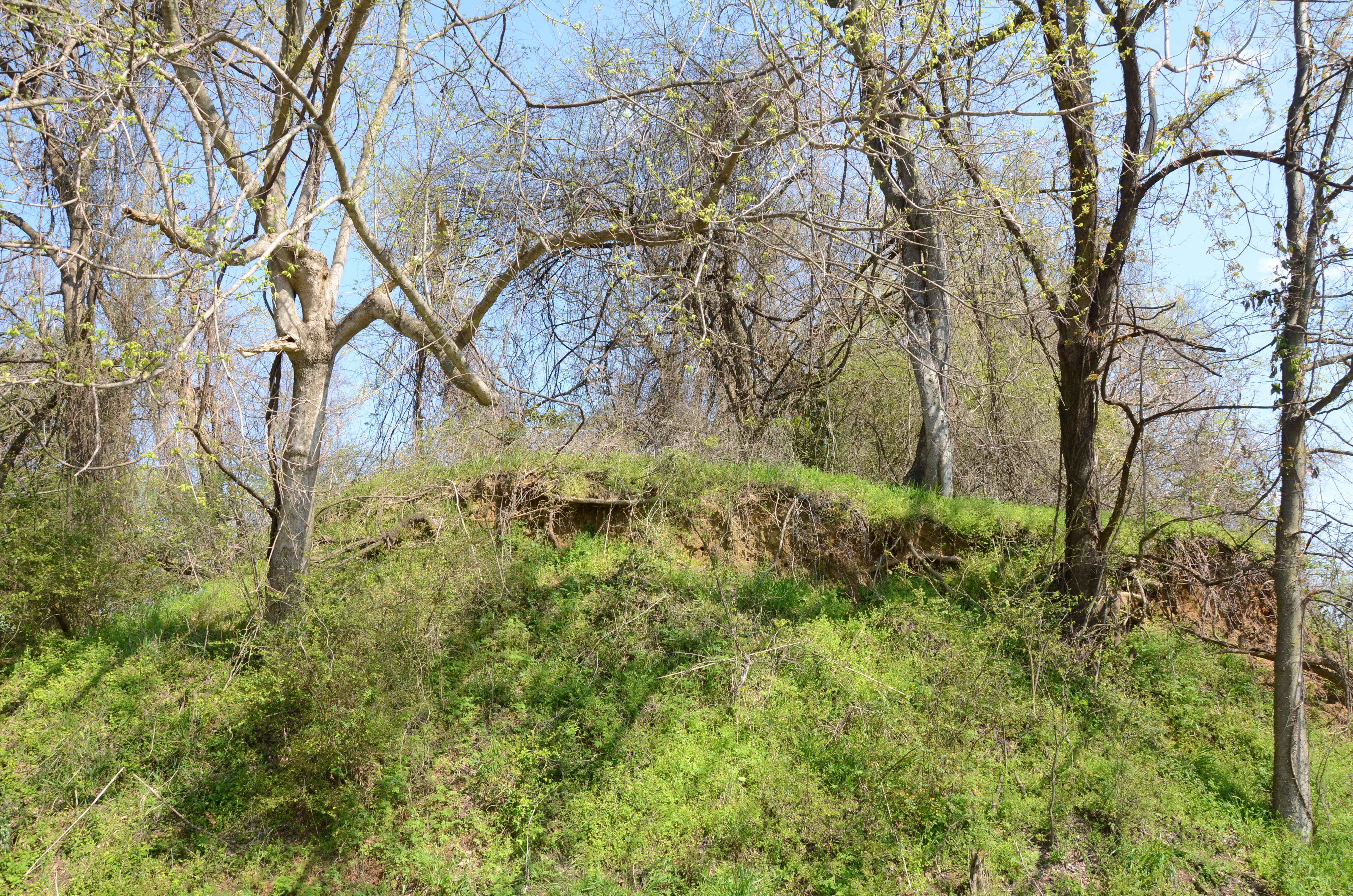
The battle's climax came on Graveyard Hill, where Price's Missouri troops finally overran Battery C on their third attempt. But the Union gunners had spiked one cannon and removed firing supplies before retreating. Holmes and Price reached the hilltop to find captured guns they could not use. It was a critical moment: if Confederate artillery could be hauled up the hill, they could shell the Union defenses into submission. Instead, Prentiss ordered every available gun to fire on Graveyard Hill -- the other three batteries, the gunboat USS Tyler, reserve cannons, and artillery on the Lower Little Rock Road. Price's men, battered by converging fire, charged downhill toward Helena itself but were driven back. Holmes issued confused orders that worsened the situation, sending the 8th Missouri to attack Fort Curtis in a charge that triggered an unplanned general assault. The Union guns concentrated on this movement and inflicted devastating casualties. By 10:30 am, Holmes ordered a withdrawal.
Dueling Generals
The butcher's bill told the story of a botched attack. Holmes lost 1,636 men: 173 killed, 687 wounded, and 776 missing. Prentiss lost about 220 of his 4,100 defenders. The 2nd Arkansas Infantry Regiment (African Descent) suffered the first combat wounds of African American soldiers in Arkansas during the war. The recriminations began immediately. Holmes accused Colonel Dandridge McRae of misbehavior before the enemy, though a court-martial cleared McRae. Holmes blamed Price for not reinforcing Fagan; Price blamed Holmes for the entire debacle. Both Holmes and Marmaduke accused Walker of dereliction of duty for his feeble performance. The feuds intensified during the subsequent campaign to defend Little Rock. On September 6, 1863, Marmaduke challenged Walker to a duel and killed him -- one of the few instances of a general killing another general in American military history. Union troops captured Little Rock four days later. The Helena Confederate Cemetery, where fallen soldiers from the battle are buried, is listed on the National Register of Historic Places.
From the Air
Located at 34.526°N, 90.597°W on the Mississippi River in Phillips County, Arkansas. Helena sits on Crowley's Ridge, a narrow geological formation that rises above the flat Delta plain -- the ridge provided the elevated battery positions that shaped the battle. The Mississippi River forms the eastern boundary of the town. Helena-West Helena Municipal Airport (KHEE) is nearby. Memphis International (KMEM) is approximately 65 nm north. The battlefield batteries on Crowley's Ridge are visible as elevated wooded knobs above the surrounding lowland. Best viewed at 3,000-5,000 feet AGL.