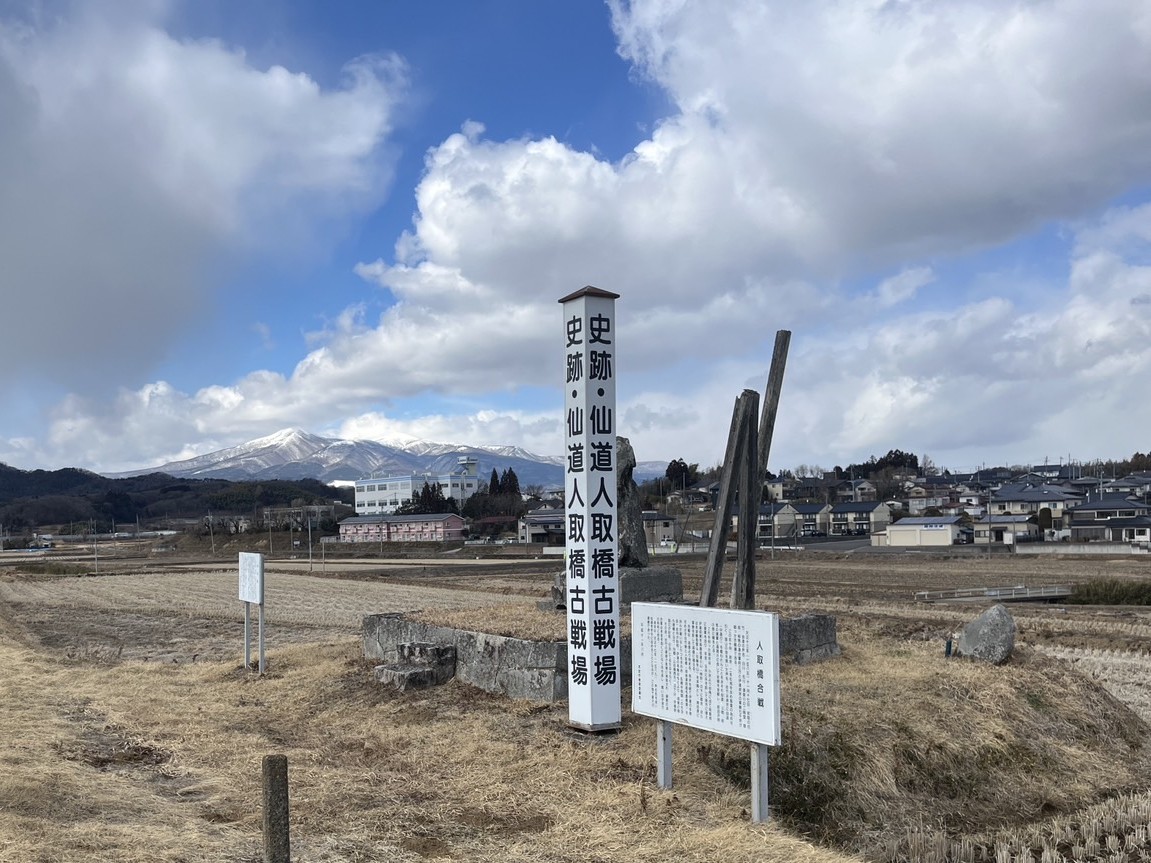
The Battle of Hitotoribashi: A Son's Vengeance Against Impossible Odds
The father's body was barely cold when the son went to war. Date Terumune, lord of the Date clan in northern Japan, was abducted and killed near the Abukuma River by Nihonmatsu Yoshitsugu in 1585. His heir, Date Masamune, was eighteen years old, had already lost the sight in his right eye to childhood smallpox, and had been leading the clan for barely a year. None of that mattered. Masamune swore vengeance, and in January 1586, he marched his 7,000 warriors toward the Nihonmatsu stronghold at Hitotoribashi. Waiting for him were 30,000 troops drawn from five allied clans. The odds were roughly four to one against him. Masamune attacked anyway.
Blood at the Abukuma
The roots of the battle lay in a kidnapping gone wrong. Date Terumune had retired from leadership of the Date clan in 1584, passing control to his seventeen-year-old son Masamune. Relations between the Date and the neighboring Nihonmatsu clan had been hostile for years. When Nihonmatsu Yoshitsugu seized Terumune during a meeting -- likely intending to use him as a hostage -- the situation escalated beyond recovery. Terumune was killed near the banks of the Abukuma River, either during the abduction attempt or shortly after. The exact circumstances remain debated by historians, but the outcome was absolute: Masamune now had a blood debt to collect, and the Nihonmatsu clan had united every rival family in the region against the young Date lord.
Five Clans Against One
Nihonmatsu Yoshitsugu did not wait passively for Masamune's attack. He assembled a formidable coalition: the Soma, Satake, Nikaido, Ashina, and Iwaki clans joined forces, forming an army of approximately 30,000 soldiers. Their combined strength dwarfed the Date forces more than fourfold. The allied army marched toward Motomiya Castle, a strategic position in what is now central Fukushima Prefecture, where the Abukuma River cuts through the Nakadori valley. Masamune, commanding just 7,000 troops, chose not to meet the coalition in open battle. Instead, he prepared a defensive strategy anchored on Motomiya Castle, constructing a series of fortifications along the routes leading to the stronghold. He was outnumbered, but he held the terrain.
The Bridge That Bore a Name
The fighting at Hitotoribashi was fierce. The coalition forces pressed the Date army hard, pushing Masamune's defenders back toward the walls of Motomiya Castle. In the chaos of battle, warriors on both sides fell. Among the notable casualties, the Iwaki clan suffered heavy losses, and their general Kubota Juro was killed after cutting through many of the Date-allied forces. By nightfall, the situation looked grim for Masamune. His smaller force had been driven into a defensive posture, and the five-clan alliance held the field. A lesser commander might have considered surrender or retreat. Masamune held his position through the night, waiting inside the fortifications he had prepared.
An Alliance Unravels at Dawn
Morning brought a reversal that no battle plan could have predicted. The Date forces woke to find the battlefield emptying. The Satake clan, the coalition's most powerful member, had received urgent news from home: in their absence from Hitachi Province to the south, Hojo clan partisans under Edo Yoshimichi and Satomi Yoshiyori had attacked Satake territory. Worse still, within the coalition's own camp near Motomiya Castle, the Satake's senior commander Onozaki Yoshimasa had been assassinated during the night. Faced with war on two fronts and the loss of a key leader, the Satake withdrew. Without the Satake backbone, the remaining allies -- Soma, Nikaido, Ashina, Iwaki -- lost their cohesion and scattered. Masamune had survived against four-to-one odds, not through battlefield dominance but through the fragility of his enemies' alliance.
The Dragon Rises
Hitotoribashi did not end Masamune's wars -- it began them. The young lord who held Motomiya Castle against five clans would spend the next several years conquering his way across northern Japan, eventually ruling one of the largest domains in the Tokugawa shogunate. He would found the city of Sendai, establish trade routes across the Tohoku region, and earn the epithet Dokuganryu -- the One-Eyed Dragon of Oshu. But all of that lay ahead. At Hitotoribashi in January 1586, he was simply a teenager fighting for survival and revenge beside the Abukuma River, outnumbered and cornered, waiting for dawn to reveal whether his enemies' coalition would hold. It did not. The battlefield near Motomiya, in what is now Fukushima Prefecture, is marked today as a historic site -- a quiet spot in the valley where a blood feud between samurai clans decided the trajectory of an entire region.
From the Air
Located at 37.517°N, 140.400°E near Motomiya, Fukushima Prefecture, in the Nakadori valley along the Abukuma River. From altitude, the battlefield area appears as agricultural flatland in the valley between mountain ranges, with the Abukuma River winding through the terrain. Motomiya is a small city visible along the Tohoku Shinkansen corridor between Koriyama and Fukushima city. Best viewed at 2,000-3,000 feet AGL. Fukushima Airport (RJSF) lies approximately 20 nautical miles to the south. The Abukuma River and the Tohoku Expressway provide clear visual navigation references through the valley.