Battle of Hoa Moc
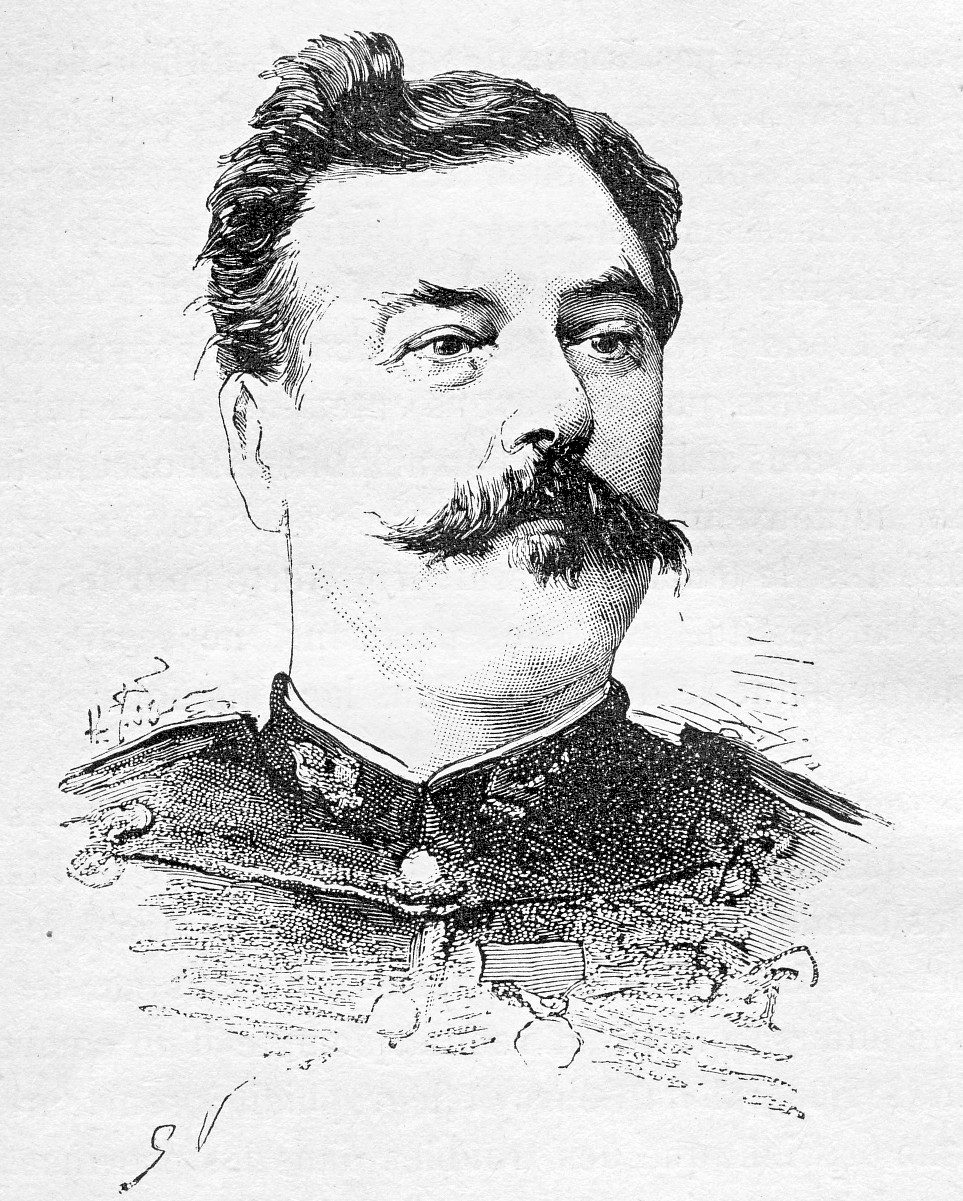
Colonel Giovanninelli told his brigade he was leading them 'into known dangers, by a known way.' It was late February 1885, and the French 1st Brigade were pushing up the Clear River in northern Tonkin, deep in the forested highlands of what is now Tuyen Quang Province, Vietnam. Fifty kilometers ahead, 600 legionnaires and Tonkinese auxiliaries were running out of time. The garrison at Tuyen Quang had held for three months against seven major assaults, losing a third of its strength. Unless relief arrived, the post would fall. Between the brigade and the garrison stood 6,000 Chinese and Black Flag soldiers entrenched in three lines across the Yu Oc gorge, near the village of Hoa Moc. What followed would become the war's costliest single engagement.
The Long Road to the Gorge
The Sino-French War had been grinding through Tonkin since August 1884, and by February 1885, the siege of Tuyen Quang had become its most desperate chapter. Liu Yongfu's Black Flag Army and Tang Jingsong's Yunnan Army had methodically sapped up to the French defenses, breaching walls with mines and launching assault after assault. Commander Marc-Edmond Domine's garrison -- 400 Foreign Legion troops and 200 Tonkinese -- beat back every attack, but 50 of their men were dead and 224 wounded. The post was dying by inches. After capturing Lang Son on 13 February, General Briere de l'Isle redirected Giovanninelli's brigade for the relief march. The soldiers covered the distance from Lang Son to Hanoi in five days -- a forced march that whittled 3,000 men down to 2,400 through sheer exhaustion. Gunboats of the Tonkin Flotilla then ferried them up the Red and Clear Rivers to Phu Doan, where a thousand reinforcements from Son Tay and Hung Hoa brought the column back up to fighting strength.
No Way Around
Giovanninelli and Briere de l'Isle knew the Chinese had fortified the Yu Oc gorge. They considered a flanking march along the Song Chay River, approaching Tuyen Quang from the west. They rejected it. Leaving the river meant losing the gunboats' firepower. It meant exposing the column's rear to the entrenched enemy. It meant marching through unmapped terrain on bad paths, only to face equally formidable siege lines at the other end. There was no path to Tuyen Quang that did not run through a fight. Better, the commanders reasoned, to fight on ground they already knew. Colonel Jacques Duchesne had marched this same route in November 1884 before the Battle of Yu Oc. On 28 February, the brigade crossed the Song Chay and camped five kilometers below Hoa Moc, at the mouth of the gorge. Ahead of them, the Chinese and Black Flag forces under Liu Yongfu's personal command held three successive trench lines, their flanks anchored on the river to the east and impassable mountains to the west. Frontal assault was the only option.
Twenty-Four Hours of Blood
Late on the morning of 2 March, the French approached trenches that appeared deserted -- flags down, no movement. Giovanninelli sent a platoon of Tonkinese riflemen forward to probe. A volley at point-blank range cut down 20 of the 30 men. The defenders were waiting. The first assault went in early afternoon: Comoy's battalion of Algerian Turcos charged the left flank. A mine detonated beneath their feet as they advanced, scattering bodies across the approach. Captain Rollandes fell mortally wounded. The attack collapsed. Mahias's marine infantry tried next and were shredded by close-range fire. A third assault, combining Mahias's survivors with Lambinet's fresh battalion, finally broke into the forward trenches. But the cost was staggering. That evening, Lieutenant Huguet observed General Briere de l'Isle sitting behind an embankment with his head in his hands, contemplating retreat. Giovanninelli, watching stretcher after stretcher of bloodied soldiers file past, could only repeat in a broken voice: 'My children! My poor children!' Overnight, the Chinese counterattacked to recover their lost trenches. Comoy's Turcos met them with bayonets in vicious hand-to-hand fighting and held.
Empty Trenches at Dawn
On the morning of 3 March, Giovanninelli committed everything he had left. The entire brigade advanced at a trot, then broke into a run, bracing for the killing volley. It never came. The Chinese and Black Flags had abandoned their positions before dawn, melting into the forests. The way to Tuyen Quang lay open. French casualties at Hoa Moc stood at 76 dead and 408 wounded -- the heaviest single-day toll of the entire Sino-French War. Six officers were killed or mortally wounded, and 21 more were wounded. Mahias's marine infantry battalion, which had entered the campaign 600 strong with 19 officers, could now muster only 307 men and 6 officers. Many of the wounded, evacuated by gunboat to the overcrowded military hospitals at Dap Cau and Thi Cau, did not survive.
The Forgotten Battle
That same day, the relieving force entered Tuyen Quang and shook hands with the garrison's surviving defenders. Briere de l'Isle's words to the besieged troops became famous across France: 'Today, you enjoy the admiration of the men who have relieved you at such heavy cost. Tomorrow, all France will applaud you!' France did applaud -- but it applauded the garrison's defense, not the relief column's sacrifice. Domine's stand at Tuyen Quang became the defining image of the Sino-French War in French memory. The battle of Hoa Moc, the engagement that actually broke through to save the garrison, faded into near-obscurity. Some of the survivors carried that bitterness for years. All they had for consolation was Briere de l'Isle's order of the day, which closed: 'Taking no heed of the number of your adversaries, you stormed the positions of Hoa Moc after a struggle lasting nearly twenty-four hours. The outcome justified your sacrifices.' For the men who charged those trenches, and especially for the 484 who fell, the justification was cold comfort.
From the Air
Located at 21.82N, 105.22E along the Clear River (Song Lo) in Tuyen Quang Province, northern Vietnam. The Yu Oc gorge is surrounded by densely forested limestone hills. From the air, the Clear River is the primary landmark, winding through narrow gorges. Nearest airport: Noi Bai International (VVNB) in Hanoi, approximately 130 km to the southeast. Recommended viewing altitude: 3,000-5,000 feet to appreciate the gorge terrain. The Red River Delta is visible to the east; mountainous terrain extends north toward the Chinese border.