Battle of Inverlochy (1645)
By the end of January 1645, the Marquess of Montrose was trapped. His Royalist force -- a motley alliance of Highlanders and Confederate Irish troops -- had been reduced to fewer than two thousand men by sickness, desertion, and a brutal winter campaign. To the north, the Earl of Seaforth blocked the route at Inverness. To the south, the Marquess of Argyll, head of Clan Campbell and one of the most powerful men in Scotland, sat with a large army under the walls of Inverlochy Castle. Further south still, more government forces were assembling. Montrose did the one thing nobody expected: he marched south, through the mountains, in winter, and attacked.
The March Nobody Believed Possible
The decision to attack Argyll was driven by both strategy and clan politics -- Argyll's forces threatened the lands of several of Montrose's key supporters. The flank march that followed became one of the legendary feats of the Scottish wars. Montrose's men moved south through the Great Glen and then struck west through terrain that was difficult in summer and potentially lethal in winter. They crossed snowbound passes, forded icy rivers, and navigated ground so rough that the watercourses leading from Glen Buck to Carn na Larach -- terrain the army traversed -- remain challenging for fit hillwalkers even today. The Confederate Irish troops, two thousand experienced soldiers sent from Ireland under Alasdair Mac Colla at the instigation of the Earl of Antrim, had been hardened by years of warfare. The Highlanders, many of them from Clan Donald, were motivated by generations of enmity with the Campbells. Together, they arrived at Inverlochy on the morning of 2 February 1645 -- exhausted, half-starved, and ready to fight.
Dawn Under the Castle Walls
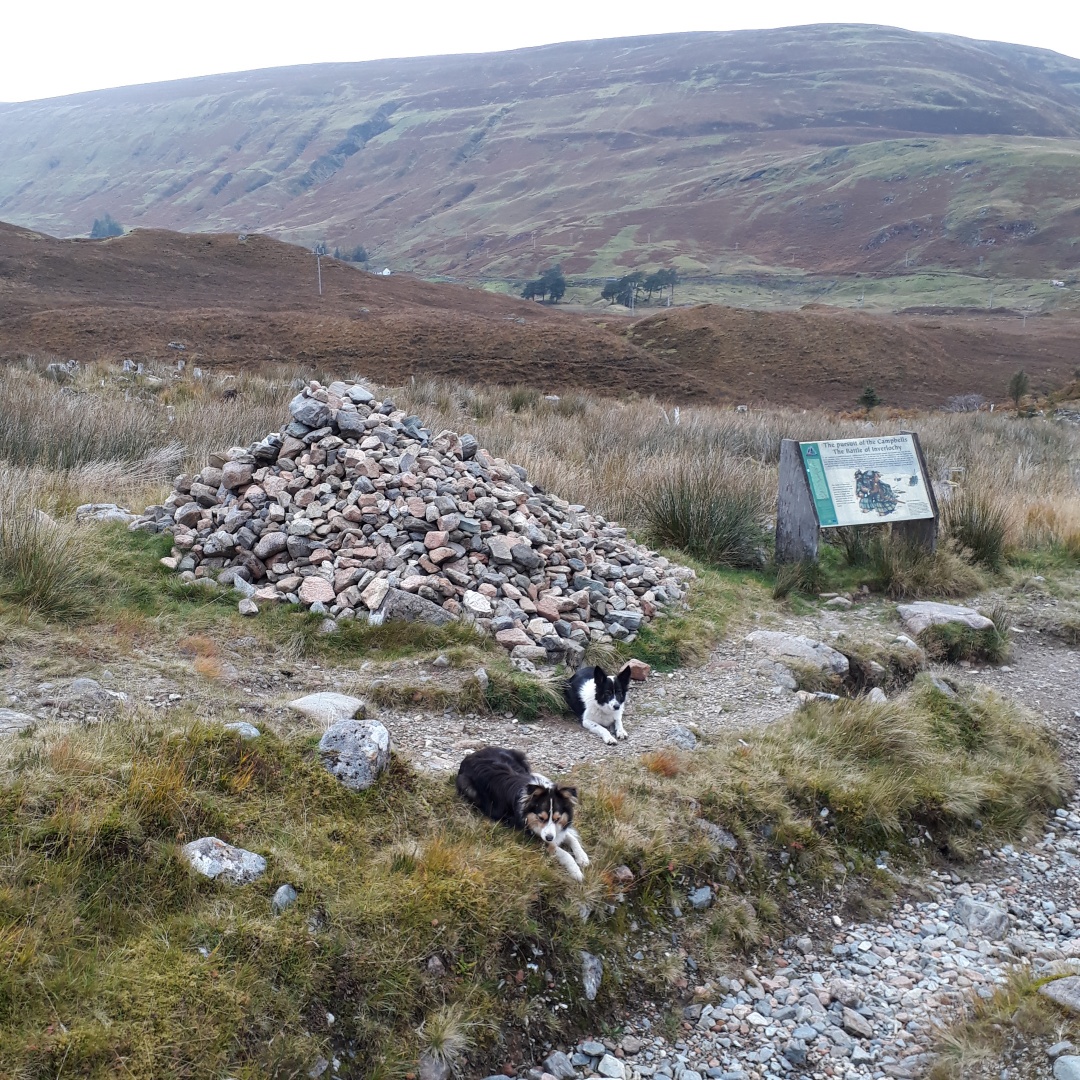
Argyll's force was composed of his own Campbell regiment, eight companies of Lowland foot sent by the government general William Baillie, and a substantial number of Campbell clan levies. They were camped beneath the thirteenth-century walls of Inverlochy Castle, confident that Montrose was pinned far to the north. The Royalist attack at dawn came as a complete shock. Argyll himself, reportedly suffering from a dislocated shoulder, watched the battle from his galley on Loch Linnhe rather than commanding from the field. The rout was comprehensive. The Campbell forces were largely destroyed, and a cairn marking where the MacDonalds finally stopped pursuing and killing the fleeing Campbells still stands in the landscape. The victory secured the cooperation of the Marquess of Huntly, whose Clan Gordon levies made him one of the most powerful nobles in northern Scotland. Historic Scotland designated the battlefield in 2011, recognizing its national significance.
From the Air
Battle of Inverlochy (1645) site at 56.8313N, 5.0791W lies near Inverlochy Castle ruins, approximately 2 nm northeast of Fort William. The castle and battlefield are between the River Lochy and Loch Linnhe. Best viewed at 1,500-3,000 ft. Fort William heliport is nearby. The Great Glen stretching northeast provides strong orientation.