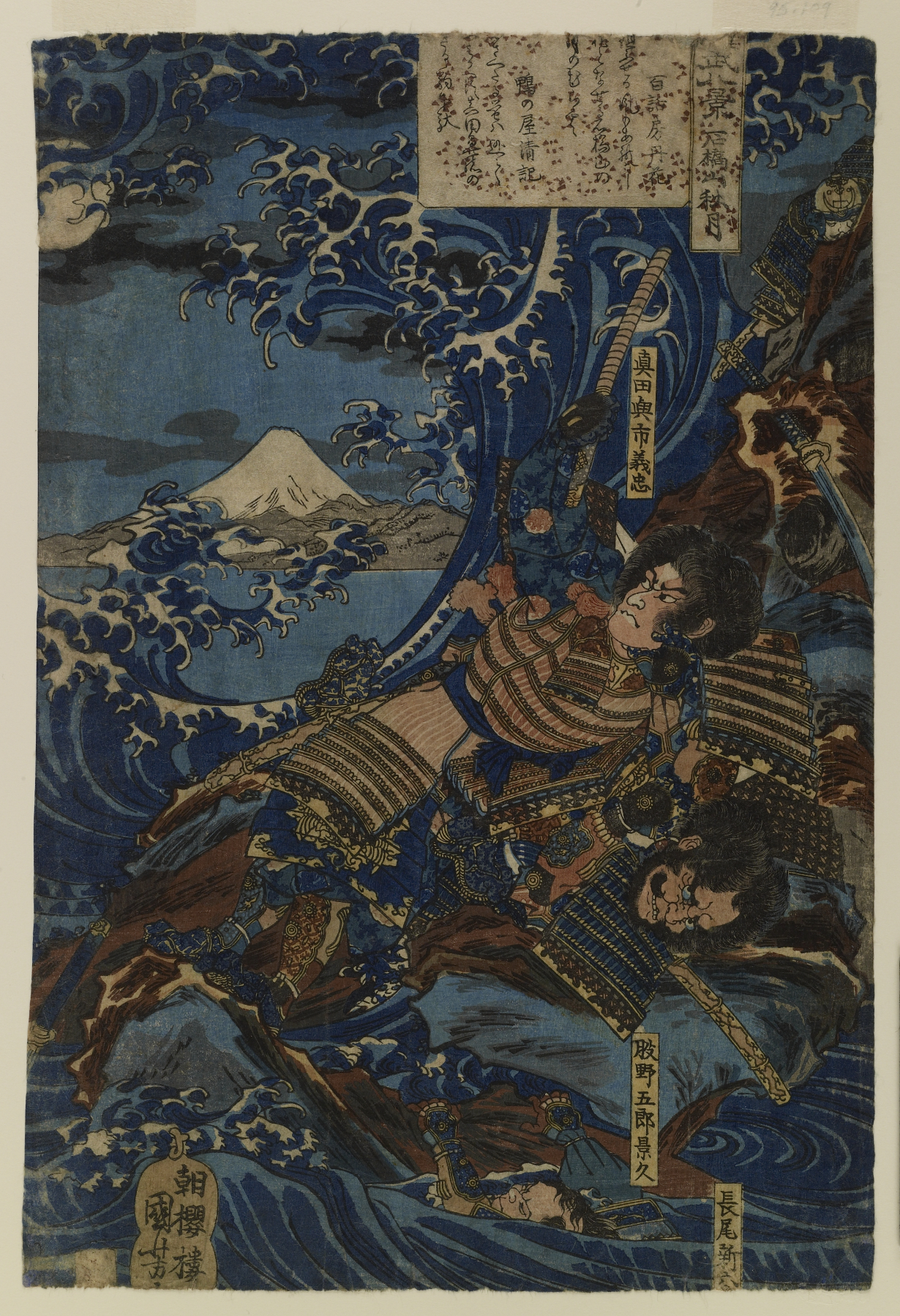
Battle of Ishibashiyama
Three hundred horsemen against three thousand -- and the man who lost would go on to reshape Japan forever. On September 14, 1180, in the rain-soaked hills southwest of present-day Odawara, Minamoto no Yoritomo raised an imperial decree as his battle standard on the slopes of Ishibashiyama. He had spent twenty years in exile, married into the powerful Hojo clan, and gathered just enough allies to attempt a rebellion against the dominant Taira clan. The odds were catastrophic. But what happened on this hillside, and in the desperate flight that followed, set in motion the founding of Japan's first shogunate at Kamakura -- and with it, seven centuries of feudal rule.
Twenty Years in Waiting
Yoritomo's road to Ishibashiyama began in 1160, when his father Minamoto no Yoshitomo was killed in the failed Heiji Rebellion. Yoritomo, just thirteen years old, was exiled by the Taira clan leader Taira no Kiyomori. For two decades he lived as a political prisoner in Izu Province, devoting himself to Buddhist scripture. During this exile he married Hojo Masako, daughter of the local strongman Hojo Tokimasa, binding himself to a clan that would become his military backbone. When Prince Mochihito issued a call to arms against the Taira in May 1180, Yoritomo finally had his pretext. He summoned potential allies one by one to secret meetings, telling each man, 'I am telling you this because I rely solely on you.' The flattery worked on some. Others scoffed -- one retainer compared Yoritomo's ambitions to 'a mouse trying to catch a cat.'
Fire at Yamaki Manor
Yoritomo's uprising began not at Ishibashiyama but ten days earlier, with a midnight raid on Yamaki Manor. His target was Yamaki Kanetaka, the Taira-appointed deputy governor of Izu who had pushed the Hojo out of power. Yoritomo timed his attack for the night of the Mishima Shrine festival, when many of Kanetaka's retainers would be away at the celebrations or drinking at a riverside inn. When his adviser suggested taking a side road to avoid festival crowds, Yoritomo refused: 'This is the beginning of our uprising, and we shouldn't use a side road.' The Sasaki brothers, delayed by flooding, arrived exhausted on the day of the attack, and Yoritomo wept with gratitude. That night, his forces stormed the manor, killed Kanetaka, and set the buildings ablaze. The flames were the signal Yoritomo had been watching for from a distance -- proof that his rebellion had begun.
Outnumbered on the Slopes
Even with Yamaki defeated, Yoritomo could muster only 300 cavalry. Critical reinforcements from the Miura clan never arrived -- heavy rains had flooded the Sakawa River, cutting them off. When the Taira dispatched Oba Kagechika with 3,000 horsemen, Yoritomo was pinned on the slopes of Ishibashiyama with no escape route and no reserves. The battle was swift and devastating. Yoritomo's small force was overwhelmed, and the survivors scattered into the dense forests of the Hakone Mountains. Yoritomo himself fought with bow and arrow during the retreat, but the situation was hopeless. His loyal retainer Doi Sanemitsu, whose territory this was, made a desperate proposal: he would hide Yoritomo alone while everyone else dispersed to fight another day. They parted in tears, not knowing if they would meet again.
The Cave and the Compassionate Enemy
What saved Yoritomo was an act of mercy from the opposing side. As the Oba army combed the mountains, a Taira samurai named Kajiwara Kagetoki found Yoritomo's hiding place but chose to conceal it. He led the search party away, insisting there were no footprints on that particular mountain and pointing them toward a different slope. Legend places this episode at the Shishido Cave in what is now Yugawara, named for a bird that flew suddenly from the cave mouth, convincing the pursuers that no one could be hiding inside. Yoritomo eventually reached Hakone Shrine, where the head priest Gyojitsu sheltered him. From Cape Manazuru, Yoritomo fled by sea to the Boso Peninsula in Awa Province. Today, a shrine called Sanadaraisha stands on the battlefield site, and much of the surrounding hillside is covered by orange groves -- a tranquil landscape that belies the desperation once felt here.
From Ruin to Shogunate
Yoritomo's defeat at Ishibashiyama was total, but it was not final. Reuniting with the Miura clan and other allies in Awa Province, he marched north through the Boso Peninsula, gathering warriors as he went. By the end of September 1180, his army had swelled to tens of thousands. On October 6, he entered Kamakura. Weeks later, at the Battle of Fujigawa, he decisively defeated a Taira force sent from Kyoto. The commanders who had beaten him at Ishibashiyama met grim ends: Oba Kagechika was executed, and his ally Ito Sukechika committed suicide after capture. Yoritomo went on to destroy both the Taira clan and his rivals within the Minamoto, establishing the Kamakura Shogunate -- the first military government in Japanese history. The feudal system he set in motion would endure until the 17th century, all of it traceable to a rainy hillside where 300 riders stood against impossible odds.
From the Air
Located at 35.221N, 139.140E in southwest Odawara, Kanagawa Prefecture. The battlefield sits in hilly terrain between the coastal plain and the Hakone Mountains. From the air, look for the ridgeline of Ishibashiyama rising above the surrounding orange groves and residential areas south of Odawara city center. Nearest major airports: Tokyo Haneda (RJTT), approximately 65 km northeast; Mt. Fuji Shizuoka Airport (RJNS), approximately 90 km west. The Hakone mountain range dominates the western skyline. Approach from the east over Sagami Bay for the best perspective on how the terrain channeled the battle.