Battle of Jargeau
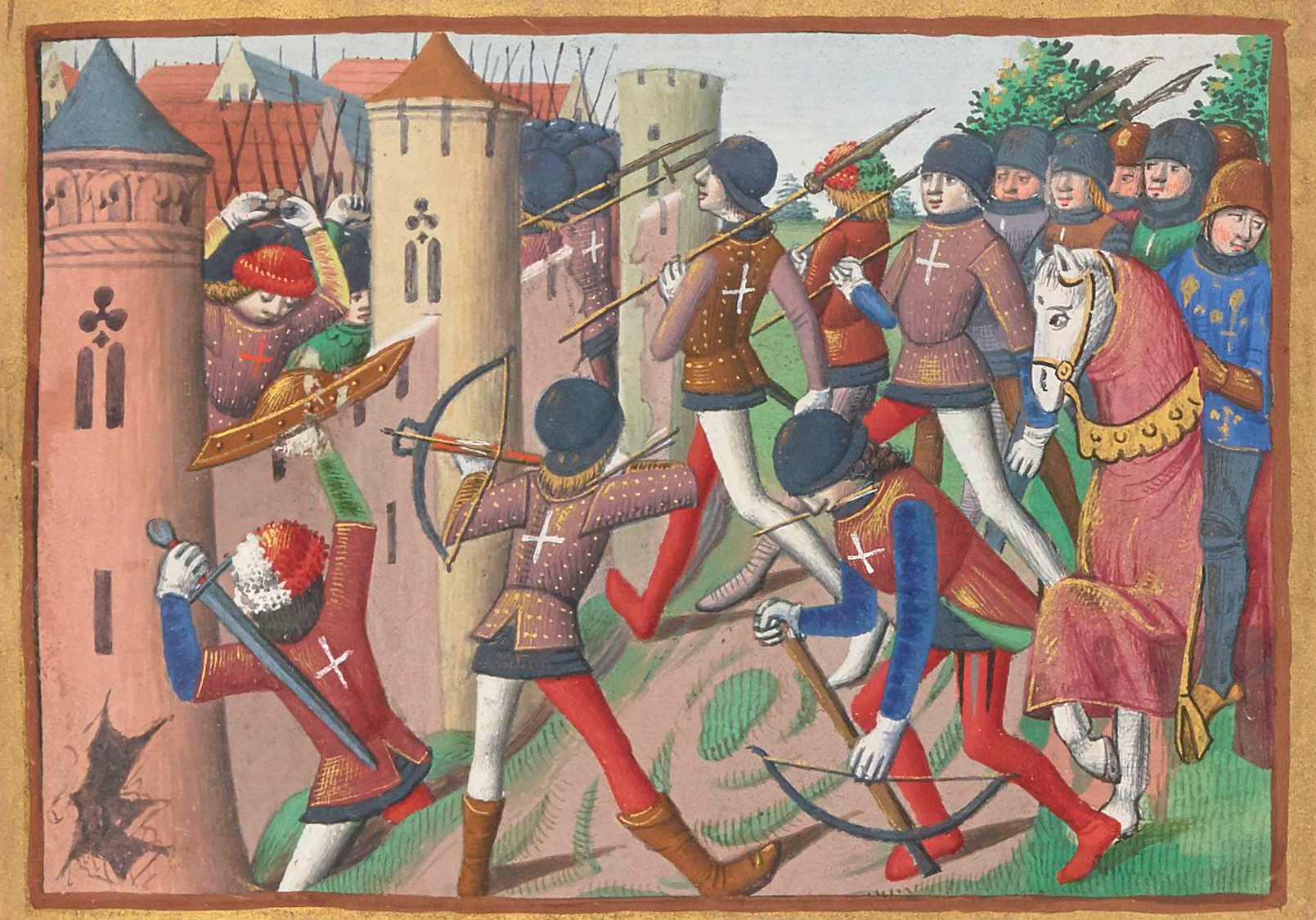
A stone projectile struck Joan of Arc's helmet and knocked her to the ground. She got back up. It was June 12, 1429, and the seventeen-year-old who had arrived at the French court just three months earlier was leading her first offensive assault, storming the walls of Jargeau, a small fortified town ten miles east of Orleans on the southern bank of the Loire. The battle lasted two days. When it ended, the English garrison was destroyed, and the Loire Campaign that would reshape the Hundred Years' War had begun in earnest.
A River Held Hostage
By late 1428, the English and their Burgundian allies controlled nearly all of France north of the Loire. Strategic bridges along the river had been seized one by one, and Orleans, the last major city still in French hands, was under siege. If the English secured the entire Loire valley, southern France, the final territory of the Dauphin Charles, would be exposed to invasion. The bridge at Orleans had been destroyed during the siege. Every other crossing, including the fortified bridge at Jargeau, remained in English hands. Control of the river meant control of France's future, and in early June 1429, French military leaders meeting in the presence of Charles VII decided to clear the valley. The army assembled at Orleans, where Joan rejoined them on June 9. That same day, they marched for Jargeau.
The Town on the Bank
Jargeau was no great fortress, but it was well defended. Walls ringed the town, punctuated by towers and fortified gates. A ditch ran just outside the walls. Suburbs had grown up beyond the defenses, and a single fortified bridge crossed the Loire to the north bank, making the town a valuable strategic chokepoint. Approximately 700 English troops held the position, armed with gunpowder weapons. Their commander was William de la Pole, the Earl of Suffolk. The French army approaching them included some of the most celebrated captains of the age: Jean d'Orleans, known as the Bastard of Orleans; Gilles de Rais, whose name would later become synonymous with horror; the fierce mercenary La Hire; and Jean Poton de Xaintrailles. But the figure who drew the most attention was the peasant girl carrying the standard.
Two Days of Violence
The French struck the suburbs first on June 11. English defenders poured out from the walls to meet them, and the French fell back. Joan rallied the troops using her banner, and the English retreated behind their fortifications. The French spent the night lodged in the captured suburbs. The next morning, Joan called on the garrison to surrender. They refused. French artillery, primitive cannons and siege engines, opened a bombardment that toppled one of the town's towers. Suffolk attempted to negotiate a surrender through La Hire, a captain considered too minor for such talks. The breach of protocol infuriated the French commanders. Joan then led the assault on the walls herself. When the stone struck her helmet and sent her crashing to the ground, the attack might have faltered. Instead she rose and pressed forward. The English suffered catastrophic losses, and the French executed those they captured.
The Campaign That Changed Everything
Jargeau was the first domino. In the weeks that followed, French forces swept the Loire valley, recapturing bridge after bridge. Sir John Fastolf, who had left Paris on June 8 with a reinforcing army of several thousand, arrived too late to save the English position. The Loire Campaign culminated in the Battle of Patay on June 18, where the English field army was shattered. Charles VII, emboldened by these victories, marched to Reims and was crowned king on July 17, 1429, legitimizing his claim to the French throne. None of it would have happened without the momentum that began at Jargeau. Today the town sits quietly on its riverbank, its medieval walls long gone, the Loire flowing past as it has for millennia. The bridge that once controlled the fate of a kingdom now carries ordinary traffic. But the place where a teenage girl got up after being knocked down, and refused to stop fighting, left a mark that no amount of time can erase.
From the Air
Coordinates: 47.867N, 2.122E. Jargeau sits on the south bank of the Loire River, about 10 miles east of Orleans. The town is visible along the river corridor. Recommended viewing at 2,000-4,000 ft AGL. Nearest airports: Orleans-Bricy (LFOJ) and Orleans-Saint-Denis-de-l'Hotel (LFOZ).