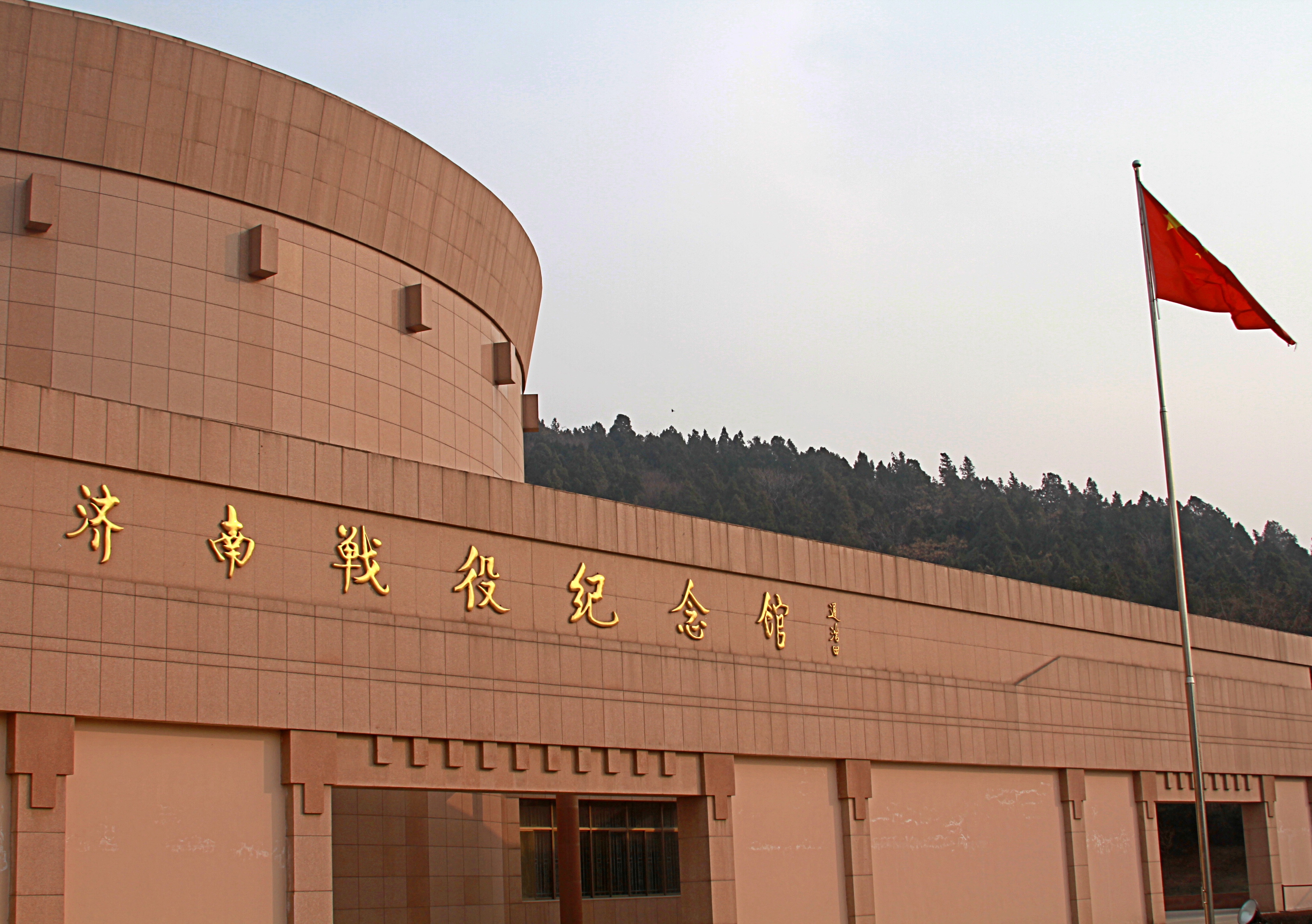
Battle of Jinan
For eight days in September 1948, the city of Jinan became the hinge on which the Chinese Civil War turned. The Kuomintang had held Shandong's capital as a transportation hub and urban stronghold with a population of roughly 600,000 people. But by summer, the Communist Eastern China Field Army under Chen Yi had severed the railway lines to the south, leaving the garrison isolated. When the siege began on September 16, the defenders found themselves cut off from reinforcement. By September 24, it was over. The Communist capture of Jinan did not merely remove a city from the Nationalist column -- it set the stage for the massive Huaihai Campaign that would effectively decide the war.
An Island in a Red Sea
By the summer of 1948, the military situation for the Kuomintang in Shandong had deteriorated from difficult to desperate. Communist forces controlled much of the surrounding countryside, and the capture of railway lines south of Jinan severed the city's lifeline to Nationalist-held territory. The garrison was effectively marooned -- an urban island surrounded by hostile territory. Jinan was not just any city. As the capital of Shandong Province, it was a symbol of Nationalist authority in the north. Its position at the junction of major rail lines made it a critical transportation hub. Losing it would not merely cost territory; it would signal to friend and foe alike that the Nationalists could no longer hold the north.
Eight Days in September
The Eastern China Field Army launched its assault on September 16, 1948. The Communist forces, commanded by Chen Yi, surrounded the city and pressed inward with methodical intensity. What made the siege especially damaging to the Nationalists was the defection of key officers within the garrison. According to accounts, letters from relatives who had been captured by the Communists may have prompted at least one critical defection, opening gaps in the defense that the besiegers exploited. Street by street, the city fell. The old moat that had once protected Jinan from medieval invaders offered no barrier to modern assault. By September 24, after just eight days of fighting, the Communist forces had taken the city entirely.
The Domino That Started the Avalanche
The fall of Jinan reverberated far beyond Shandong. It demonstrated that the Communists could successfully besiege and capture a major urban center -- something that had been in doubt among observers both domestic and international. The victory freed up the Eastern China Field Army for redeployment southward, directly enabling the Huaihai Campaign that began in November 1948. That campaign, one of the largest battles of the twentieth century, would shatter the Nationalist military position in central China. In this light, Jinan was not simply a city lost; it was the first stone pulled from the wall. The Liberation Pavilion, erected in 1986 at the southeastern corner of the old city moat where Communist troops breached the wall, stands as the city's most visible memorial to those eight days that changed its history.
Traces of the Battle
Modern Jinan bears subtle traces of its civil war past. The Liberation Pavilion rises 34 meters above the old moat, its classical Chinese architecture set on a pedestal decorated with Socialist Realist bas-reliefs depicting the battle. The gilded characters of its name were taken from the handwriting of Marshal Chen Yi himself. Nearby, Daming Lake preserves its own memory of the conflict -- the Moon-lit Pavilion on the lake's northeastern shore connects to an escape tunnel built by the warlord Han Fuju, which Kuomintang General Wang Yaowu used to flee the city during the final hours of the siege. The tunnel, the pavilion, and the lake itself all predate the battle by centuries, but September 1948 added another chapter to their long histories.
From the Air
Located at approximately 36.67N, 117.0E in the heart of Jinan, Shandong. Jinan Yaoqiang International Airport (ZSJN) is roughly 30 km northeast. The battle centered on the old walled city area, now marked by the city moat and Daming Lake to the north. The Liberation Pavilion on the southeast corner of the moat is a notable landmark. From the air, the moat's rectangular outline and the lake provide orientation points.