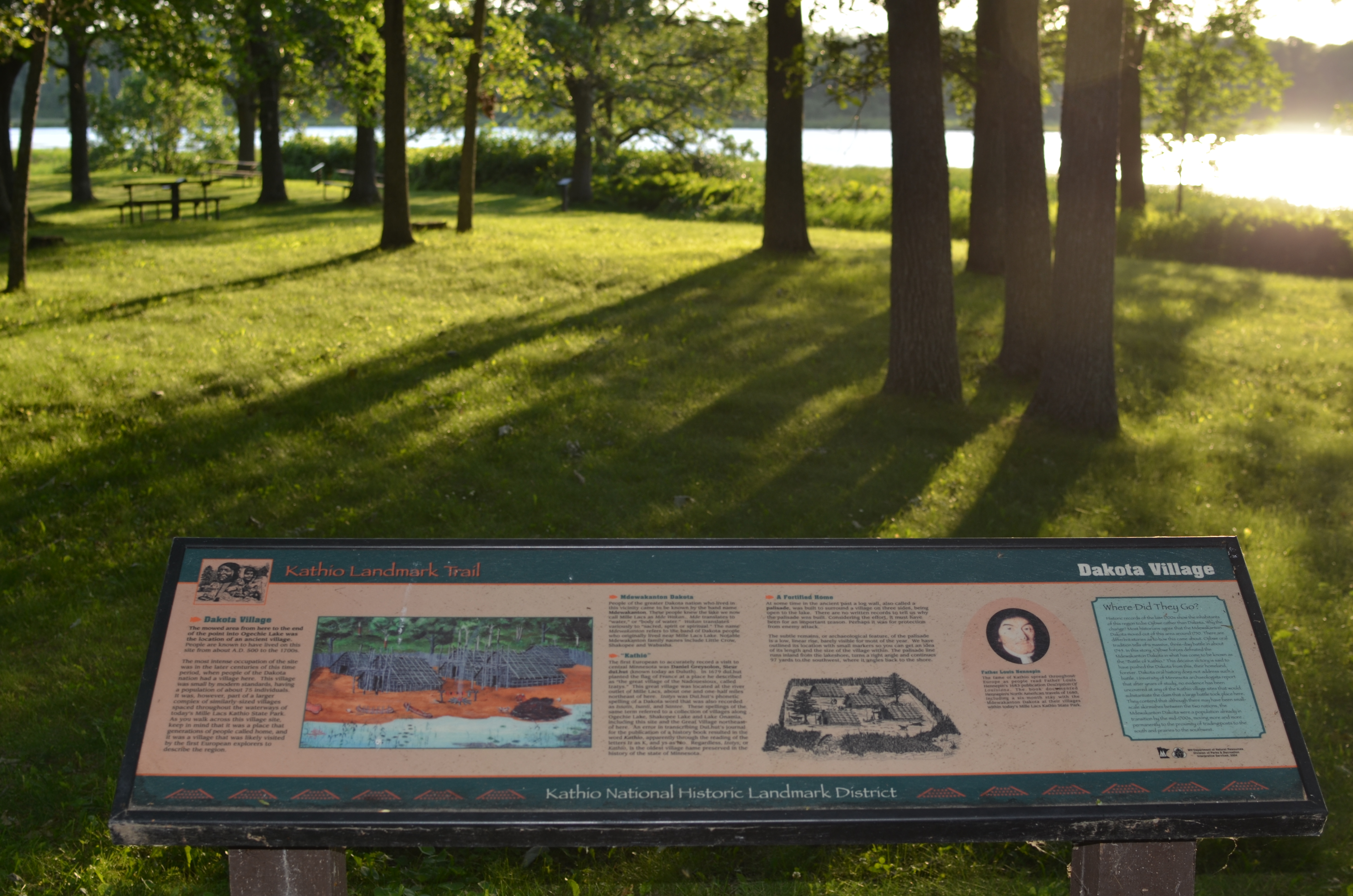
Battle of Kathio
An old man sat in his lodge at Fond du Lac, on the shore of what is now Duluth, and counted his losses. He had sent four sons south to the Dakota villages near Mille Lacs Lake. Three came home in coffins -- or rather, did not come home at all. The fourth returned only to report the deaths. This is how the Ojibwe oral tradition begins the story of the Battle of Kathio, also called the Battle of Izatys, fought around 1750 at the source of the Rum River. It is a story about grief, patience, and the two years a father spent hunting and gathering ammunition before he sent his tobacco and war club to every Ojibwe village he could reach, asking for warriors to accompany him "in search of his sons." The response was overwhelming. The war party that assembled at Fond du Lac would alter the political geography of what became Minnesota.
A Father's Reckoning
The oral tradition is precise in its emotional architecture. The four brothers had made regular trips to visit the Dakota, returning with gifts -- a relationship built on trade and familiarity. When the first son died in a quarrel over a Dakota woman, the remaining three brothers returned home briefly, then went back, convinced their brother's death was a misunderstanding. Two more died. The last surviving son, described as filled with forgiveness, traveled alone to reconcile differences with the Dakota. He too was killed. The escalation follows a pattern familiar in oral histories worldwide: each act of good faith met with violence, until the father's grief crystallized into something harder. For two years he prepared, not in hot rage but in cold determination, accumulating the supplies and alliances needed for a decisive strike.
The War Club and the Tobacco
The father's method of raising a war party followed established Ojibwe custom. He sent his tobacco and war club from village to village -- symbols that carried the weight of a formal declaration. Tobacco signified the seriousness of the request; the war club made the purpose unmistakable. The tradition records that the response was overwhelming, suggesting that tensions between the Ojibwe and Dakota at Mille Lacs had been building well before this particular grievance. The assembled warriors marched south from Fond du Lac to the village of Kathio, also known as Izatys, situated near the source of the Rum River at the southern end of Mille Lacs Lake. French explorer Daniel Greysolon, Sieur du Lhut, had recorded the existence of 40 Sioux villages in the area as early as 1679, making this one of the most densely settled Dakota territories in the region.
Where the Rum River Begins
The Ojibwe were victorious. The destruction of the great Sioux village of Kathio on the Rum River, near what is now the village of Vineland, broke the last vestige of Dakota dominance over Mille Lacs Lake and the surrounding territory. The battle's consequences rippled outward for generations: the Ojibwe gained control of the northern part of what would become modern Minnesota, pushing the Dakota south and west. This territorial shift, part of the broader Dakota-Ojibwe War that stretched across decades, redrew the human map of the upper Midwest. The Kathio site itself became so significant that the National Park Service designated it a National Historic Landmark, and the surrounding area became Mille Lacs Kathio State Park, preserving not just the battle site but evidence of human habitation stretching back thousands of years.
Between Memory and Archaeology
No archaeological evidence has been found to confirm the battle as a discrete historical event. This absence does not diminish the story's significance -- oral traditions carry cultural truths that do not always leave physical traces. A historically documented battle at Mille Lacs in 1745 may have been a precursor or a parallel event that merged with the Kathio narrative over time. What is beyond dispute is that the Dakota presence at Mille Lacs ended and Ojibwe settlement began, a transition that happened roughly in the mid-eighteenth century. The Mille Lacs Band of Ojibwe has lived on these shores ever since, maintaining a continuous presence that would survive treaty negotiations, allotment policies, and a 2022 federal court ruling that reaffirmed their reservation boundaries. The father's war party, real or legendary, set in motion a relationship between a people and a lake that has never been broken.
From the Air
Located at 46.167°N, 93.759°W on the southwestern shore of Mille Lacs Lake in central Minnesota. The Kathio site sits near the source of the Rum River, which flows out of the lake's southern end. Mille Lacs Lake itself is Minnesota's second-largest inland lake, roughly 14 miles across, and unmistakable from altitude. Mille Lacs Kathio State Park occupies the western shoreline. Nearest airports: Mille Lacs Lake Airport (7MN4) near Garrison on the north shore; Isle Airport (MY72) on the east side. Regional airports include St. Cloud Regional (KSTC) approximately 55 nm southwest and Brainerd Lakes Regional (KBRD) about 40 nm northwest. Best viewed at 3,000-5,000 feet AGL where the lake's full expanse and the Rum River outlet are clearly visible.