Battle of Kelley Creek
By the time the posse found them on February 25, 1911, the Daggett family had been running for nearly a year. Twelve Shoshone, mostly children and women, had fled the Fort Hall Reservation in Idaho the previous spring, led by a man the newspapers would later call Shoshone Mike. Now they huddled in a makeshift camp at Kelley Creek, northeast of Winnemucca, Nevada, with lawmen closing in. What happened next, a three-hour firefight in the frozen sagebrush that left nine dead, would be called the Last Massacre, one of the final violent confrontations between Native Americans and United States forces in the American Indian Wars. But the story behind the headlines was not a rebellion. It was a family trying to survive.
A Son's Death, A Father's Rage
Mike Daggett led his family off the reservation at Rock Creek, Idaho in spring 1910. The group included three women, four or five children, and only two men who were not family members. They headed south into northern Nevada, where tragedy struck: a son called Dugan was mortally wounded by white cattle rustlers. In revenge, the band killed a man named Frank Dopp in May 1910 and buried his body. Realizing they would find no justice in white courts, the Daggetts traveled west to Oroville, California, then back into Nevada to spend the winter at Little High Rock Canyon in Washoe County. By January 1911, they were starving. They butchered cattle belonging to a local rancher, an act witnessed by a Basque sheepherder named Bert Indiano who fled to spread the alarm.
Four Stockmen in the Canyon
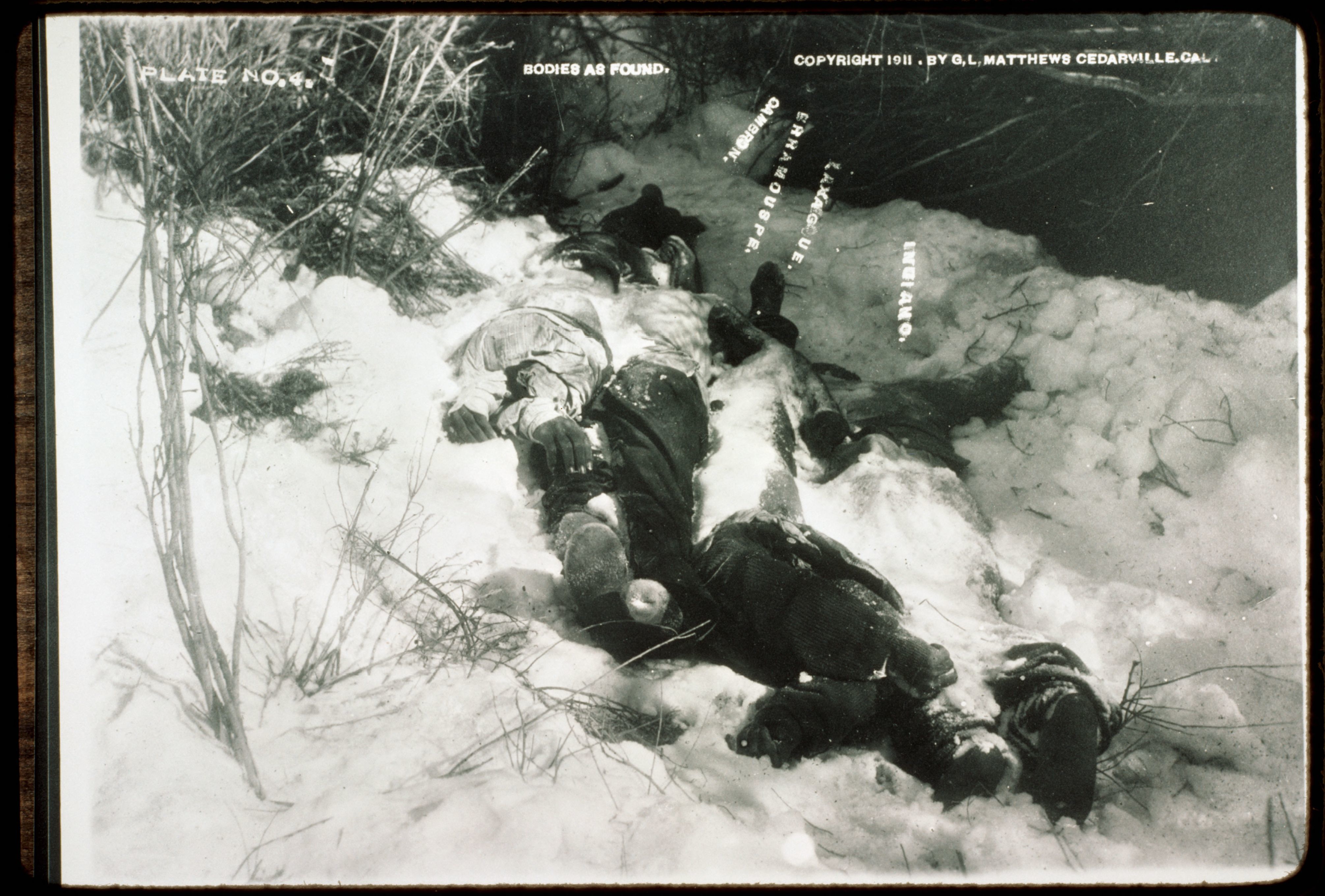
The Daggetts knew pursuit was coming. When four stockmen entered Little High Rock Canyon on January 19, 1911, searching for the missing cattle, the family opened fire. Harry Cambron and three Basque sheepherders, Bert Indiano, Peter Erramouspe, and John Laxague, were killed. Their bodies lay undiscovered until February 8, when a search party from Eagleville, California found them in a creekbed, mutilated and riddled with gunshot wounds. Panic swept the surrounding settlements. Families evacuated. Men who stayed behind remained armed at all times. Initially, authorities suspected Oregon outlaws or a band of Modoc warriors. When the truth emerged, Nevada and California State Police organized a posse under Captain J.P. Donnelley, and a large bounty was promised for the fugitives, dead or alive.
The Last Stand
Donnelley's posse, including five policemen, armed civilians, and the county coroner, tracked the Daggetts through extreme cold and winter weather, covering over 200 miles before finding them at Kelley Creek. It remains unclear who fired first. The battle lasted approximately three hours. The women fought alongside the men. Mike Daggett was among the first casualties, but his death only made his family fight harder. As ammunition ran out, the surviving Daggetts resorted to bows, spears, and tomahawks. By the end, eight family members lay dead. One posse member, Deputy Ed Hogle of Eagleville, was also killed. Two young children were shot inadvertently. Only four Daggetts survived: a sixteen-year-old girl and three young children, taken into police custody.
The Survivors
Sheriff Charles Ferrell arrived in Reno on March 2, 1911 with the four surviving captives. They confirmed the dead man was Shoshone Mike, though they said their mother was Bannock. The children were informally adopted by Reno's civilian population before being enrolled in the Stewart Indian School near Carson City in May 1911. By 1913, three had died of natural causes. Only Mary Jo Estep survived into adulthood, living until 1992. The reward money promised to the posse was initially denied by Governor Tasker Oddie because state policemen had participated, but the Nevada Supreme Court ruled in the posse's favor in 1915. A marker now stands near the battle site, beside the Twin Creeks gold mine, whose 1996 environmental impact statement carefully reconfigured waste sites to avoid disturbing it.
What History Remembered
The Battle of Kelley Creek was briefly characterized as a Native American revolt, a last gasp of indigenous resistance against American expansion. The reality was both simpler and more tragic: a grieving father, a desperate family, a cascade of violence that began with the death of a son and ended with eight more bodies in the Nevada sagebrush. The Daggetts were not warriors launching an uprising. They were refugees who ran out of places to run. That a single family's tragic flight could be mistaken for an insurrection speaks to the fears and assumptions of 1911 America. The Last Massacre was less a battle than a cornered family's final, futile defense against forces they could never escape.
From the Air
Located at 41.26N, 117.10W in remote northeastern Nevada, approximately 45nm northeast of Winnemucca. The site lies in high desert sagebrush terrain near the Twin Creeks gold mine. Best viewed at 2,000-3,000 feet AGL. A historical marker is present at the site. Nearest airport is Winnemucca Municipal (WMC). This is very remote terrain with limited emergency services; ensure adequate fuel reserves and file a flight plan. Clear weather essential for safe navigation in this area.