Battle of Kiyosu Castle
He was seventeen years old, freshly orphaned, and his own relatives were carving up his inheritance. In the spring of 1552, Oda Nobunaga -- the young lord who would one day come closer to unifying Japan than anyone before him -- faced a province fractured by rival cousins and hostile neighbors. His first target was Kiyosu Castle, seat of his cousin Oda Nobutomo, the deputy governor of southern Owari. What followed was not a single clash but a grinding two-year campaign of field battles, political maneuvering, and a midnight betrayal that ended with Nobutomo kneeling on the castle floor, blade in hand, forced to take his own life. The Battle of Kiyosu Castle gave Nobunaga his first real domain and the momentum that would carry him across the map of feudal Japan.
A Province Torn Apart
When Nobunaga's father, Oda Nobuhide, died in the spring of 1551, the power structure of Owari Province crumbled overnight. The province was nominally governed by the Shiba clan, but real authority lay with branch families of the Oda, each controlling a slice of territory from their respective castles. Nobunaga inherited estates in the southwestern corner around Nagoya Castle, but his cousin Nobutomo held the strategic prize: Kiyosu Castle, the administrative center of southern Owari. To the east, the powerful Imagawa clan -- rulers of three neighboring provinces and patrons of the Matsudaira family, who would later take the name Tokugawa -- pressed against Owari's borders. Surrounded by enemies both within his family and beyond it, the teenage Nobunaga had to fight or be consumed.
Spears Longer Than Any Before
The first blow came in August 1552. Nobutomo had seized two of Nobunaga's border forts, but Nobunaga and his uncle Oda Nobumitsu counterattacked, recapturing the positions and routing Nobutomo's forces at the village of Kaizu, just three kilometers from Kiyosu's walls. More than 80 samurai of rank fell in the fighting, and Nobunaga's men burned the outskirts of the castle town. The second engagement came the following July, after Nobutomo made a catastrophic political blunder: he executed the provincial governor, Shiba Yoshimune, who had been conspiring with Nobunaga. Killing a man whose authority derived from the Shogun himself alienated Nobutomo's remaining allies. On July 18, 1553, Nobunaga's forces defeated Nobutomo beneath Kiyosu's walls, aided by an innovation that would become a hallmark of Nobunaga's military thinking -- ashigaru foot soldiers armed with spears between 18 and 21 feet long, weapons of Nobunaga's own design that outreached anything the defenders could muster.
The Gates Open at Midnight
Despite two battlefield victories, Nobunaga could not breach Kiyosu Castle by force. He settled into a blockade, waiting for the right moment. It came after he defeated the Imagawa clan at the Battle of Muraki in January 1554, freeing himself from the threat on his eastern flank and burnishing his reputation across Owari. Desperate and running out of loyal retainers, Nobutomo's chief adviser Sakai Dozen hatched a scheme: he offered Nobumitsu, Nobunaga's own uncle, the title of provincial governor in exchange for betraying his nephew. Nobumitsu appeared to accept. He and a band of warriors were admitted through the gates of Kiyosu -- but when night fell, his men opened the gates from inside. Nobunaga's troops stormed the castle on April 20, 1554. Nobutomo was forced to commit seppuku. Sakai Dozen fled to Suruga Province, seeking refuge with Nobunaga's archenemy, Imagawa Yoshimoto.
The Seat of a Unifier
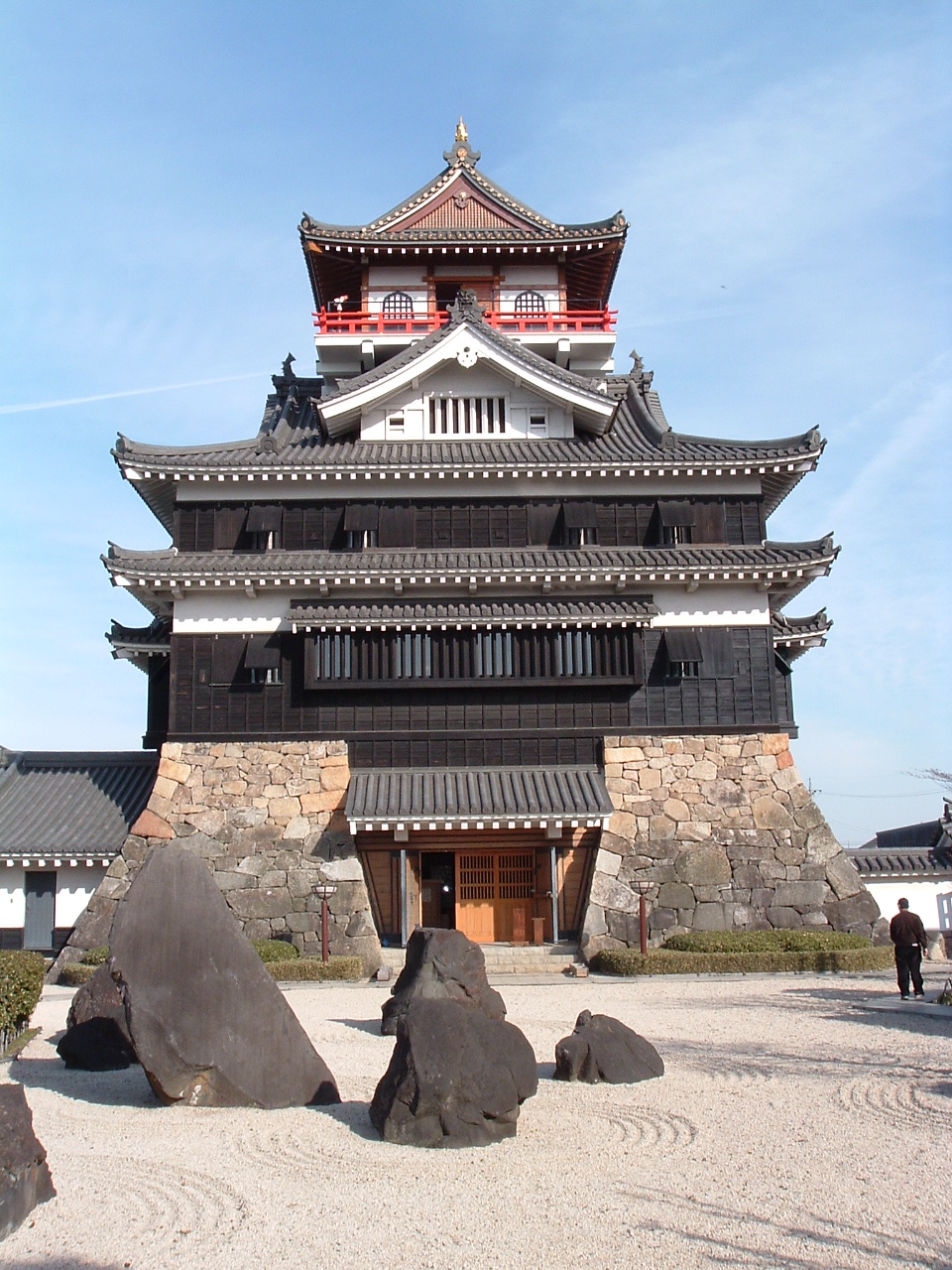
With Kiyosu in his hands, Nobunaga became lord of southern Owari and moved his base from Nagoya Castle to his conquered prize. He rewarded his uncle Nobumitsu with Nagoya Castle and two of lower Owari's four eastern districts. Kiyosu would serve as Nobunaga's seat for years to come, the launchpad for the campaigns that would make him the most feared warlord in Japan. It was at Kiyosu that he sealed his alliance with Tokugawa Ieyasu in 1562, forging a partnership that would outlast both men's lifetimes. The original castle was eventually dismantled, its stones and timbers recycled into Nagoya Castle. Today, a 1989 concrete reconstruction stands near the original site -- not an exact replica, since no plans of the original survived, but a monument to the teenager who bluffed, fought, and schemed his way to power on this flat stretch of the Owari plain.
From the Air
Located at 35.200N, 136.853E on the flat alluvial plain of the Owari region, roughly 10 km northwest of central Nagoya. The reconstructed castle donjon is visible from 2,000-3,000 feet AGL as a white tower structure along the Gojo River. Nagoya Airfield (RJNA) lies approximately 8 km to the northeast. Nagoya Castle is visible about 8 km to the southeast. Chubu Centrair International Airport (RJGG) is roughly 40 km to the south.