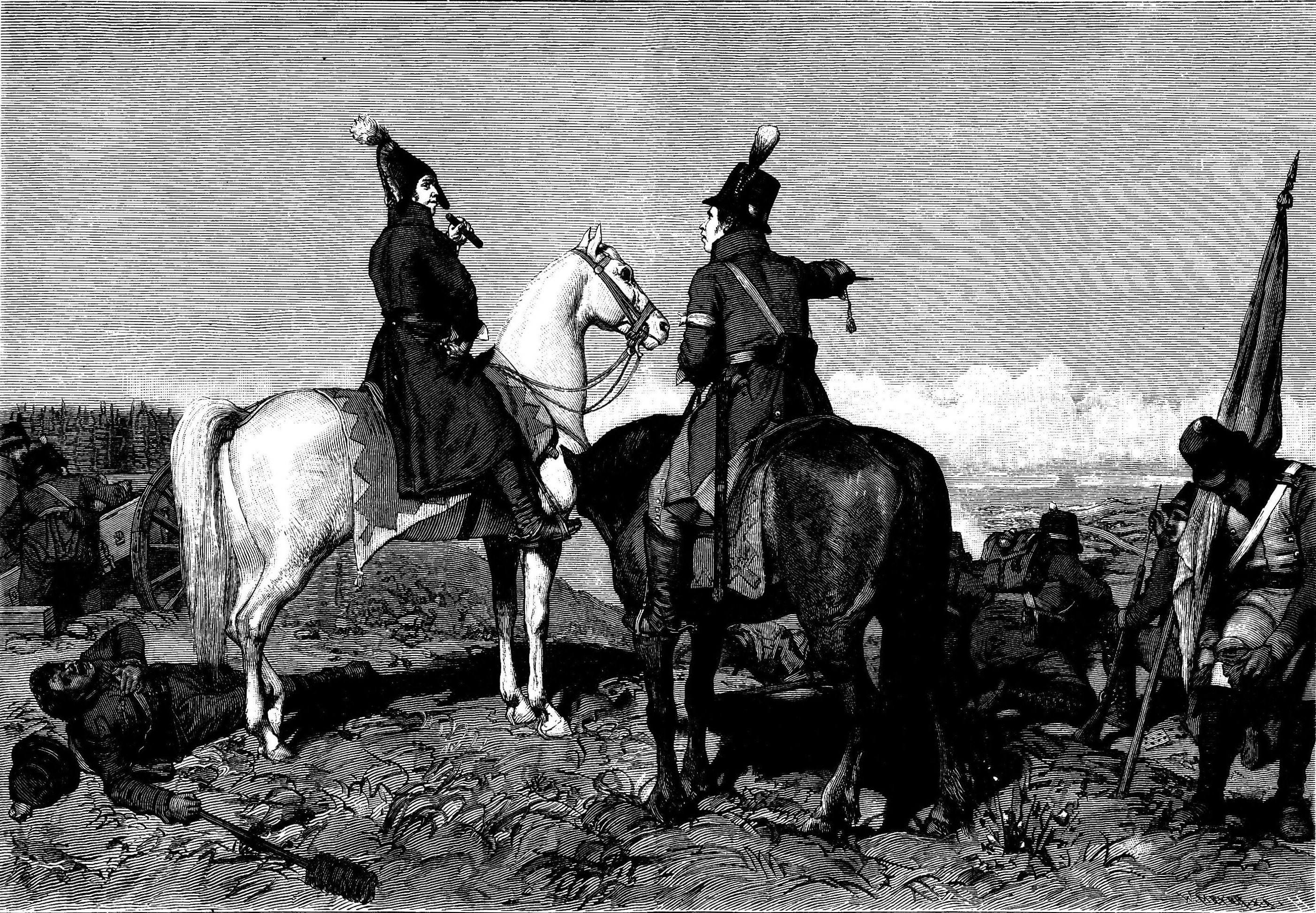
Battle of Koljonvirta
The poem tells of a simple soldier named Sven Dufva who was too slow-witted to understand the order to retreat. While his comrades fell back, Dufva held the bridge alone and died fighting. Johan Ludvig Runeberg, Finland's national poet, wrote the story into his epic Tales of Ensign Stal in 1848, transforming a real engagement into national myth. The battle behind the poem took place on October 27, 1808, at the Koljonvirta strait near Iisalmi, where a Swedish force outnumbered roughly four to one turned back a Russian advance. It was the last time a Swedish army would win a battle on Finnish soil.
A War Already Lost
By the autumn of 1808, Sweden's position in Finland was collapsing. The Finnish War, triggered by Napoleon's diplomacy and Russia's territorial ambitions, had gone badly from the start. The main Swedish army had been defeated at the Battle of Oravais in September, and Russian forces were pushing northward through the Finnish interior. Colonel Johan August Sandels commanded one of the last effective Swedish formations in the Savonia region of eastern Finland. With the main army broken, Sandels knew he could not hold indefinitely. But he could choose where to fight, and he found his ground at the narrow strait of Koljonvirta, where the river flowed between two lakes north of Iisalmi.
The Bridge Between Two Lakes
A ceasefire had been in effect since late September, and Sandels used the pause well. He fortified his position at the strait, where the terrain forced any attacking army to funnel across a bridge and through narrow approaches between the lakes. When fighting resumed on October 27, the Russian force under Lieutenant General Nikolay Tuchkov outnumbered the Swedes significantly. Swedish sources estimated 1,200 to 1,800 defenders against 5,000 to 6,000 Russian attackers, though Russian accounts placed Swedish strength higher. Tuchkov sent his infantry forward across the bridge and along the shorelines, attempting to overwhelm the position through sheer numbers.
Bayonets at the Water's Edge
The Swedes counterattacked in columns with bayonets. The fighting became close and chaotic as Swedish troops physically pushed the Russian Tenginsky and Navaginsky regiments back toward the bridge. The two Russian units became entangled with each other in the retreat, crossing back to their own side in disorder. Swedish losses were comparatively light: 34 killed and 282 wounded. The Russians suffered far more heavily, with 221 killed, 479 wounded, and 73 captured according to one accounting, though Swedish sources estimated total Russian casualties exceeding 1,000. It was one of the most lopsided Swedish successes of the entire war.
The Victory That Changed Nothing
Koljonvirta was a tactical triumph that could not alter the strategic reality. Russia had committed overwhelming force to the conquest of Finland, and no single battle could reverse the tide. By 1809, Sweden would cede all of Finland to the Russian Empire in the Treaty of Fredrikshamn, ending over six centuries of Swedish rule. But the battle lived on in memory. Runeberg's Tales of Ensign Stal, published four decades later, turned the Finnish War into a founding narrative of Finnish identity. The character of Sven Dufva, based on a real soldier named Zacharias Bang, became a symbol of stubborn courage. Today a walking trail traces the battlefield at Koljonvirta, and the strait where Swedish bayonets met Russian muskets remains a quiet place between two Finnish lakes.
From the Air
Located at 63.59°N, 27.16°E near Iisalmi in eastern Finland. The Koljonvirta strait connects lakes on either side and the narrow geography that shaped the battle is visible from low altitude. Nearest airport: Kuopio Airport (EFKU) approximately 80 km south. The battlefield area includes a walking trail and historical markers. Recommended viewing altitude: 2,000-5,000 ft to appreciate the lake-and-strait terrain that determined the battle's course.