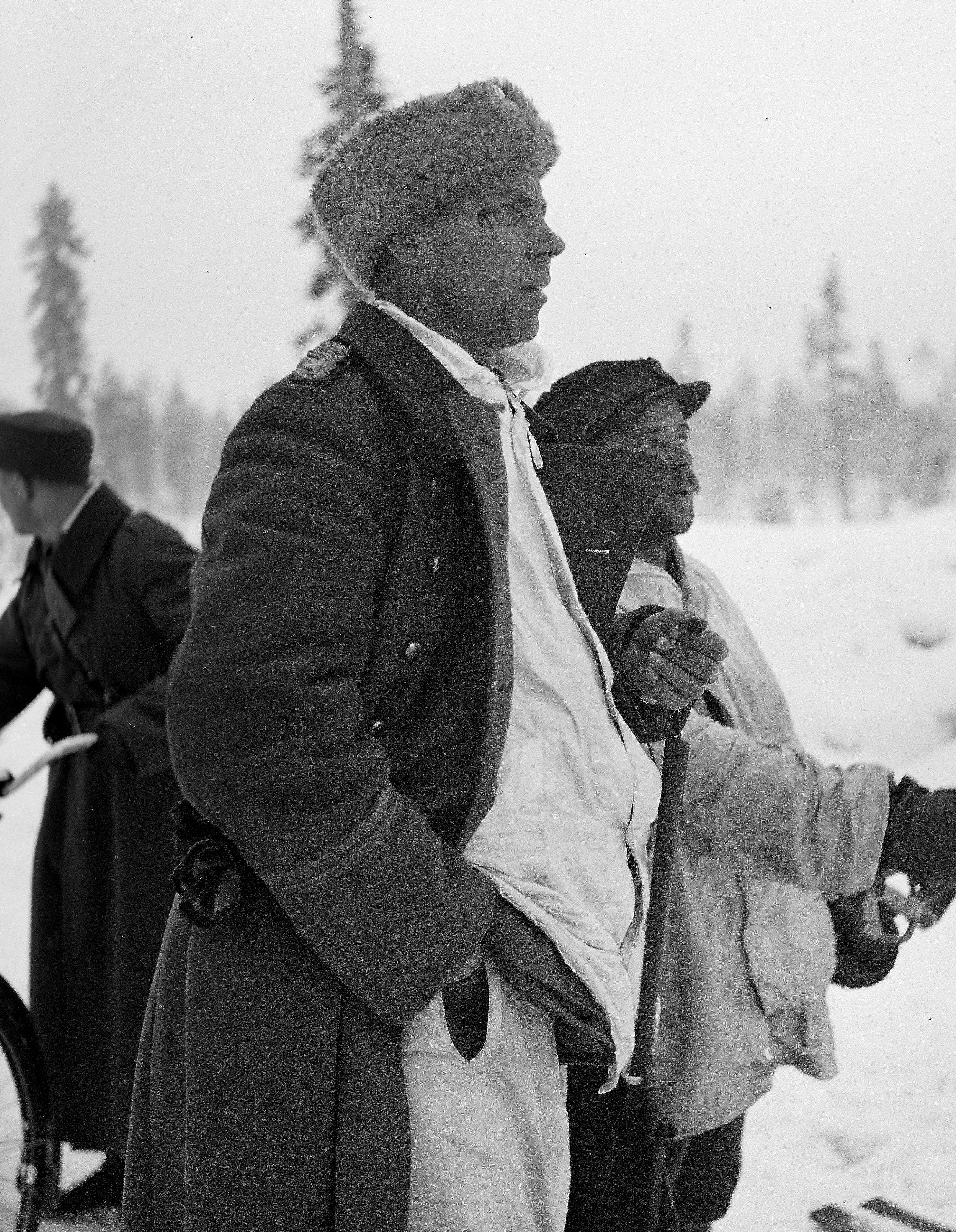
Battle of Kollaa
"Kollaa kestaa" -- Kollaa holds. The phrase entered the Finnish language as shorthand for perseverance against impossible odds, and the battle that produced it lasted from 7 December 1939 to 13 March 1940, spanning nearly the entire Winter War. On the banks of a creek-sized river in Ladoga Karelia, the Finnish 12th Division held a line that Soviet planners expected to break in days. It did not break. For more than three months, through the darkest and coldest period of the Finnish winter, the defenders of Kollaa proved that terrain, skill, and resolve could offset staggering disadvantages in numbers and equipment.
A River Too Cold to Dig
The Kollaa River was not much to look at: a narrow creek winding through frozen ground in a landscape of forest and low hills. But it sat in the path of a Soviet advance that, if successful, would have outflanked the Finnish line of defense north of Lake Ladoga and bypassed the Mannerheim Line entirely. The strategic stakes were enormous. The 24th Finnish regiment, having taken over from the battered 26th regiment, entrenched west of the river and prepared to hold. The soil was so frozen that digging proper fortifications was nearly impossible. The Finns improvised, using snow, timber, and the terrain itself to create defensive positions that would have to survive repeated Soviet assaults.
Thirty-Two Against a Regiment
One defensive position became legendary. The Finns called it Killer Hill, and its story captures the battle's character in miniature. The Soviets advanced an entire regiment against a force of 32 fortified Finnish soldiers. The arithmetic was absurd, the outcome astonishing: 400 Soviet soldiers died in the assault, along with 28 of the 32 defenders. The position held. Stories like this repeated along the Kollaa front because the Soviets, despite their numerical advantage, were prepared to advance only along roads. With few roads in the Kollaa area and all of them guarded by Finnish troops, the Red Army could not move cross-country without skis -- and the Finns had the skis.
The White Death
Simo Hayha arrived at the Kollaa front as an unremarkable farmer from Rautajarvi who happened to be an extraordinary marksman. Over the course of the Winter War, he would be credited with at least 505 confirmed kills according to Finnish military records, earning the nickname the White Death from the Soviet soldiers who learned to fear the invisible shooter in the snowfields. Hayha did not use a telescopic sight, preferring iron sights to avoid the glint that a scope could produce and to keep a lower profile in the snow. He dressed in white, lay motionless for hours in temperatures far below zero, and picked off targets with a precision that became legendary. A Soviet sniper eventually shot him in the jaw on 6 March 1940, just days before the war ended. He survived and lived to the age of 96.
Why Kollaa Held
The Finnish defenders at Kollaa succeeded not through any single advantage but through a combination of factors that multiplied each other. They knew the terrain intimately. They could move on skis through forests that immobilized their opponents. Their small-unit tactics, honed in peacetime, were suited to the fragmented, close-range combat that the landscape demanded. And they were defending their homeland, which gave their endurance a quality that no amount of Soviet artillery could match. The question that passed between Finnish soldiers -- Does Kollaa hold? -- always received the same answer. It became a national creed, a two-word expression that Finns still invoke when facing difficulties that seem insurmountable.
Frozen Ground, Living Memory
The Kollaa battlefield lies in territory that Finland ceded to the Soviet Union after the war, now part of Russia's Republic of Karelia. The creek still flows through the same landscape of birch and spruce, and the ground still freezes solid each winter. From above, the terrain looks deceptively peaceful: lakes, forest, and the occasional clearing where a road threads through the wilderness. But the geography tells the story of the battle to anyone who reads it. The narrow approaches, the chokepoints where roads pass between lakes, the dense tree cover that favored defenders who knew every ridge and hollow -- all remain. A Finnish punk band took the name Kollaa Kestaa, ensuring that a new generation encounters the phrase even if they have never visited this quiet stretch of frozen river.
From the Air
Located at 62.03N, 32.26E in Ladoga Karelia, now part of Russia's Republic of Karelia. The terrain is dense boreal forest interspersed with lakes and the narrow Kollaa River. Recommended viewing at 2,000-4,000 feet to appreciate the chokepoint geography. No nearby civilian airports; the area is remote forest and wetland. Joensuu (EFJO) is approximately 130 km west. Lake Ladoga lies to the south. The landscape of narrow roads threading between lakes illustrates why road-bound forces struggled here.