Battle of La Plata (1957)
By every reasonable measure, the Cuban Revolution should have ended before January 1957. Of the eighty-two fighters who had landed on Cuba's southern coast aboard the yacht Granma the previous month, roughly twenty-two remained as a cohesive fighting unit. The rest were dead, captured, or scattered across the mountains. International newspapers reported Fidel Castro killed. The rebels had almost no weapons, little food, and no medicine. They were hiding in the Sierra Maestra, a jungle-choked mountain range where the Caribbean crashes against limestone cliffs, and nobody outside their small band believed they still existed. The village of La Plata, a tiny settlement where the La Plata River meets the sea, was about to change that.
Eighty-Two Became Twenty-Two
On December 2, 1956, eighty-two members of the July 26th Movement crammed aboard the Granma, a small yacht built for twelve passengers, and crossed from Mexico to Cuba's Oriente coast. The landing near Playa Las Coloradas was a disaster from the start. Their local guide abandoned them and alerted army patrols. Three days later, government forces ambushed the column at Alegria de Pio, killing or capturing the vast majority. The survivors regrouped over the following weeks in tiny clusters, stumbling through unfamiliar jungle with no supplies. By mid-January, Castro had gathered roughly twenty-two Granma expeditionaries — the core of what would become the rebel army. They lacked rifles, ammunition, and even basic hygiene supplies. What they did not lack was a need to prove, to the Cuban public and to themselves, that the rebellion was still breathing.
The Informant Who Talked Too Much
Reconnaissance of the La Plata barracks began on January 15. For two days, the rebels watched the small military outpost from the hills above the river. Local peasants, taken as hostages during the approach, revealed that roughly fifteen soldiers were garrisoned there. They also mentioned that Chicho Osorio, one of the most feared military informants in the region, would soon pass along the road. Osorio arrived drunk that evening with a boy in tow. The rebels posed as members of the Cuban Rural Guard, and Osorio, believing them to be allies, talked freely. He named sympathizers and government opponents in the area. He boasted of beating local peasants and admitted to killing two men, crimes for which Batista had pardoned him. He showed off boots taken from a dead rebel captured after the Granma landing. When Castro asked what Osorio would do if he ever caught Fidel, the informant drew a finger across his throat. He never learned who he was speaking to.
A Coconut Warehouse on Fire
The attack came on January 17, with twenty-nine guerrillas in total — twenty-two Granma expeditionaries joined by peasant recruits and three men sent by Celia Sánchez. Castro's plan was simple: use Osorio to approach the barracks, then call on the soldiers to surrender. The sergeant commanding the outpost refused. Each demand was answered with M1 rifle fire. Grenades and dynamite produced little effect against the fortified positions. Then Che Guevara and Luis Crespo crept close to an adjacent building and set it ablaze. Only after flames leapt through the roof did they realize they had torched a coconut warehouse rather than a strategic target. It hardly mattered. The fire panicked the garrison, and soldiers began abandoning their positions. The rebels suffered no casualties. When it was over, Castro freed the captured and wounded soldiers, left them medicine from the barracks' own stores, and released civilians who had been held prisoner inside. The column burned the outpost and marched into the mountains before dawn, arriving at Palma Mocha by first light.
More Than a Skirmish
Measured by conventional military standards, La Plata was negligible: twenty-nine guerrillas against a garrison of roughly fifteen soldiers, a coconut warehouse accidentally incinerated, a few rifles seized. But its significance was entirely out of proportion to its scale. The rebels captured weapons, ammunition, food, and equipment they desperately needed after losing nearly everything at Alegria de Pio. More critically, the victory shattered the government's narrative that Castro was dead and the revolution crushed. Word spread through the Sierra Maestra that the guerrillas were real, that they fought, and that they treated prisoners humanely. Peasants who had been skeptical began offering food and intelligence. The raid at La Plata did not win the Cuban Revolution, but it ensured there would be one to fight.
The Sierra Maestra Today
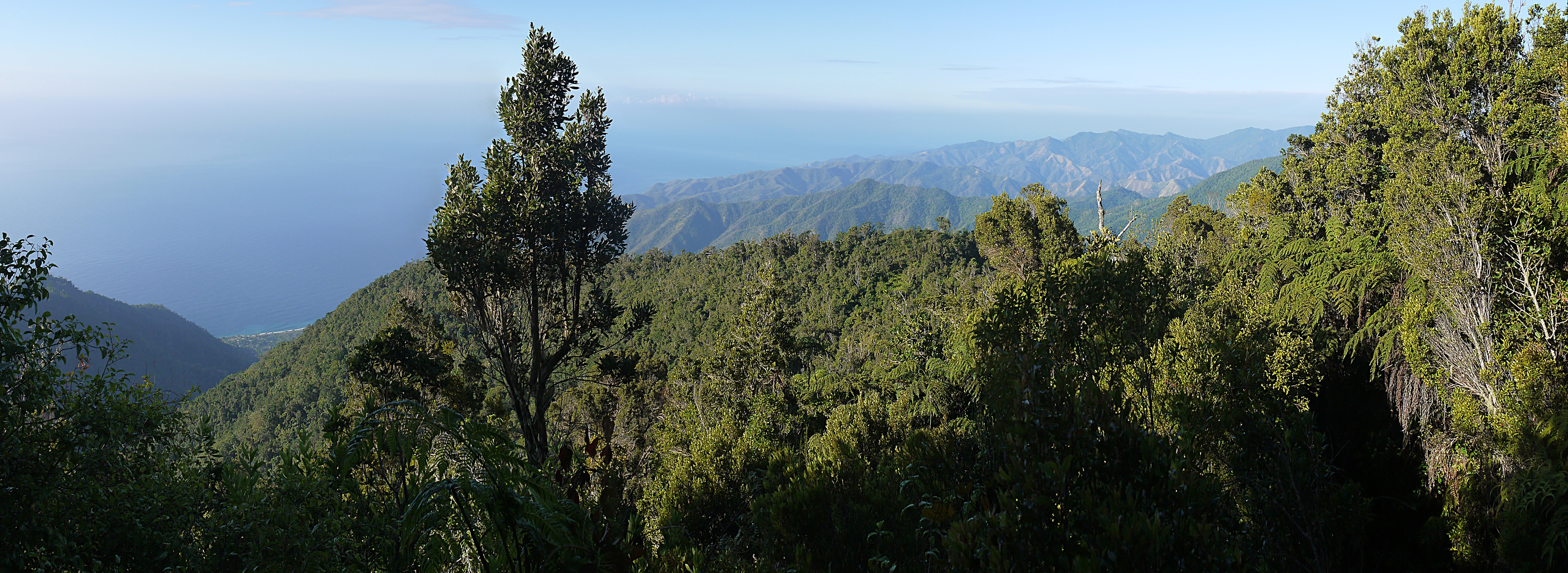
The coast where these events unfolded remains one of Cuba's most remote stretches. The Sierra Maestra rises sharply from the Caribbean, its peaks reaching nearly 2,000 meters at Pico Turquino, the island's highest point. Dense tropical forest covers the slopes, broken by rivers that cut steep valleys down to the shore. La Plata itself is still a small settlement, reachable only by rough mountain roads. The landscape has changed remarkably little since 1957. The same narrow trails wind through the same dense bush, and the Caribbean still breaks against the same rocky shoreline where twenty-nine guerrillas proved that a revolution given up for dead could survive.
From the Air
Located at 19.92N, 76.90W on the southern coast of Cuba's Sierra Maestra range. The La Plata River valley is visible from altitude where it meets the Caribbean Sea. The surrounding terrain rises steeply to nearly 2,000 meters at Pico Turquino to the east. Nearest airports: Sierra Maestra Airport (MUSM) and Antonio Maceo International Airport (MUCU/SCU) in Santiago de Cuba, approximately 100 km to the east. Expect tropical conditions with frequent cloud cover clinging to the mountain slopes. The coastline and river mouths provide the clearest visual references from the air.