Battle of Lake Tunis
The Romans expected an easy conquest. The Third Punic War's opening campaign in 149 BC was supposed to be a straightforward siege of a weakened Carthage, stripped of its military by treaty and surrounded by enemies. Two consuls, Manius Manilius and Lucius Marcius Censorinus, sailed across the Mediterranean with their armies and set up camp on opposite sides of the city. Then they discovered that the Carthaginians, who were supposed to be defenseless, had spent the interim secretly forging weapons behind their walls. The Battle of Lake Tunis was the humbling result.
Two Camps, One Trap
The two Roman consuls divided their forces in the classic pincer approach. Manilius established his camp on the narrow isthmus leading to the city, directly facing the citadel of Byrsa. Censorinus positioned his troops on the shore of Lake Tunis, opposite Carthage's western wall. Their plans were straightforward: Manilius would fill the defensive ditch and scale the southern wall, while Censorinus would raise ladders from the ground and from his ships' decks. Both launched their assaults confident that the Carthaginians had been disarmed under the terms of the previous peace treaty. Both were repelled. The citizens of Carthage had rearmed, and they fought with the desperation of people who understood that this war would end in their annihilation or their survival -- nothing between.
Ambush at the Timber Line
After the initial failures, Censorinus sent his men across Lake Tunis to gather timber for siege engines. The Carthaginian cavalry commander, Himilco Phameas, seized the opportunity. His horsemen struck the Roman foraging parties, killing 500 soldiers and destroying a great quantity of tools and construction equipment. It was a calculated blow -- not large enough to decide the war, but precisely targeted to slow the Roman siege machinery. Censorinus nonetheless gathered enough timber to build new engines and ladders. He and Manilius launched a coordinated second assault, which was again driven back. Manilius abandoned further attempts from the isthmus, but Censorinus was not finished.
Breach and Counter-Attack
Censorinus filled sections of Lake Tunis to create room for operations and constructed two battering rams -- one mounted on ships, another supported by 6,000 infantry. In the subsequent assault, his troops managed what no previous attack had achieved: they breached the wall of Carthage. But the defenders rallied and drove the Romans back through the gap. That evening, knowing they had only hours before a second assault, the Carthaginians sallied from the unrepaired breach and attacked Censorinus's camp on the lakeshore, setting fire to many of his siege engines. The following day, when Roman troops tried again to pour through the breach, they were met by ferocious resistance. Only the young military tribune Scipio Aemilianus -- the adopted grandson of the great Scipio Africanus -- showed tactical discipline, refusing to send his men into the gap and instead deploying them at intervals along the wall.
Plague, Fire, and Retreat
Around July 27, as the star Sirius appeared on the horizon at sunrise marking the hottest days of the year, disease swept through Censorinus's forces. His camp sat on stagnant water with poor ventilation -- the walls of Carthage blocked the sea breeze. He relocated to the open shore, a move the Carthaginians observed with keen interest. Spotting the Roman fleet repositioning along the coast, they built fire ships in their harbor and launched them when the Roman vessels came into view. The blazing ships drifted into the fleet and destroyed most of it, a devastating blow that set back the entire Roman campaign. Shortly afterward, Censorinus departed for Rome to conduct elections, leaving Manilius to continue a siege that had produced nothing but Roman losses. The city would hold for three more years before Scipio Aemilianus -- promoted to consul -- finally breached the walls and burned Carthage to the ground.
From the Air
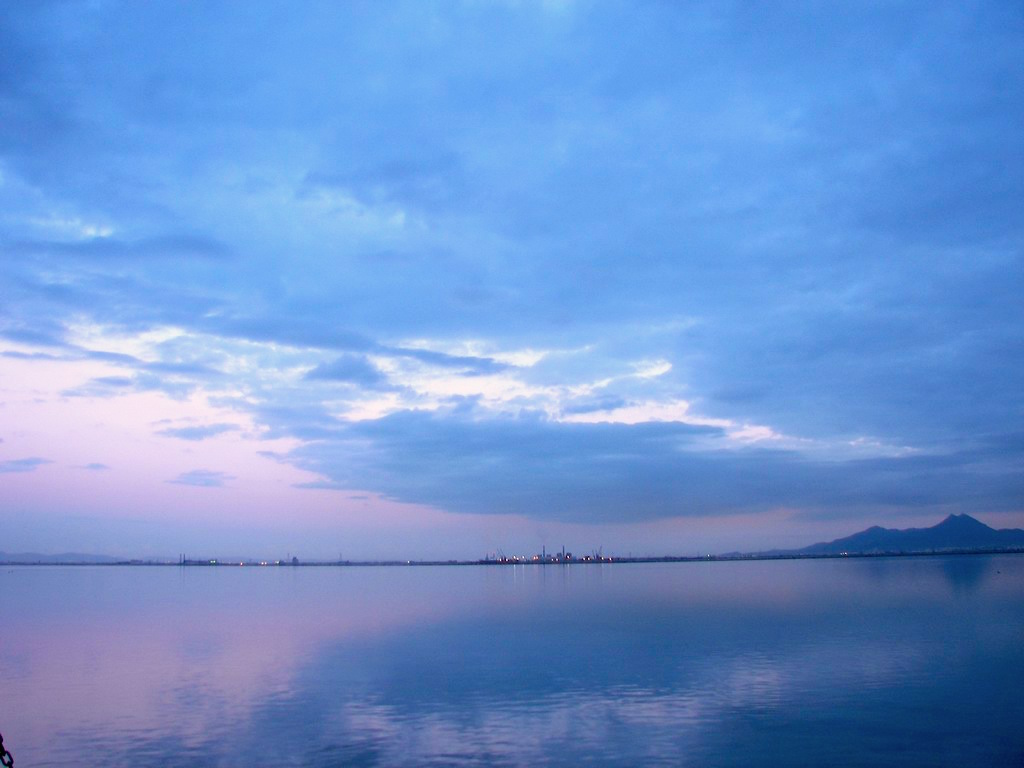
Centered on Lake Tunis at 36.82°N, 10.25°E. The lake is a large, shallow body of water clearly visible from altitude, lying between the modern city of Tunis and the Carthage peninsula. The isthmus where Manilius camped connects the Carthage peninsula to the mainland. The shore where Censorinus's camp was attacked runs along the lake's eastern edge. Tunis-Carthage International Airport (DTTA) lies on the northeastern shore of the lake. Best viewed at 5,000-8,000 feet to see the full tactical geography of the siege.