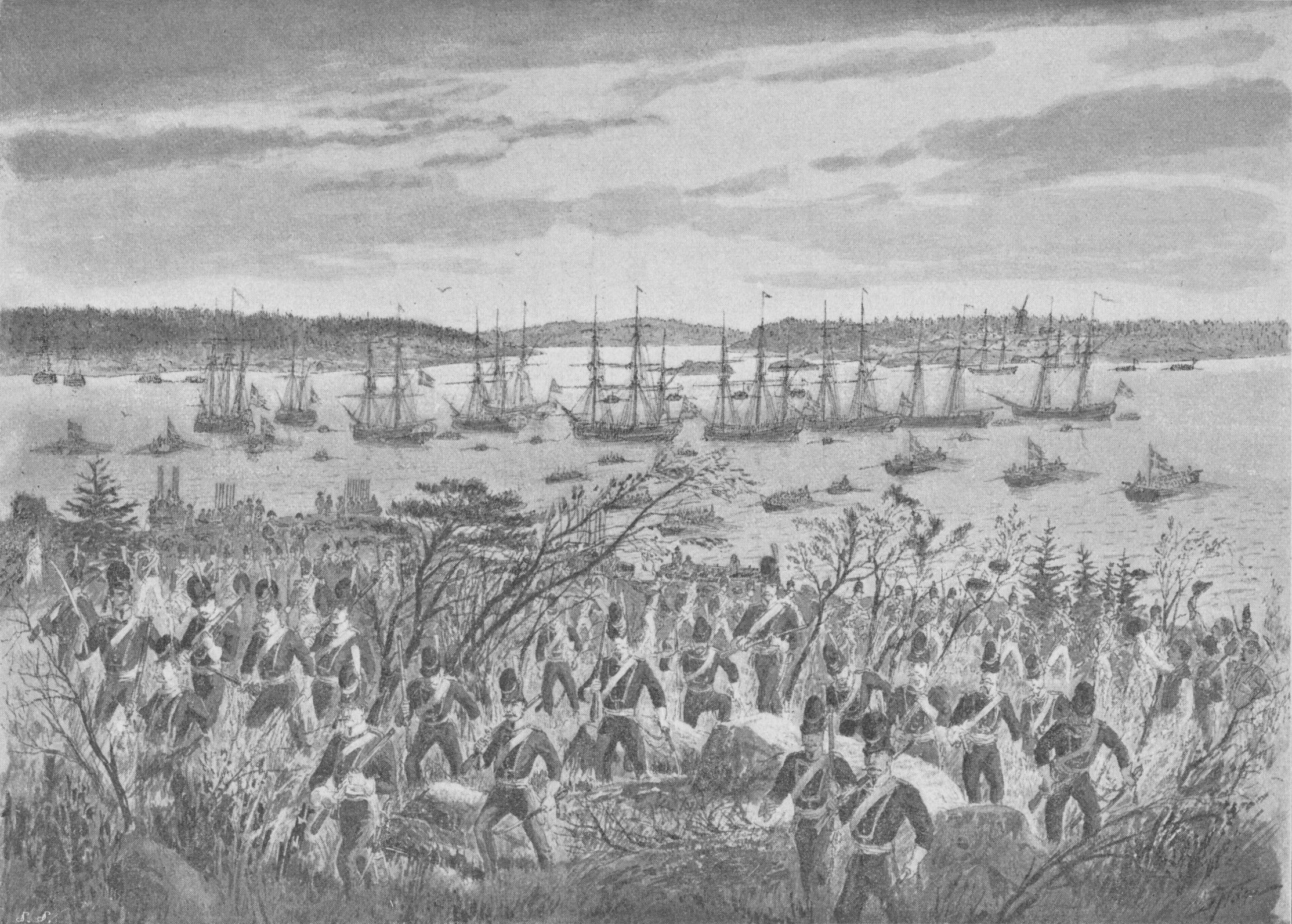
Battle of Lemo
On Sunday morning, June 19, 1808, Swedish boats ground onto the shores of Lemo, disgorging troops into Finnish territory that had been theirs for 600 years. Major General Eberhard Ernst von Vegesack's men immediately began entrenching, deploying artillery in front of Ala-Lemo Manor house while gunboats blocked the strait behind them. The Finnish War had been raging since February, and this amphibious landing represented Sweden's desperate attempt to turn the tide. Within hours, Swedish soldiers would actually see Turku, the old capital of Finnish Sweden, shimmering on the horizon. They would never reach it. Two days of brutal fighting would end with the Swedes evacuating under fire to their ships, leaving the manor house in flames and Finland one step closer to becoming part of the Russian Empire.
The Gamble at Lemo
Von Vegesack chose his landing site with an experienced eye. The strait at Lemo offered natural protection for his fleet while giving access to the main road between Turku and Vyborg. If Swedish forces could sever that road and threaten Turku, they might force the Russians to negotiate. The general positioned his gunboats to command both the strait and the battlefield, creating an integrated defense that used sea power to compensate for his limited ground forces. Russian troops were scattered in small units along the main road, not expecting a major landing this far into their lines. The initial phases went exactly as planned. Swedish soldiers pushed inland through fields and forest, advancing several kilometers until the spires of Turku came into view. For a brief moment, it seemed the audacious plan might work.
Sunday's Ebb and Flow
The Libau Infantry Regiment arrived first to contest the Swedish advance. With a single gun, they launched a counterattack that pushed the forward Swedish units back to von Vegesack's main defensive line. The general responded with characteristic aggression, ordering an immediate assault on the Russian center. Russian commander Karl Gustav von Baggovut fed reinforcements into the fight: two companies on the right, two on the left, two with the gun in the center. It was Lieutenant von Vegesack, the general's own son, who spotted the opportunity. The Russian left flank hung exposed. The younger von Vegesack struck without hesitation. The Russians fell back several kilometers, and Swedish troops pursued, maintaining pressure as Sunday's long northern twilight faded into the white nights of Finnish summer.
Monday's Reckoning
Dawn on June 20 brought Russian reinforcements and renewed determination. Major General Nikolay Borozdin had assembled 300 men from the Brest Infantry Regiment, two additional guns, and a squadron of the Finland Dragoon Regiment. The Libau Infantry Regiment attacked before full light, driving the weary Swedes back to their defensive lines once again. Von Vegesack called in every man he could spare from the nearby islands, strengthening his positions while Baggovut prepared the decisive blow. When the Russian assault came, it came everywhere at once. The Pernov Musketeer Regiment attacked on the right. The Libau Regiment drove forward in the center. The Brest Regiment swept around the left. Russian artillery found the range on Ala-Lemo Manor house and set it ablaze, removing the Swedish command post in a column of smoke and fire.
Retreat to the Sea
With their defensive positions crumbling and the manor house burning, the Swedes had no choice but to fall back to the beach. The retreat could have become a massacre, but von Vegesack had prepared for this contingency. Shore fortifications covered the evacuation, and the gunboats that had blocked the strait now turned their guns on the pursuing Russians. Soldiers waded into the water, scrambling onto boats under artillery fire as Russian guns moved to the shoreline to engage the Swedish fleet directly. Von Vegesack managed to extract both his land and sea forces, pulling back to the relative safety of the Aland Islands. The Russian reserve forces at Yli-Lemo, two companies of the Nevski Regiment and half a squadron of Finland Dragoons, watched the Swedish sails disappear over the horizon. Finland's fate was sealed.
The Dying Soldier
Two hundred years after the battle, sculptor Heidi Limnell created a monument called 'Kuoleva sotilas,' the Dying Soldier, and placed it near the Yli-Lemo Manor house. The work was inspired by 'The Tales of Ensign Stal,' Johan Ludvig Runeberg's epic poem cycle about the Finnish War that shaped how both Swedes and Finns remember this conflict. The Battle of Lemo never became as famous as the Finnish victories at Oravais or Lapua, perhaps because it ended in Swedish failure. But it captured something essential about the war: the desperate courage of men fighting for a cause already lost, the violence of close-quarters combat in peaceful farm country, the sound of artillery echoing across waters that had known fishing boats and trading vessels for centuries. Today, the battlefield lies quiet, the manor house rebuilt, the strait open to pleasure boats. Only the monument stands witness to the two days in June when Sweden made its last serious effort to hold Finland.
From the Air
The Battle of Lemo took place at approximately 60.39°N, 22.31°E, in the municipality of Masku near Turku in southwestern Finland. From cruising altitude, you're looking at a landscape of agricultural fields, forest patches, and coastal waters characteristic of the Archipelago Sea region. Turku Airport (EFTU) lies roughly 15 nautical miles to the southwest. The strait where von Vegesack positioned his gunboats is visible as a narrow channel between larger landmasses. The Yli-Lemo Manor area, where the monument now stands, lies near the eastern edge of the battlefield. The Aland Islands, where the Swedish fleet retreated, are visible to the west on clear days.