Battle of Lena
The Danish folksong tells it best: "The ladies stand on the high balcony, they await their masters to arrive. The horses return bloodied, and the saddles are empty." On January 31, 1208, in the frozen landscape of Vastergotland, a massive Danish army met annihilation. Perhaps 55 men made it back to Denmark, according to tradition. Legend held that the old god Odin himself had ridden to Sweden four days before the battle, abandoning Norway to aid the Swedish cause. What actually happened at Lena that winter day remains obscured by centuries, but its impact echoed through Scandinavian history.
Two Houses, One Throne
For a century, two royal houses had traded the Swedish crown like a bloody heirloom. The House of Sverker and the House of Eric alternated on the throne between 1150 and 1250, their succession marked by violence and exile. By 1207, Sverker II held the crown, but his position had grown untenable. Eric Knutsson, the sole surviving son of the House of Eric, returned from exile in Norway. He may have brought Norwegian troops with him, though historians debate this. What is certain is that Swedish nobles rallied to his cause. Sverker fled to Denmark, where he had spent his childhood, and returned with an army to reclaim what he had lost. His relative King Valdemar the Victorious provided troops, and King Ottokar I of Bohemia sent a Czech contingent. But the core of the force came from Sverker's in-laws, the powerful Sunesen brothers.
Slaughter on Frozen Ground
The Danish army entered Vastergotland in the depths of winter. Medieval sources claim the invasion force numbered between 12,000 and 18,000 men, though these figures are likely exaggerated. Frozen lakes and rivers may have eased their march. On January 31, they met Eric's defenders at Lena. No contemporary chronicle describes the battle in detail. We know only the outcome: catastrophic Danish defeat. Ebbe Sunesen, who commanded the army, fell in the fighting. The Icelandic Flateyarbok records that "Junker Eric slew Ebbe Sunesen," hinting at personal combat between the Swedish prince and the Danish commander. Ebbe's brother Laurentius died as well. On the Swedish side, Knut Jarl of the House of Bjalbo was killed, along with a Magnus who may have been the father of the future Birger Jarl. The winter itself may have decided the battle, as heavy Danish cavalry floundered in deep snow.
The God Who Changed Sides
Medieval Scandinavians explained the battle through older traditions. The Norwegian Saga of Inge Bardsson tells of a mysterious horseman who arrived at a smith's farmstead at Nesje on January 26, five days before the battle. The stranger displayed supernatural powers that baffled his host. "I have been to the north, and stayed in Norway for a long time," he announced, "but I will now move over to Sweden." He revealed himself as Odin, spurred his horse, and leaped over a high fence into the sky. The old gods, it seemed, had chosen their side. Four days later, the Danes died in droves on Swedish ice. The legend speaks to the battle's impact on the medieval imagination: a defeat so complete that only divine intervention could explain it.
The War Continues
Sverker II was among the few who escaped the carnage. He fled back to Denmark, but his cause was not yet lost. Pope Innocent III took interest in the fallen king and ordered Eric to restore him to power. When Eric refused, Sverker raised another army. In July 1210, he invaded Sweden once more, meeting Eric's forces at Gestilren. This time there would be no escape. Sverker died in the fighting, killed by his own brother-in-law, and the bitter war between the houses finally ended. Later generations commemorated both battles in song and verse. A Swedish rhyme celebrated the rout: "It happened in Lena, two Danes ran for one Swede." A Danish folksong mourned the civil war dimension: "It was ill to stand in the fighting, as the son let his father down." The 2008 Swedish film Arn: The Kingdom at Road's End brought the battle back to popular attention.
From the Air
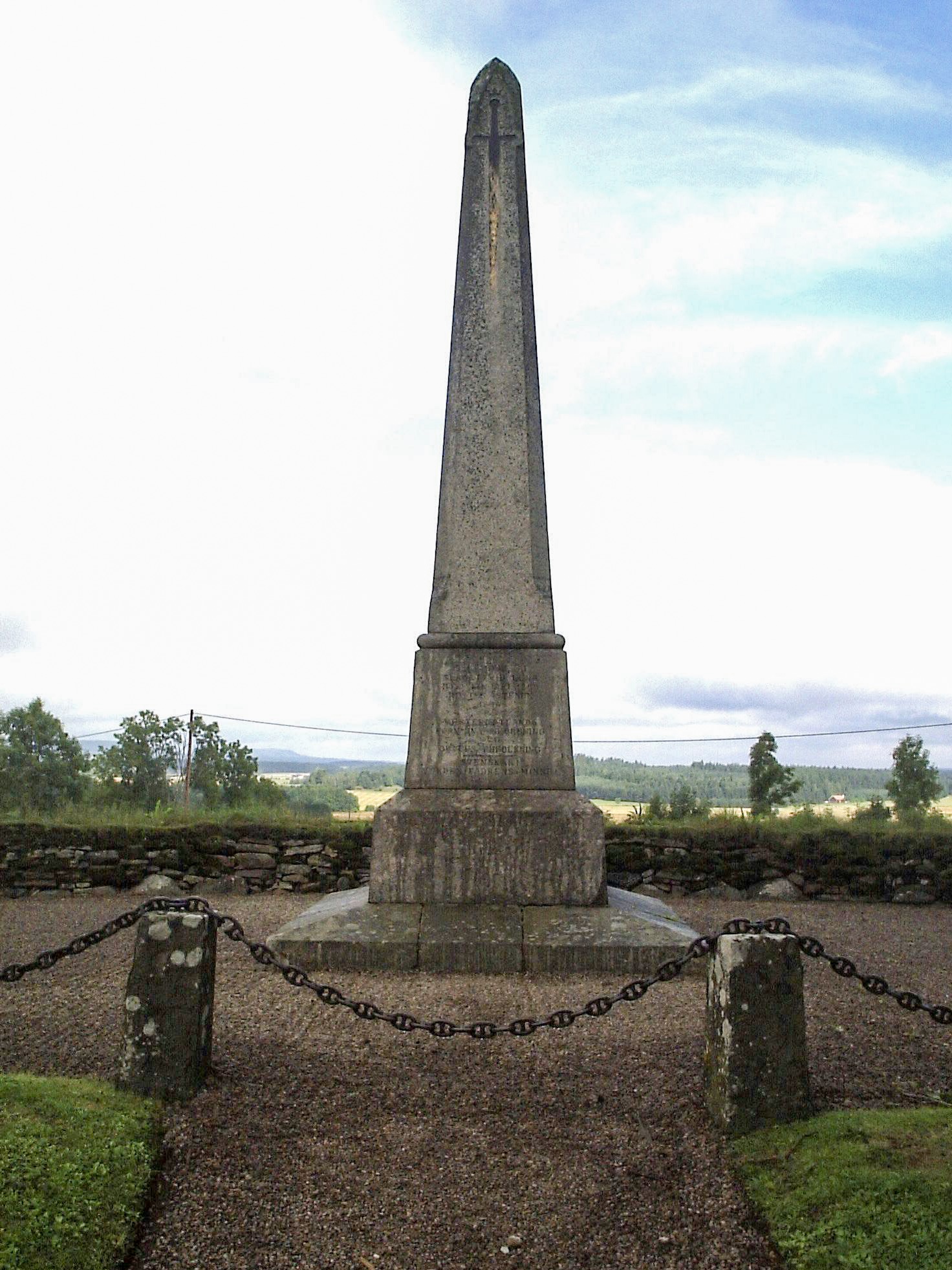
Located near Kungslena at approximately 58.23N, 13.83E in Tidaholm Municipality, Vastergotland. The battlefield lies in rolling agricultural terrain typical of this region of western Sweden. A memorial marks the traditional battle site. The Battle of Gestilren (1210) occurred just a few kilometers south. Nearest airports include Skovde (ESGR) approximately 25km north, and Jonkoping Airport (ESGJ) about 50km southeast. Winter conditions would have transformed this landscape, with frozen lakes providing routes for the invading Danish army.