Battle of Lima Site 85
The airmen who operated the radar on Phou Pha Thi had signed paperwork releasing them from military service. Officially, they were civilian technicians employed by Lockheed. In reality, they were U.S. Air Force personnel running a top-secret bombing guidance system on a 1,700-meter mountain in neutral Laos -- a country where American military operations were forbidden by international agreement. On the morning of March 10, 1968, North Vietnamese special forces climbed the cliffs of Phou Pha Thi and overran the installation, killing or capturing 12 Americans in what remains the largest single ground combat loss of USAF personnel during the Vietnam War. For the Hmong and Yao people who lived in the mountain's shadow, Phou Pha Thi was sacred, inhabited by spirits with supernatural powers. By 1968, it had become something else entirely: a nexus of secret wars, covert operations, and geopolitical deception.
A Mountain Between Wars
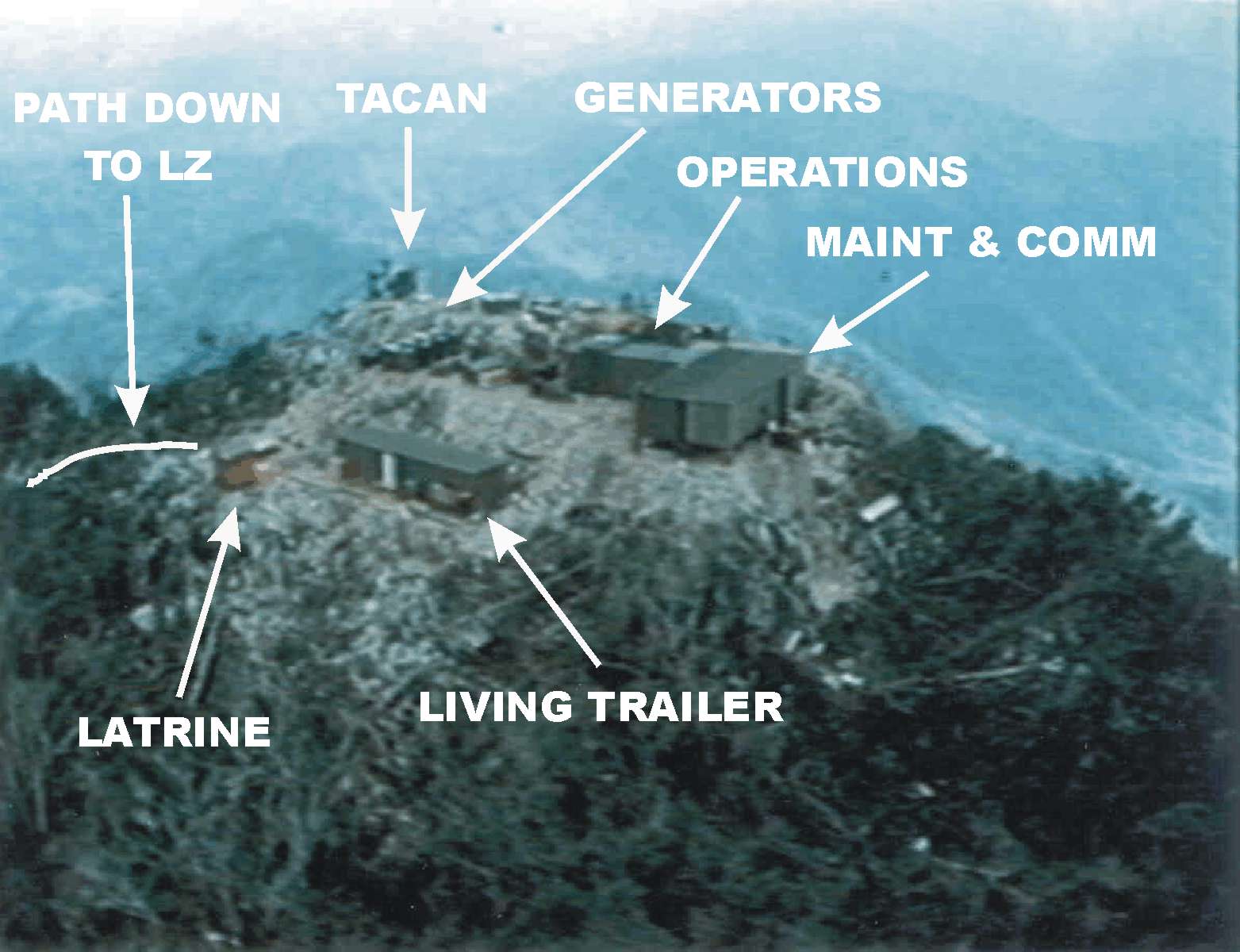
Phou Pha Thi rises from the rugged terrain of Houaphanh Province in northeastern Laos, roughly 24 kilometers from the Vietnamese border and 48 kilometers from Sam Neua, the Pathet Lao capital. The mountain had strategic value that both sides recognized. In August 1966, after U.S. Ambassador to Laos William H. Sullivan approved the plan, the Air Force installed a TACAN navigation system on the summit -- an autonomous radio transmitter that provided pilots with distance and bearing relative to the station. The following year, the installation was upgraded with an AN/TSQ-81 radar system under the code name Heavy Green. This allowed American aircraft to bomb North Vietnam and Laos in any weather, day or night, through an operation called Commando Club. But Laotian Prime Minister Prince Souvanna Phouma had imposed a condition: no U.S. military personnel could man the site. So the airmen were "sheep-dipped" -- temporarily discharged from military service and given civilian cover.
Biplanes Over the Mountaintop
The North Vietnamese did not ignore Phou Pha Thi. USAF reconnaissance aircraft tracked paved roads being constructed toward the mountain through 1967, connecting it to Dien Bien Phu via Routes 6 and 19. In December, Pathet Lao companies overran a village just 12 kilometers east of Lima Site 85. Hmong units retook it, but the pressure was building. Then came one of the war's strangest episodes. On January 12, 1968, four Soviet-made An-2 biplanes -- fabric-covered propeller aircraft from another era -- attacked the radar site, dropping 120mm mortar rounds from their cargo doors. Ground fire damaged one, sending it into a mountainside. An Air America helicopter piloted by Captain Ted Moore gave chase to a second An-2, pulling alongside so that flight mechanic Glenn Woods could open fire with an AK-47. The biplane crashed into a ridge. It was the only helicopter shoot-down of a fixed-wing aircraft in the Vietnam War. Four Hmong -- two men and two women -- were killed, but the radar survived. Despite this warning, the U.S. Embassy and Air Force refused to strengthen the site's defenses.
Three Forty-Five in the Morning
The PAVN 41st Special Forces Battalion had been training for nine months -- mountain fighting, jungle operations, physical conditioning for the extreme terrain of northern Laos. Beginning in December 1967, their soldiers conducted terrain reconnaissance, watching the routines at Lima Site 85 and mapping routes of withdrawal. Six sappers were sent to climb Phou Pha Thi and pinpoint positions. On the night of March 9, they moved into position. The plan divided the assault force into two groups and five cells, each assigned a specific target: the communications center, the TACAN installation, the airstrip, and the Thai defensive positions. At 3:45 a.m. on March 10, Cell 1 encountered a Hmong outpost 30 meters from the communications center. A grenade destroyed the post. Within 15 minutes, two cells had secured the communications site. An RPG-7 round destroyed the TACAN antenna. Another hit the electric generators. Raven Forward Air Controllers at a nearby Lima Site were awakened by radio around 4:00 a.m. and flew through darkness to the closest airstrip.
The Longest Recovery
By midday on March 10, Lima Site 85 was fully in North Vietnamese hands. Twelve American airmen were dead or missing -- eleven on the ground, one killed during evacuation. A USAF A-1 Skyraider searching for survivors was shot down, its pilot killed. The PAVN held the facility until March 14 before withdrawing. Ambassador Sullivan had ordered evacuation at 5:15 that morning, not realizing the Americans had already lost control of their equipment. The battle's aftershocks carried for decades. In 2002, former PAVN soldiers told investigators they had thrown the Americans' bodies off the cliff, unable to bury them on the rocky summit. The following year, JPAC investigators dropped dummies from the indicated points while a helicopter filmed the trajectories, leading them to a ledge 540 feet below where they recovered boots, survival vests, and evidence of at least four Americans. Remains have been identified gradually: Technical Sergeant Patrick Shannon in 2005, Colonel Clarence Blanton in 2012, Sergeant David Price in 2024. As of early 2026, four airmen remain unaccounted for. In 2010, Chief Master Sergeant Richard Etchberger received a posthumous Medal of Honor from President Obama for his actions during the battle -- 42 years after the fight on the mountain that was never supposed to be there.
From the Air
Located at 20.45°N, 103.71°E on Phou Pha Thi mountain in Houaphanh Province, northeastern Laos. The mountain rises to approximately 1,700 meters (5,577 ft) and is situated 24 km from the Vietnamese border. The terrain is extremely rugged, with steep karst limestone formations. No nearby commercial airports; the original Lima Site 85 airstrip (700 m) in the valley below is no longer operational. Sam Neua is approximately 48 km to the east. Udorn Royal Thai Air Force Base (now Udon Thani International Airport, VTUD) in Thailand was the primary support base during the war, roughly 300 km to the southwest. Best viewed at 6,000-8,000 ft AGL to appreciate the mountain's commanding position and the difficult terrain that made the site both strategically valuable and nearly impossible to defend.