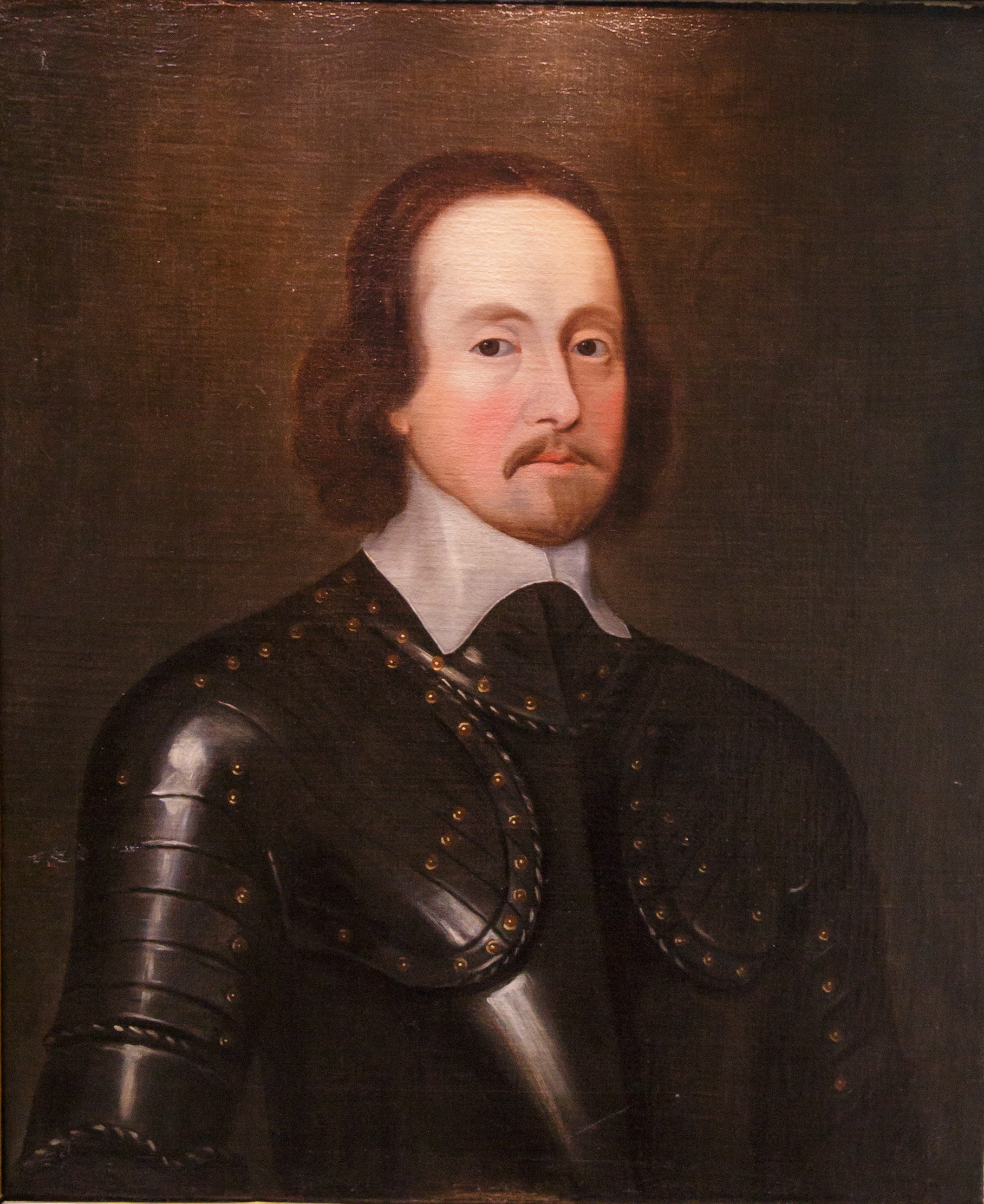
Battle of Lisnagarvey
Most of an army of 5,000 men fled at Lisnagarvey on 6 December 1649 without firing a single shot. They were Royalists and Scots Covenanters under Lord Clandeboye and George Munro, drawn together more by what they feared — the new English Commonwealth that had executed a king the previous January — than by any shared cause. They had not been paid in two years. Their equipment was old and incomplete. They outnumbered the Parliamentarian force in front of them, and it did not matter. When Sir Charles Coote's main body came up behind the advance guard, the field became a rout, then a slaughter, then a marker in the long arc that would end with Cromwell's reconquest of all of Ireland.
The Three-Sided War
To understand Lisnagarvey you have to follow a tangled set of allegiances. The Irish Confederate Wars, kindled by the 1641 Rebellion, had begun as a contest between the predominantly Catholic Confederation and a Protestant government army under Ormond, both nominally loyal to Charles I. In Ulster that already complicated war went three-sided: Royalists, the Gaelic Catholic forces of Eoghan Roe O Neill, and the Presbyterian Laggan Army backed by Scots Covenanters under Robert Munro. When the English Parliament executed Charles I on 30 January 1649, the Scots — Presbyterians who viewed monarchy as divinely ordained — recoiled in horror. The Covenanters transferred their loyalty to the son. The Confederation, the Royalists, the Laggan Army, and the Scots in Ulster were now nominally united against a Cromwellian Commonwealth they all considered radical and dangerous.
Cromwell Lands
On 2 August 1649, Ormond's combined Royalist-Confederate army was crushed at Rathmines outside Dublin. The defeat opened the city gates. Cromwell landed with 12,000 men two weeks later, an army hardened by years of civil war in England. Drogheda fell on 11 September after a brutal storming whose memory still poisons the politics of these islands. The main force turned south toward Wexford. Colonel Robert Venables was sent north with three regiments — perhaps 2,500 men — to take Ulster. He moved fast. By the end of September he had occupied Dundalk, Carlingford, Newry, and Belfast. Munro's garrisons surrendered with almost no resistance. When Coote took Coleraine on 15 September, he massacred the largely Scottish garrison — a calculated terror that the Parliamentarians would inflict more than once. Scots settlers across Ulster were being expelled from their homes as punishment for siding with the dead king's son.
The Rout at Lisnagarvey
Coote joined Venables at Belfast at the end of October. Through November they reduced the surrounding garrisons. By early December they had assembled 3,000 men for the final move on Carrickfergus, the only northern port still in Royalist hands. Losing it would mean losing the sea lane to Scotland. George Munro, Robert's nephew, marched north with what remained of the Laggan Army, joined forces with Lord Clandeboye's Royalists, and brought roughly 5,000 men into the field. Most had not been paid in over two years. The army leaked desertions as it advanced. On 6 December the two advance guards met outside Lisnagarvey, near present-day Lisburn. The Royalist-Covenanter line broke before the Parliamentarian main body even arrived. In the rout, 1,500 men were killed or captured. Lord Clandeboye surrendered shortly after. Munro escaped to Enniskillen with a handful of survivors.
What Followed
Carrickfergus surrendered on 13 December, and its Scottish settlers were expelled like those of every other town the Commonwealth took. Early in 1650, Munro accepted £500 to evacuate Enniskillen and slipped back to Scotland. Eoghan Roe O Neill, the Gaelic Catholic commander who might have stopped the Parliamentarian advance in the north, had died in November 1649. His army, leaderless and divided, was destroyed at Scarrifholis the following June by the same Coote and Venables. Ulster passed under Parliamentarian control, and the road was clear for the Cromwellian Settlement — the confiscations, the transplantations, the slow grinding-up of Catholic landholding that would shape Ireland for the next two centuries. The dead at Lisnagarvey have no monument. Most of them were men whose names never reached the chronicles, fighting under colours they had been told to march behind, for a cause that was already running out of options.
From the Air
The coordinates filed with this article (54.476°N, 6.036°E) place the location in the North Sea — a mislabelling of longitude. The actual battle was fought near Lisnagarvey, present-day Lisburn in County Antrim, Northern Ireland, at roughly 54.51°N, 6.04°W. The site lies south-west of Belfast on the gentle ground between the River Lagan and the hills. Nearest airports to the actual battlefield: Belfast International (EGAA) about 25 km north-west, George Best Belfast City (EGAC) about 15 km north-east. Lisburn itself is built directly over the historic Lisnagarvey settlement.