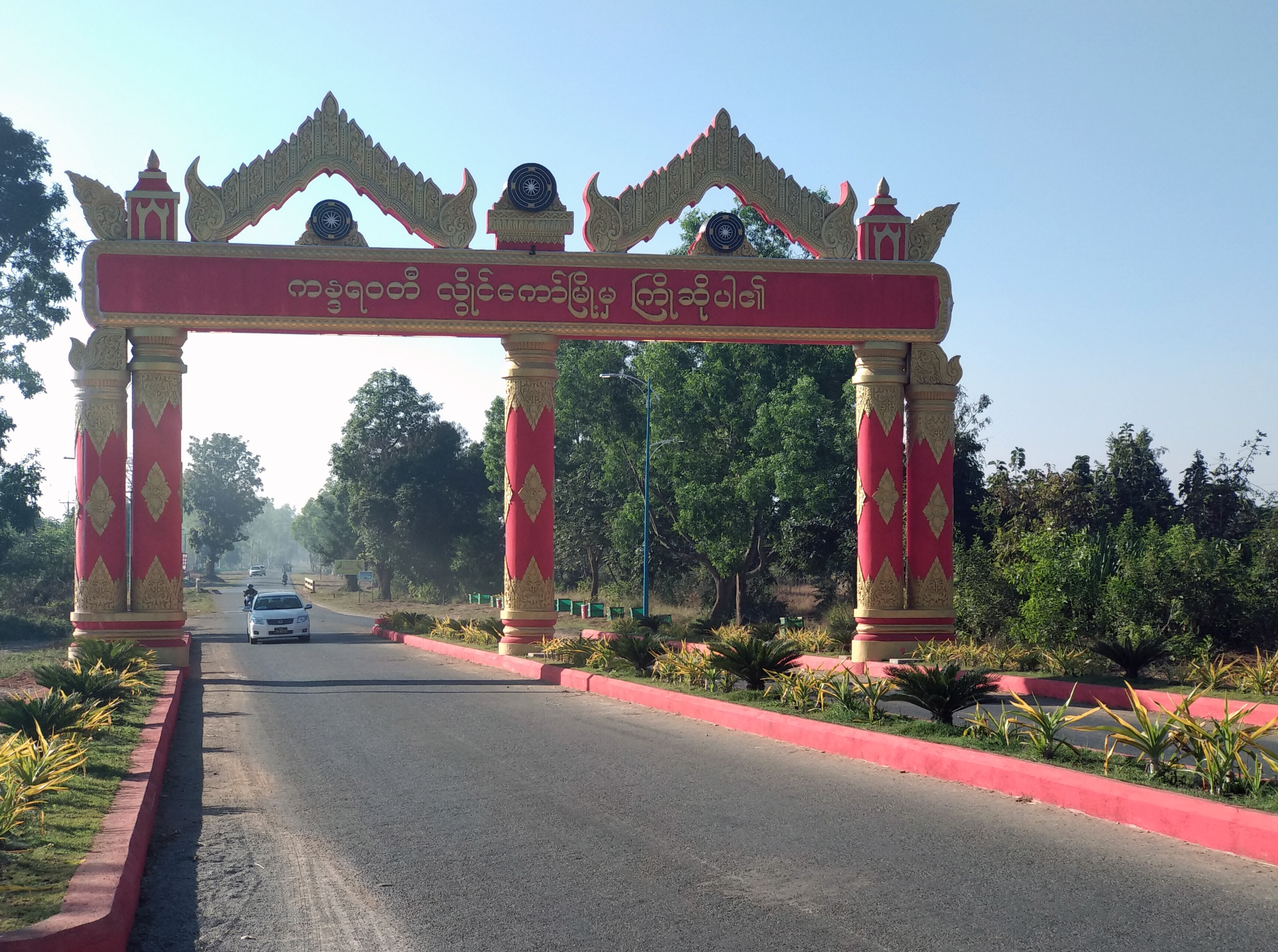
Battle of Loikaw (2021)
Three months after Myanmar's military seized power on 1 February 2021, the capital of the country's smallest state became a battlefield. Loikaw -- a city of roughly 50,000 people nestled in the mountains of Kayah State -- had never been a center of armed resistance. Its university professors taught classes, its markets opened on schedule, and its relationship with the Tatmadaw, while uneasy, was governed by ceasefires that had held for years. Then the coup happened, and Loikaw's civilians decided to fight back with whatever they had.
From Classrooms to Barricades
Massive protests erupted in Loikaw on 8 February 2021, just one week after the coup. For weeks, the demonstrations remained mostly peaceful, though over twenty people were injured during clashes with security forces. The turning point came on 12 March, when several professors at Loikaw University were detained and tortured. The crackdown silenced the street protests temporarily, but it also radicalized the population. By May, five People's Defence Force groups had formed under the banner of the National Unity Government, the shadow civilian administration, in Loikaw, Demoso, Phruso, and Nam Maeng. These were not seasoned guerrillas. They were teachers, students, and shopkeepers who had decided that peaceful protest was no longer enough.
A City Under Siege
On 20 May, protests escalated into armed skirmishes. Karenni National Progressive Party fighters clashed with junta troops near Bawlakhe Township, and within days, running battles engulfed Loikaw itself -- its streets, the road to Demoso, and surrounding villages. An attack on Hloinko Church on 22 May killed four people and injured eight. By late May, PDF fighters were attacking a junta-guarded gate in the village of Pankan, where sixty to seventy soldiers and a helicopter held position. Civilians fled into monasteries and churches, some of which were destroyed in the fighting. Between 1,000 and 2,000 refugees poured out of Loikaw and Pankan during those first chaotic days. In downtown Loikaw, civilians raided a police station. The KNDF reported eight of its fighters and allied PDF killed. On 29 May, the army sealed the main roads in and out of the city.
The Uneasy Ceasefire
A ceasefire took effect on 12 June, though junta forces continued sporadic shelling in the days that followed. Life in Loikaw contracted to the bare minimum -- fuel ran short, and a curfew restricted shopping to a four-hour window between 5am and 9am. Residents of Demoso, Phruso, Mobre, and nearby villages crowded into Loikaw to buy basic goods, their own communities having become unlivable. The junta controlled parts of the city; the resistance held others. When fighting briefly flared on 12 July after junta troops refused to leave a village under KNPP control, both sides pulled back. But the ceasefire was a pause, not a peace. By September, the villages surrounding Loikaw were ghost towns, their populations scattered into the forest or farther afield.
Slow Collapse Into Winter
The junta declared the ceasefire over on 17 September, launching an offensive from Pekon in neighboring Shan State. What followed was a grinding series of ambushes, roadblocks, and village burnings. In November, eighteen junta soldiers and one Karenni Army fighter died in clashes near the village of Sedaw. The National Unity Government began funneling money to the KNDF, though the resistance remained desperately short of ammunition. On 6 November, a junta medic in central Loikaw defected to the KNDF -- a small act that led to a crackdown on motorcycle riders and the arrest of medical staff, cutting off what had been the city's only functioning clinic. By December, the junta had blocked the roads between Loikaw, Demoso, and Bawlakhe. On 18 December, the village of Konna burned. Parts of Naunglong burned too. Fleeing residents reported that soldiers guarded the fires, preventing anyone from extinguishing them.
A Capital Emptied
On 6 January 2022, junta forces launched a full offensive into Loikaw. The KNDF and PDF were embedded among the civilian population, making the city impossible to take without destroying it. Much of Loikaw's population fled. The 2021 battle had not produced a decisive victor, but it had accomplished something the Karenni resistance had never managed before: it had unified disparate PDF groups and ethnic militias under a single cause. By the time the 2022 battle began, the fighters who had been students and shopkeepers eight months earlier were something closer to soldiers. Flying over the green mountains of Kayah State, nothing about the landscape suggests the scale of displacement and destruction below -- which is precisely what makes stories like Loikaw's essential to tell.
From the Air
Located at 19.64N, 97.21E. Loikaw is the capital of Kayah State in eastern Myanmar, situated in a mountain valley at approximately 900 meters elevation. Loikaw Airport (VYLO) serves the city, though operations have been disrupted by the conflict. Heho Airport (VYHH) in Shan State lies approximately 130 km to the north-northwest. The surrounding terrain is mountainous with dense forest cover.