Battle of Long Tan
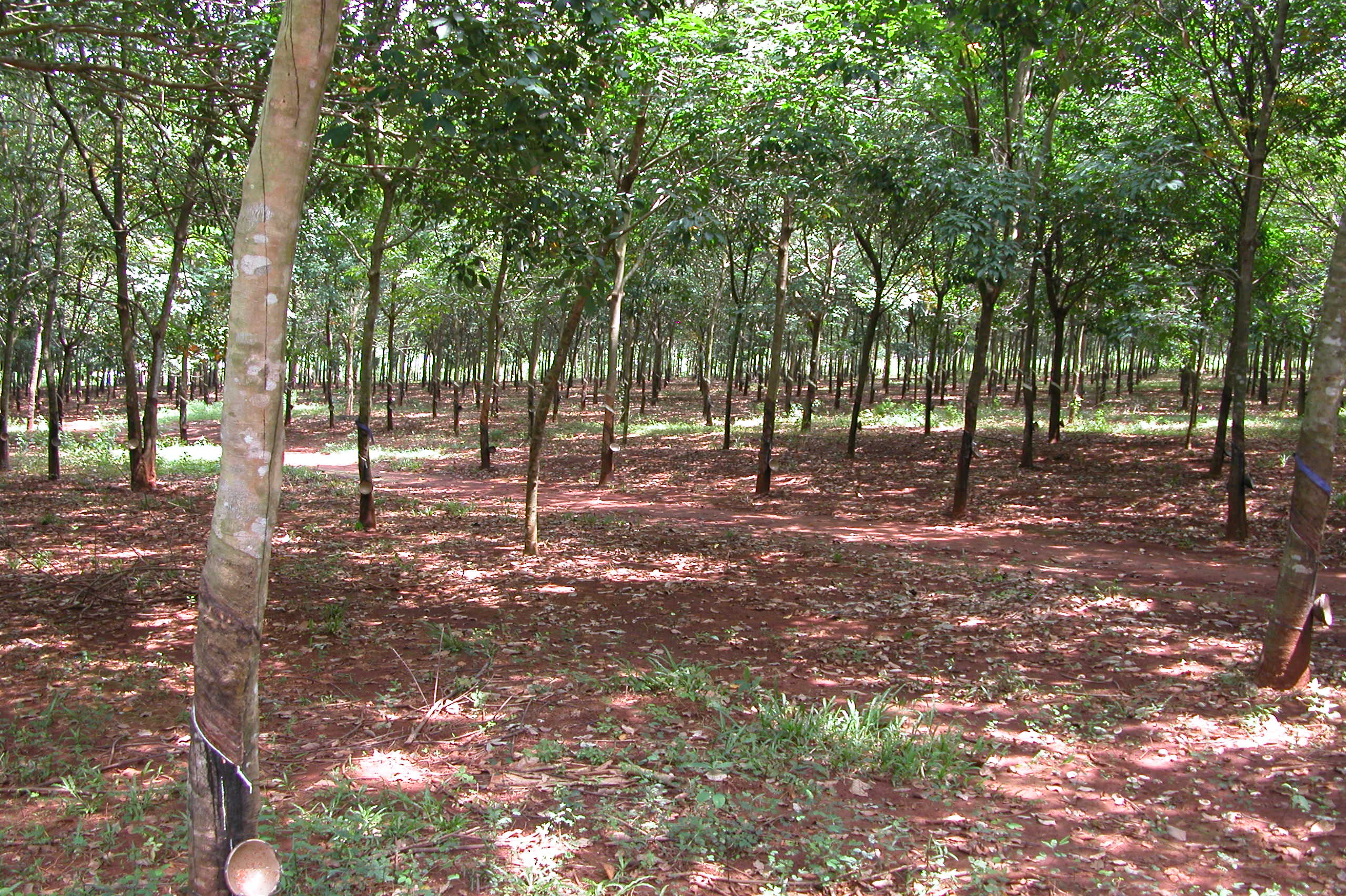
At 15:40 on 18 August 1966, D Company of the 6th Battalion, Royal Australian Regiment walked into a fight they were never supposed to have. One hundred and eight men, sent on a routine patrol to find mortar positions used in an overnight bombardment of the Australian base at Nui Dat, instead found themselves face to face with a force that outnumbered them roughly ten to one. What followed over the next four hours in a rubber plantation near the village of Long Tan, Phuoc Tuy Province, became the most celebrated engagement of Australia's Vietnam War -- a desperate stand in monsoon rain where artillery, ammunition drops, and sheer tenacity held the line against wave after wave of assault.
The Bombardment That Started It All
In the small hours of 17 August, over a hundred mortar rounds slammed into Nui Dat, the 1st Australian Task Force base in Phuoc Tuy Province. Vehicles burned. Tents shredded. Twenty-four men were wounded, one fatally. Counter-battery fire silenced the barrage after twenty-two minutes, but the damage was done -- not just to the base, but to the assumption that the province was quiet. Australian signals intelligence had been tracking the VC 275th Regiment and D445 Battalion moving into position north of Long Tan, just outside artillery range. The next morning, B Company was sent to find the firing positions. They located weapon pits and mortar craters, but no enemy. What they did not yet know was that a force of between 1,500 and 2,500 VC and PAVN soldiers was massing in the rubber plantation barely two kilometres away.
A Platoon Alone in the Trees
D Company, under Major Harry Smith, took over the patrol on 18 August. By early afternoon they had pushed into the rubber plantation east of Nui Dat and begun making contact with small groups of VC. Then, at 15:40, 11 Platoon under Second Lieutenant Gordon Sharp walked into a wall of fire. The VC launched a full regimental assault, attempting to encircle and destroy the Australians. Sharp's platoon, just twenty-eight men, bore the initial brunt. Fighting from behind rubber trees in a torrential downpour that reduced visibility to metres, they held their ground while artillery from Nui Dat -- eventually twenty-four guns -- pounded the jungle around them. For over two hours, 11 Platoon absorbed attacks from three sides. By the time they withdrew to rejoin the company, many were dead or wounded, and most survivors had exhausted their ammunition.
Rain, Rounds, and Resupply
With his company now concentrated but critically low on ammunition, Smith organized a defensive perimeter in a shallow fold of ground on a reverse slope. The terrain, chosen by necessity rather than design, proved decisive -- the VC could not effectively use their heavy weapons and had to close to point-blank range. Two UH-1B Iroquois helicopters from No. 9 Squadron RAAF flew through heavy ground fire and monsoon rain to drop ammunition boxes directly onto D Company's position. The resupply arrived at precisely the moment it was needed most. Meanwhile, the artillery never stopped. The guns at Nui Dat, supplemented by American batteries and a New Zealand battery, fired more than 3,000 rounds over the course of the battle, breaking up VC assault formations again and again. Without that curtain of steel, D Company would almost certainly have been overrun.
The Relief Column
As darkness fell, a relief force of M113 armoured personnel carriers carrying infantry from A Company, 6 RAR crashed through the plantation with headlights blazing and machine guns firing. The armoured vehicles scattered the remaining VC, who had been preparing yet another assault. D Company was saved, but at terrible cost. When the Australians swept the battlefield the following morning, the rubber trees stood stripped of leaves, bleeding sap from thousands of bullet holes. The bodies of VC dead lay scattered across the plantation -- the official Australian count reached 245, though this figure has been disputed, with some participants placing it far lower and the Vietnamese official history recording 47 dead. What was not in dispute was the Australian toll: 18 killed and 24 wounded from D Company alone, with 11 Platoon suffering the heaviest losses. Thirteen of the dead were found lying in a line where they fell, still holding their weapons.
A Contested Legacy
Long Tan's significance has been debated for decades. The Australians initially treated it as a near-disaster -- a single under-strength company had been committed piecemeal against a force of regimental strength, and only artillery and extraordinary luck had prevented annihilation. Over time, the assessment shifted. The battle was reinterpreted as a strategic victory that prevented a major VC assault on Nui Dat and established Australian dominance in Phuoc Tuy Province for the remainder of the war. The VC, for their part, also claimed victory, pointing to the political success of mounting an effective ambush and controlling the battlefield. Every 18 August, Australians and New Zealanders mark Long Tan Day, commemorating the battle that came to symbolize their entire Vietnam experience. The rubber plantation is now a memorial site, its remaining trees still bearing the scars of a fight that lasted barely four hours but echoed for generations.
From the Air
Located at 10.55N, 107.26E in Phuoc Tuy Province (now Ba Ria-Vung Tau Province), approximately 80 km southeast of Ho Chi Minh City. The former rubber plantation is visible from moderate altitude as cleared agricultural land. Nearby airports include Vung Tau Airport (VVVT) approximately 30 km to the south and Tan Son Nhat International Airport (VVTS) in Ho Chi Minh City. The area is flat lowland terrain with scattered rubber and palm plantations.