Battle of Lundy's Lane: The Night the Niagara Ran Red
"I'll try, Sir." Those three words, spoken by Lieutenant Colonel James Miller when ordered to capture the British guns, became one of the most famous replies in American military history. It was the evening of July 25, 1814, and the sun was setting over a low ridge near Niagara Falls where British artillery commanded the field from a hilltop cemetery. What followed was five hours of close-range slaughter that horrified even veterans of the Napoleonic Wars. By midnight, approximately 1,720 men lay killed, wounded, or missing. Neither side could claim the ground. The Battle of Lundy's Lane remains one of the deadliest engagements ever fought on Canadian soil.
The Road to the Ridge
The battle grew out of a larger American campaign along the Niagara frontier. On July 3, 1814, Major General Jacob Brown's army crossed the Niagara River from the American side, captured Fort Erie, and pushed north. Two days later, Brigadier General Winfield Scott's brigade defeated the British at the Battle of Chippawa. But Brown's advance stalled. He lacked heavy artillery to assault Fort George, and the American naval squadron under Commodore Isaac Chauncey never arrived with reinforcements because Chauncey had fallen ill. For most of July, Brown's army sat exposed at Queenston, harassed by Canadian militia and First Nations warriors. On July 24, Brown fell back to Chippawa Creek. The next morning, British Lieutenant General Gordon Drummond arrived at Fort George and immediately pushed forces south. The two armies were on a collision course, converging on a spur road called Lundy's Lane.
Cemetery Hill
Lundy's Lane ran along a ridge about 25 feet above the surrounding terrain, and at its highest point sat a cemetery where the British massed their artillery: two 24-pounder guns, two 6-pounders, a 5.5-inch howitzer, and a Congreve rocket detachment. When Scott's brigade arrived around 6:00 pm, he sent Major Thomas Jesup's 25th U.S. Infantry along a disused track to outflank the British left. Jesup's men caught the British and Canadians mid-deployment and drove them back in confusion, even capturing the wounded Major General Phineas Riall as he rode to the rear. Scott's steadiness forced Drummond to pull back his center, leaving the artillery dangerously exposed. But Scott's brigade was being chewed apart. By nightfall, Brown arrived with the main American force. He pointed at the hilltop guns and gave Miller his order. Miller's 21st Infantry crept to within yards of the British cannon, fired a devastating volley that killed most of the gunners, and charged with bayonets.
Five Hours of Darkness
What followed was fighting of extraordinary ferocity. Drummond, wounded in the neck, reorganized his battered troops and launched three successive counter-attacks to retake his guns. Each time, he sent his men straight up the hill in frontal assaults without using his light infantry to probe for weaknesses. The Americans beat back every attempt in close-range musketry duels fought over the abandoned cannon. Smoke and darkness made identification nearly impossible. The Glengarry Light Infantry, harassing the American left flank, were mistaken for Americans by other British units and took casualties from their own side. Winfield Scott, leading his depleted brigade in an unauthorized attack, was fired upon by both the British and by Ripley's American brigade, who could not tell friend from foe. Scott was severely wounded. Drummond reported that American artillery men were "bayonetted in the Act of loading" and that "the muzzles of the Enemy's Guns were advanced within a few Yards of ours." Veteran British officers who had fought Napoleon's armies in the Peninsular War said they had never witnessed such carnage.
A Hollow Silence at Midnight
By midnight, both armies were spent. Only 700 Americans remained standing in the line. Both Scott and Brown were severely wounded. With supplies and water running out, Brown ordered a retreat. Brigadier General Peter B. Porter and artillery commander Jacob Hindman protested but complied. Hindman struggled to find enough horses to pull his guns away; one American 6-pounder had already been lost when its drivers were killed and the panicked horses bolted into British lines. A team sent back to recover a prized captured British 24-pounder was itself captured by British parties wandering the dark battlefield. The next morning, Ripley returned with 1,200 men to recover the British guns but found Drummond had reoccupied the field with 2,200 troops. The American army fell back to Fort Erie, destroying fortifications and burning bridges behind them, abandoning equipment to make room for the wounded on their wagons.
The Lane Remembers
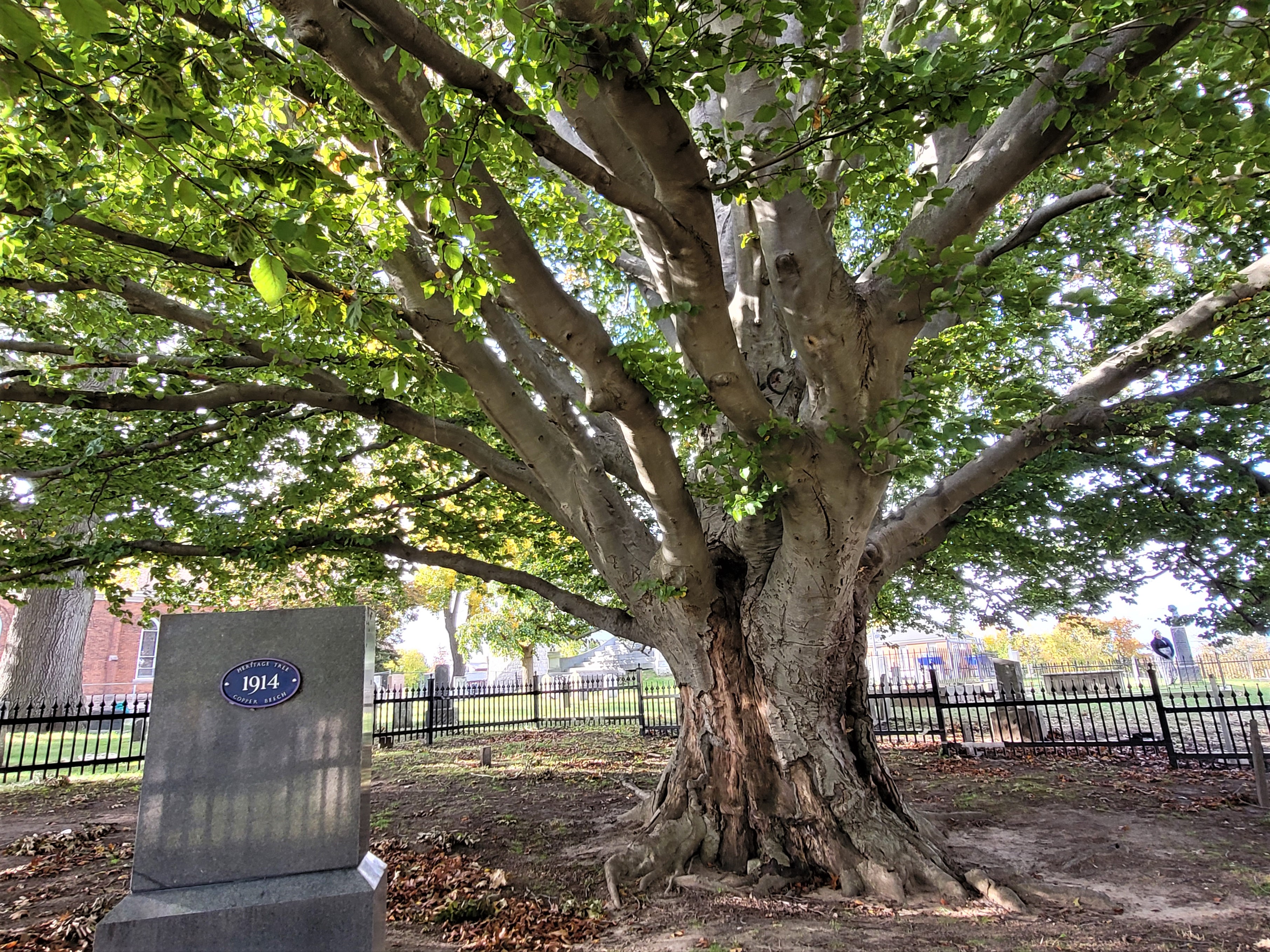
The British suffered 84 killed, 559 wounded, and over 200 captured or missing. American casualties were comparable. Strategically, the British won: Brown's plan to advance on Burlington Heights was shattered, and the balance of power on the Niagara Peninsula shifted permanently to the defenders. The battle also confirmed that America's regular army had matured into a professional fighting force, trained by Scott using French Revolutionary Army drills. Today, the battlefield is a residential and commercial area of Niagara Falls, Ontario, but a preserved site next to Drummond Hill Cemetery holds the Soldier's Monument, unveiled in 1895, and a commemorative wall added in 2004. Laura Secord, the Canadian heroine of the war, is buried in the cemetery. A copper beech tree planted there in 1914 marks the battle's centennial. And the lane that gave a woman named Catherine Lundy her place in history - she stayed behind to give water to British soldiers marching past her house and opened her door to tend the wounded - still carries her family's name.
From the Air
Located at 43.09°N, 79.10°W in present-day Niagara Falls, Ontario, Canada. The battlefield site is now largely built over but Drummond Hill Cemetery and the adjacent memorial park mark the hilltop where the fighting centered. Best viewed at 2,000-3,000 feet AGL. Niagara Falls themselves are visible approximately 1 mile to the southeast. The Niagara River gorge runs north-south as a prominent visual landmark. Niagara Falls/Niagara District Airport (CYSN) is approximately 5 miles west. Niagara Falls International Airport (KIAG) on the American side is approximately 6 miles northeast. The Queenston-Lewiston International Bridge is visible to the north.