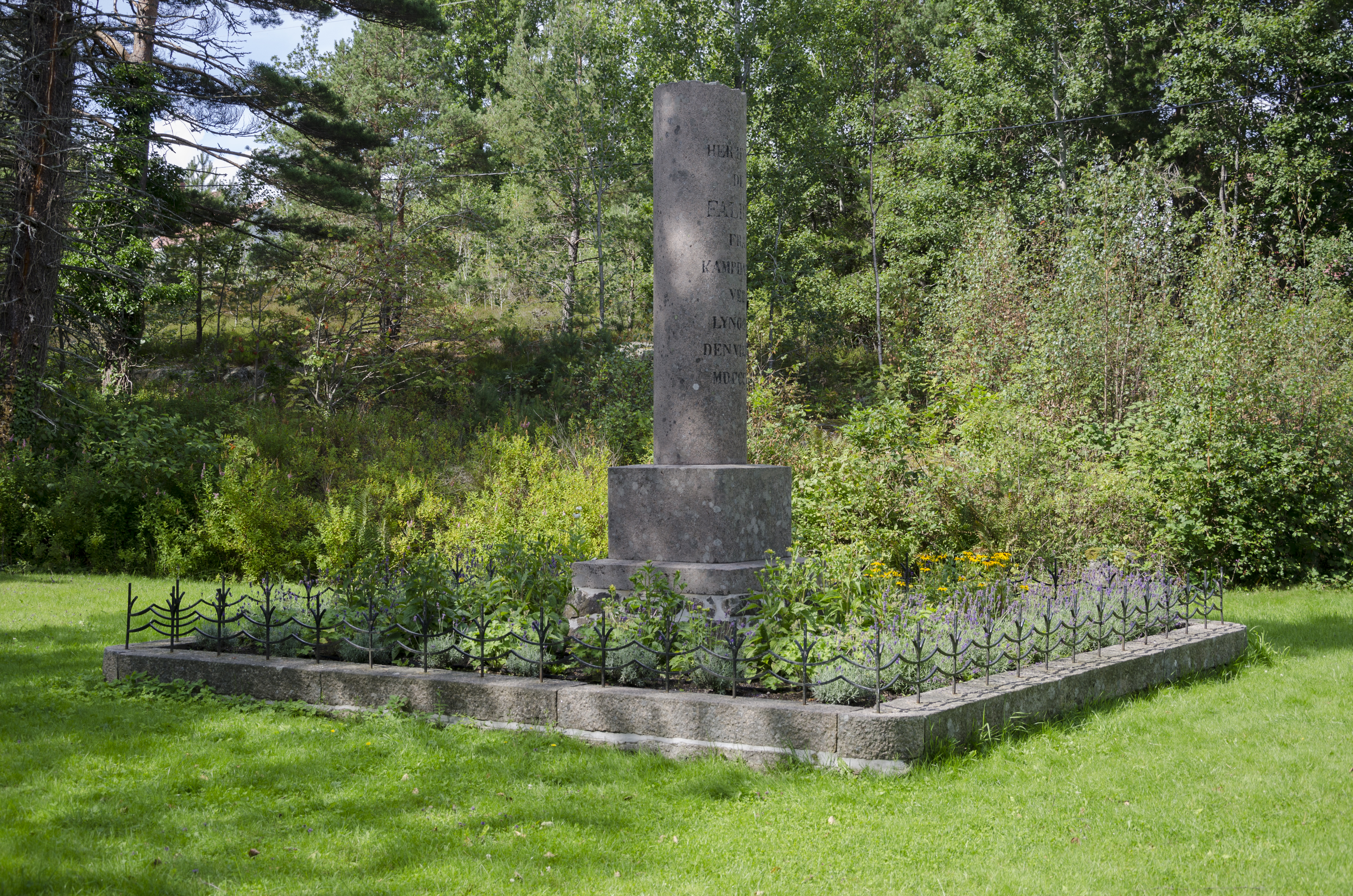
Battle of Lyngør
Captain Hans Peter Holm was dining ashore when he spotted the British squadron threading through the archipelago. He had gambled that no enemy warship would risk the craggy, reef-strewn channels off southern Norway -- channels that even local pilots navigated with caution. On the evening of July 6, 1812, that gamble collapsed. The frigate Najaden, Denmark-Norway's last major warship, was trapped in the narrow sound at Lyngør, and a 64-gun ship-of-the-line commanded by a Scotsman the Royal Navy called "Mad Jim" was bearing down on her at point-blank range.
A Kingdom's Last Ship
By 1812, Denmark-Norway's naval power had been shattered. The British pre-emptive strike of 1807 had seized the entire Danish fleet at Copenhagen, and the blockade that followed strangled trade across the Skagerrak. Norway was cut off from Danish grain; exports ground to a halt. From the wreckage of earlier battles, the Dano-Norwegian navy had managed to construct one new frigate, Najaden, finished in 1811 from salvaged timber. She sailed with three brigs -- Kiel, Lolland, and Samsøe -- and together they represented the last thread of Danish-Norwegian seapower. The British sent Captain James Stewart with the ship-of-the-line Dictator and three brigs to cut that thread for good.
Fifteen Minutes in the Sound
Holm's plan had been to avoid the British entirely, using his knowledge of the coast to slip through passages too shallow and too tight for Stewart's heavier ship. But Stewart had a pilot aboard who knew the waters, and Dictator pressed into the archipelago. When the British brig Podargus ran aground at Buskjærsteinen, Stewart pressed on alone. He sailed into the sound at Lyngør, dropped an anchor behind him, and used the cable to swing Dictator broadside-on to Najaden at a range of barely 35 meters. Najaden could not turn; her guns faced the wrong direction. At 9:30 in the evening, Dictator opened fire. The barrage lasted fifteen minutes -- four tons of ordnance that broke Najaden's mainmast immediately and set the ship ablaze. The two Danish brigs nearby surrendered within minutes.
The Anchor That Changed History
Stewart's tactic -- dropping a stern anchor and pivoting his ship with it -- was the decisive stroke. It transformed a chaotic pursuit through narrow channels into a controlled broadside engagement at musket range, negating every advantage the Norwegians held in local knowledge. The maneuver was audacious and brutal. Najaden burned to the waterline. The captured brigs Laaland and Kiel ran aground and were abandoned, though the British spared them from further destruction because their crews and wounded were still aboard. For the sailors of Najaden, the loss was total: their ship, their navy, and ultimately their kingdom's sovereignty over Norway.
From Defeat to Independence
The destruction of Denmark-Norway's last warship effectively ended the kingdom's capacity to wage war. Two years later, the Treaty of Kiel compelled Denmark to cede Norway to Sweden -- but the Norwegian reaction was defiance, not submission. Norway established its own parliament, the Storting, and drafted a constitution in 1814 that remains the foundation of Norwegian democracy. The battle at Lyngør, a small-scale naval action in a remote sound, had set in motion forces far larger than the combatants imagined. Today the wreck of Najaden rests in the harbor, a popular diving site. A cannon recovered in 1995 may belong to the frigate. Each year, a commemorative play reenacts the battle in the village, and a replica gunboat built for the 200th anniversary in 2012 keeps the memory on the water.
From the Air
Coordinates: 58.63°N, 9.13°E. The battle took place in the narrow sound at Lyngør, a tiny island community off Tvedestrand on Norway's southern coast. From the air, the archipelago is a maze of islets and skerries -- exactly the kind of terrain Captain Holm relied on for protection. Recommended viewing altitude: 2,000-3,000 feet to appreciate the tight channels. Nearest airports: Kristiansand Kjevik (ENCN) to the southwest, Sandefjord Torp (ENTO) to the northeast.