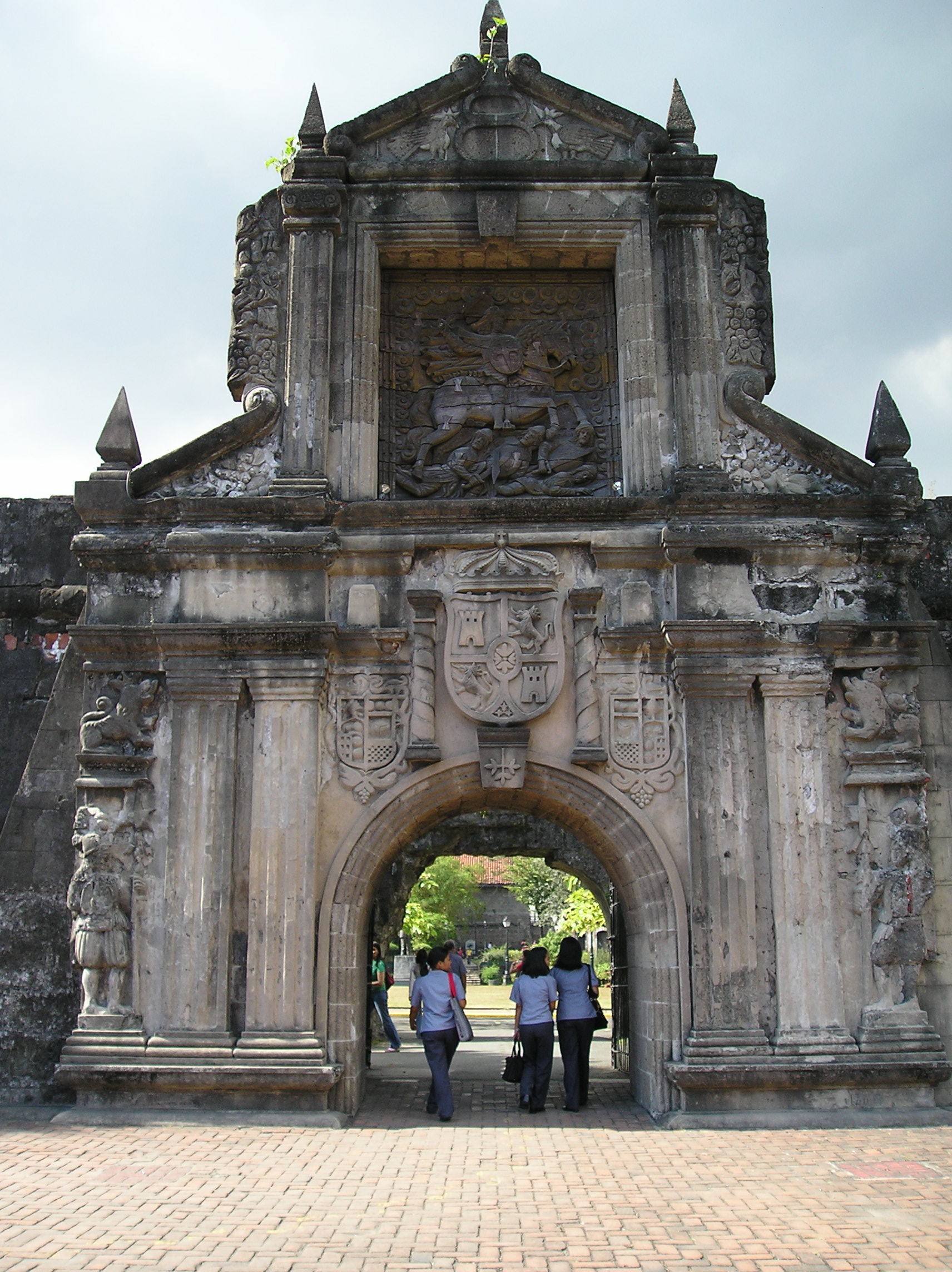
Battle of Manila (1574)
Limahong had a problem. Expelled from China by the imperial fleet after a defeat in Guangdong, the warlord needed a new base of operations. When his men captured a Chinese trading ship carrying Spanish sailors, the prisoners revealed that Manila's garrison numbered only about 200 soldiers, half of them Mexican-born criollos, mestizos, and indigenous auxiliaries. With a fleet of roughly 60 junks carrying 2,000 soldiers, 2,000 sailors, and 1,500 colonists, Limahong sailed for Luzon in November 1574, convinced the city would fall easily. He was wrong.
A Pirate King's Gamble
Limahong was no ordinary raider. He commanded a formidable force that included Japanese pirates known as wokou, and his ambitions went beyond plunder. He intended to conquer Manila and establish a permanent base in the Philippines. His fleet arrived in Luzon guided by captured Spanish prisoners, but Limahong made a fatal miscalculation at the outset: he ordered the prisoners executed upon reaching the beach. Without their knowledge of Manila's geography, his advance force under a commander named Sioco fell into treacherous currents, lost three boats, and drifted off course to Paranaque instead of reaching Manila directly. The element of surprise, the one advantage Limahong desperately needed, was slipping away.
Blood at the Gates
On November 30, 1574, Sioco led 400 to 600 pirates in a night assault. Approaching Manila on foot from Paranaque, they struck before the garrison could fully organize. In the initial chaos, Limahong's forces killed Martin de Goiti, the Spanish maestre de campo and one of the colony's most experienced officers. But Goiti's death ironically delayed the pirates. His house stood in their line of march, and the fighting there gave the garrison time to react. Local residents who heard the battle sent warnings ahead, and the defenders prepared. When Juan de Salcedo, the young conquistador commanding Spanish outposts in northern Luzon, arrived with reinforcements, the acting governor Lavezaris promoted him to the maestre de campo title that Goiti's death had left vacant. Salcedo's combined force now included 150 to 200 Iberian soldiers and 200 Ilocano warriors from Bauang.
Matched Steel, Unmatched Nerve
What makes this battle unusual for its era is how evenly matched the two sides were in technology. Both armies carried arquebuses and small artillery. Both wielded swords. The Chinese and Japanese pirates bore long-tipped pikes described as strong enough to pierce the thickest mail coats, along with sabers, catanes, and scimitars. They wore steel armor, mail, and padded gambesons, and deployed gunpowder hand grenades and incendiary devices. The Spanish advantage lay not in superior weapons but in defensive positions, discipline, and the critical timing of Salcedo's reinforcements. When Limahong launched his second assault on December 2 with 1,500 men, Salcedo drove them back to the beach. Limahong deployed 400 more troops and attempted a diversion, setting two grounded ships ablaze to draw Salcedo's attention. The Spanish captain saw through the ruse and attacked the raiding parties instead.
Retreat and Reckoning
Outmaneuvered, Limahong recalled his forces to the ships and abandoned the shore under Spanish fire. He sailed north and attempted to establish a colony at Pangasinan, but Salcedo pursued him the following year and defeated him again. Limahong fled the Philippines entirely. The consequences of the failed invasion extended beyond the archipelago. The Viceroy of Fukien traveled to the Philippines, initially to negotiate Limahong's release, but the visit ultimately established the first diplomatic relations between China and the Spanish Philippines. Meanwhile, Salcedo had to deal with ripple effects closer to home, quelling uprisings in Tondo and Mindoro where chieftain Lakandula had taken hostages. Manila had survived its most serious early colonial threat, and the battle demonstrated something the Spanish would rely on for centuries: the colony's defense depended as much on Filipino allies as on Iberian soldiers.
From the Air
The Battle of Manila (1574) took place in the area of modern Paranaque and Intramuros, Manila, at approximately 14.58N, 120.97E. The walled district of Intramuros is visible along the south bank of the Pasig River near Manila Bay. Ninoy Aquino International Airport (RPLL) is just 7 km south. Manila Bay stretches to the west. Best viewed at moderate altitude with clear weather; the contrast between the dense urban grid and the remaining walls of Intramuros marks the historic core.