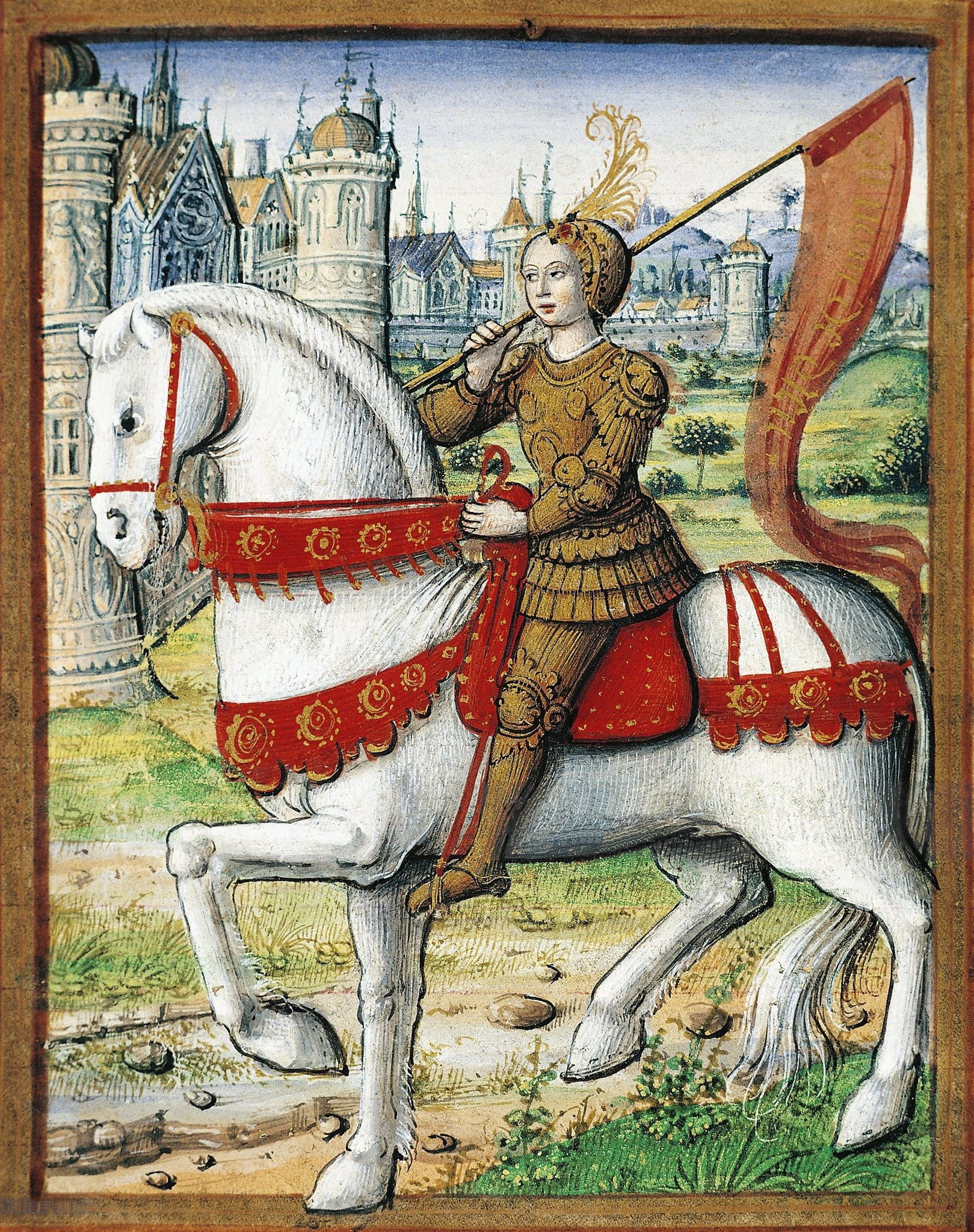
Battle of Meung-sur-Loire
By the end of 1428, virtually all of France north of the Loire had fallen to English occupation. The river itself had become a front line, and every bridge crossing was a strategic prize. On 15 June 1429, barely five weeks after the miraculous relief of Orleans, Joan of Arc and the Duke of Alencon led a French army to the small town of Meung-sur-Loire and made a decision that revealed a new kind of French confidence: rather than assault the heavily defended town and its imposing castle, they ignored both entirely and struck straight at the bridge.
The River That Divided France
Meung-sur-Loire sat on the northern bank of the Loire in the Loiret, slightly west of Orleans. Its bridge was one of several river crossings the English controlled as staging points for their planned conquest of southern France. The bridge at Orleans had been destroyed during the siege. The French had lost control of every other crossing. Whoever held the Loire's bridges held the ability to move armies north and south, and by mid-1429 that advantage belonged almost entirely to England. The Loire Campaign of 1429 -- five rapid actions at Orleans, Jargeau, Meung-sur-Loire, Beaugency, and Patay -- aimed to change that. These were not grand set-piece battles but swift, targeted strikes designed to recapture the river crossings and break the English grip on central France.
A Roll Call of Warriors
The French force that arrived at Meung-sur-Loire was commanded by Joan of Arc and Duke John II of Alencon, but its roster of captains reads like a who's who of late medieval French warfare. Jean d'Orleans, the Bastard of Orleans who had helped defend the city during its siege, was present. So was Gilles de Rais, a nobleman whose later infamy would eclipse his considerable military reputation. Jean Poton de Xaintrailles and La Hire, two of the most aggressive French commanders of the war, completed the leadership. Estimates from the Journal du Siege d'Orleans place the French strength at 6,000 to 7,000, though that figure likely included non-combatants. Facing them, the English garrison included the formidable John Talbot, Earl of Shrewsbury, and Thomas Scales, two of England's most experienced commanders.
Bypassing the Stronghold
English defenses at Meung-sur-Loire comprised three elements: the walled town, a large walled castle just outside it that served as Talbot's headquarters, and the fortification guarding the bridge itself. A conventional approach would have meant besieging all three in sequence, a time-consuming operation that would have surrendered the initiative the French had seized at Orleans. Joan and Alencon chose differently. They bypassed both the town and the castle entirely, staging a frontal assault directly on the bridge fortifications. The attack succeeded in a single day. The French installed a garrison to hold the captured bridge and moved on, leaving the English castle and town isolated but intact behind them. It was a textbook example of economy of force -- taking the objective that mattered and leaving everything else.
The Campaign That Broke England's Back
The seizure of the bridge at Meung-sur-Loire hampered English movement south of the Loire at a critical moment. Combined with the storming of Jargeau three days earlier and the subsequent siege of Beaugency, it stripped the English of their river crossing network in central France. The Loire Campaign killed, captured, or disgraced a majority of England's top-tier commanders in the region and decimated the ranks of their highly skilled longbowmen. Three days after Meung-sur-Loire, the French cavalry annihilated an English field army at Patay in what historians consider the most decisive French tactical victory of the war. Within weeks, the Dauphin Charles marched to Reims and was crowned King Charles VII of France on 17 July 1429. The second sustained French offensive in a generation had succeeded beyond anyone's expectations -- and it had been built, bridge by bridge, along the Loire.
From the Air
Located at 47.83°N, 1.70°E in the Loiret department of central France, on the northern bank of the Loire river slightly west of Orleans. The town and its historic bridge are visible from the air along the Loire's broad, sandy channel. Nearest airport is Orleans-Bricy (LFOJ) approximately 20 km to the east. Best viewed from 2,000-4,000 feet AGL. The Loire valley provides clear visual context for the strategic importance of the river crossings.