Battle of Monte Cassino
The abbey on the hilltop had survived for fourteen centuries. Founded in 529 AD by Benedict of Nursia, Monte Cassino was the birthplace of the Benedictine order and one of the most sacred sites in Western Christianity. In January 1944, it became the linchpin of the German Gustav Line, the most formidable defensive position in Italy, blocking the Allied advance toward Rome. Over the next four months, four separate assaults would be launched against this mountain fortress. The Allies would bomb the monastery into rubble, watch the Germans occupy those ruins and fight even harder from them, and suffer 55,000 casualties before Polish soldiers finally raised their flag over the wreckage on May 18. The German defenders lost an estimated 20,000 killed and wounded. The mountain earned every drop of blood.
The Geography of Entrapment
The problem was the terrain. Highway 6, the Via Casilina, was the only viable route from Naples to Rome, and it ran through the Liri valley -- directly beneath the rugged mass of Monte Cassino. From the peaks above, German observers could detect any Allied movement and direct devastating artillery fire onto troops attempting to advance. The fast-flowing Rapido River cut across the Allied front, its banks flooded by the Germans to create a waterlogged killing ground where armor could only move on paths laid with steel matting. The alternative, Highway 7 along the coast, ran into the Pontine Marshes, which the Germans had also flooded. Generalfeldmarschall Albert Kesselring had ordered his forces not to occupy the abbey itself out of respect for its historical significance, informing both the Vatican and the Allies of this decision in December 1943. He did not need to occupy it. The slopes below the monastery walls, the surrounding ridges, and the river crossings formed a natural fortress that the abbey merely crowned.
The Killing Fields of the Rapido
The first battle opened on January 17, 1944. British X Corps forced crossings of the Garigliano near the coast, causing genuine alarm among the German defenders of the 94th Infantry Division. For a brief moment, the Gustav Line wobbled -- but Fifth Army headquarters failed to recognize the opportunity, and Kesselring rushed two divisions from Rome to stabilize the position. Three days later, the U.S. 36th Infantry Division attempted the central crossing of the flooded Gari River. The results were catastrophic. Soldiers struggled through uncleared minefields to reach a river they could barely see in the darkness. Those who made it across found themselves isolated, without armor support, exposed to counter-attacks by the 15th Panzergrenadier Division when daylight came. By the evening of January 22, the 141st Infantry Regiment had virtually ceased to exist; only 40 men made it back to Allied lines. The 36th Division lost 2,100 men killed, wounded, and missing in 48 hours. The debacle became the subject of a Congressional inquiry after the war.
The Bombing That Made Things Worse
As casualties mounted, Allied commanders convinced themselves that the Germans were using the abbey as an observation post. On February 15, 1944, Allied bombers dropped approximately 1,150 tonnes of high explosives on Monte Cassino, reducing the ancient monastery to rubble. The decision remains one of the most controversial of the war. German paratroopers -- the elite Fallschirmjager, known as the Green Devils -- had not been inside the monastery. But once it was destroyed, they moved into the ruins and found that shattered walls and heaped masonry provided far better defensive positions than an intact building ever could have. The 34th Infantry Division, which had fought its way to within 400 yards of the abbey walls, was withdrawn after sustaining roughly 80 percent casualties in its infantry battalions. Their performance in the mountains north of Cassino is considered one of the finest feats of arms by any soldiers during the war. A second assault in February and a massive third attack in March, preceded by carpet-bombing that leveled the town of Cassino itself, both failed to dislodge the defenders.
The Polish Flag Over the Ruins
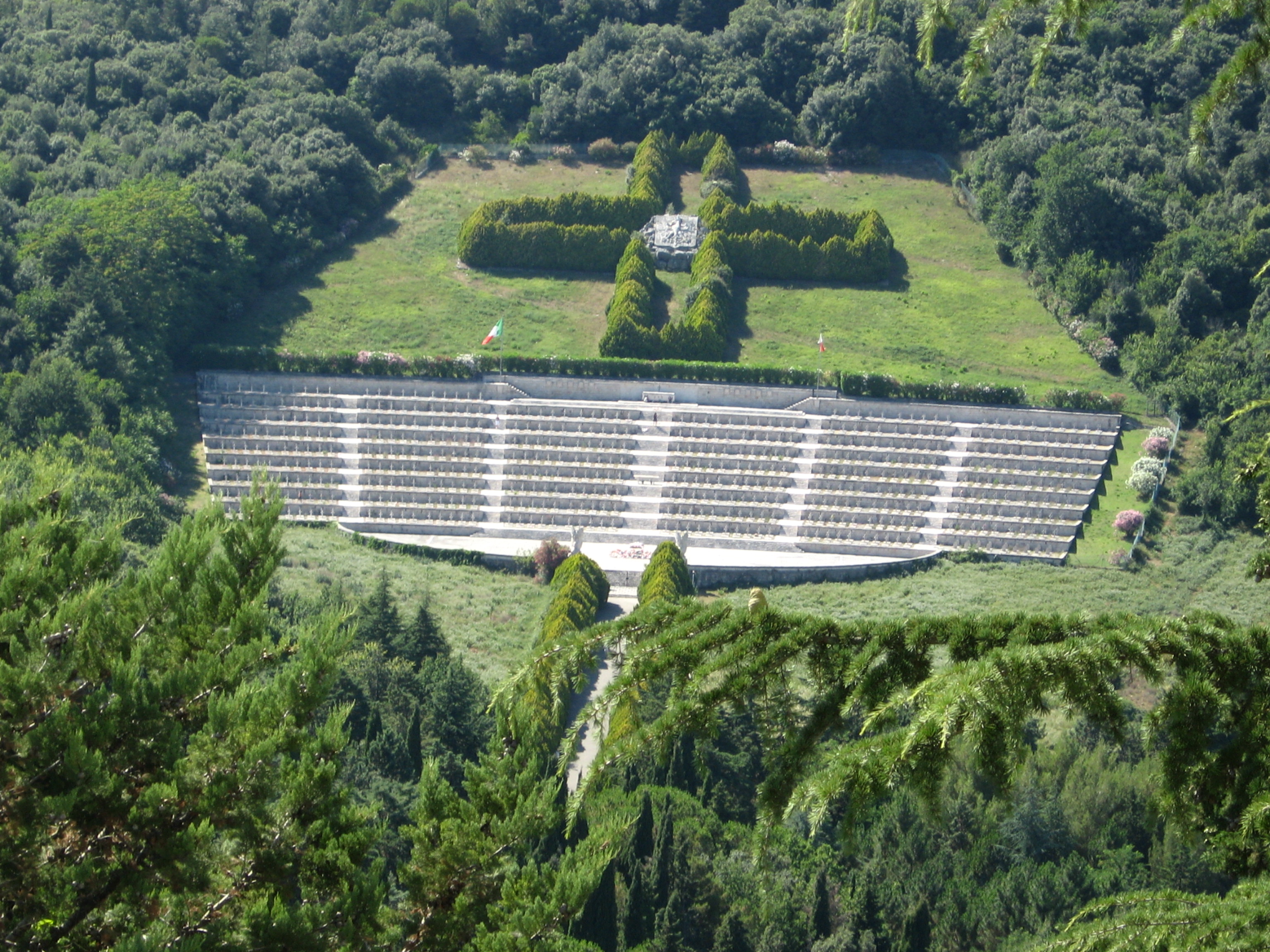
The fourth and final battle began on May 11 as part of Operation Diadem, a coordinated twenty-division assault along a 32-kilometer front. Soldiers from the Polish II Corps, under General Wladyslaw Anders, drew the assignment of taking the monastery itself. Many of these men had endured Soviet imprisonment after Poland's partition in 1939 before being released to fight alongside the Allies -- they carried personal reasons for wanting to prove themselves on this ground. After days of fierce fighting on the exposed ridges, Polish troops launched their final assault on May 17. The next morning, a patrol from the 12th Podolski Lancers found the position abandoned. The German paratroopers had finally withdrawn. On May 18, 1944, the Polish flag and the Union Jack were raised over the ruins of Monte Cassino. The monastery was rebuilt after the war, stone by stone, and reconsecrated in 1964. A Polish military cemetery below the abbey holds the remains of 1,052 soldiers who died taking the mountain. The inscription reads: "For our freedom and yours, we soldiers of Poland gave our soul to God, our bodies to the soil of Italy, and our hearts to Poland."
From the Air
Monte Cassino is located at 41.490N, 13.814E, approximately 130 km southeast of Rome in the Liri valley of central Italy. From 3,000-5,000 feet AGL, the rebuilt white abbey is strikingly visible atop its 520-meter hill, dominating the town of Cassino below and the entrance to the Liri valley. The Rapido and Gari rivers are visible winding through the valley floor. The terrain is mountainous, rising sharply from the valley to the Apennine ridgeline. Rome Ciampino Airport (LIRA/CIA) lies roughly 110 km to the northwest. Naples Capodichino Airport (LIRN) is about 90 km to the south. The Polish and Commonwealth war cemeteries are visible on the lower slopes below the abbey.