Battle of Motien Pass
General Fyodor Keller knew Motien Pass was the key to the Liaodong Peninsula. Sitting astride the main road between the coast at Antung and the interior city of Liaoyang, this mountain crossing controlled movement across the peninsula's spine. Whoever held it controlled access. On the morning of July 10, 1904, Keller's Russian garrison held it. By afternoon, they had lost it. The speed of the reversal, the manner in which it happened, and the mystery of why Keller abandoned such a defensible position have puzzled military historians ever since -- not least because the general himself was killed trying to take it back, leaving no explanation.
Stripped for Someone Else's Defense
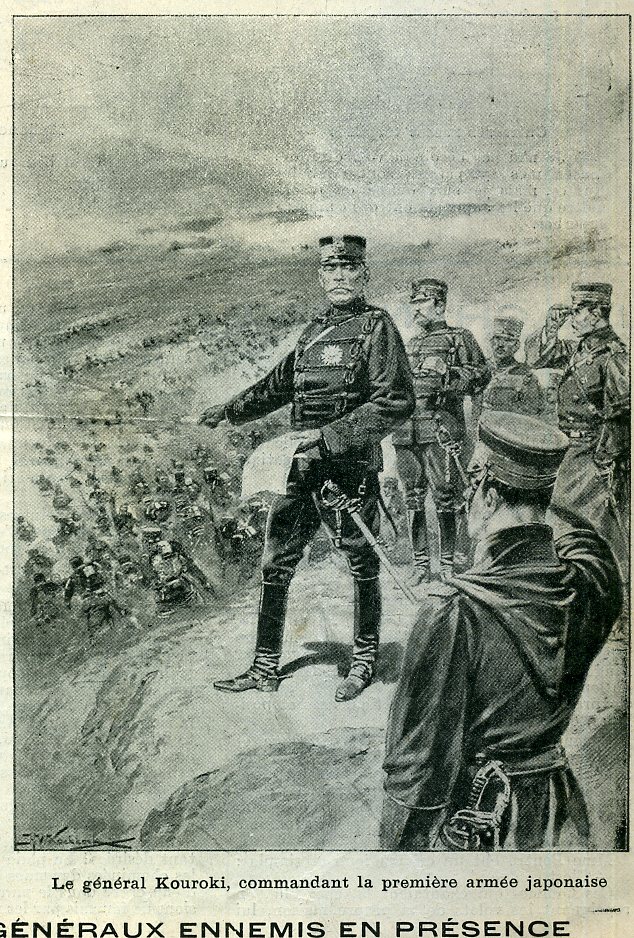
The Battle of Motien Pass cannot be understood without understanding the dysfunction that plagued the Russian command in Manchuria during the Russo-Japanese War. General Alexei Kuropatkin, the Russian commander-in-chief, was fixated on defending Haicheng, which he believed was the convergence point for the three Japanese armies -- a conclusion drawn from studying the First Sino-Japanese War a decade earlier. To plug real and imaginary gaps in his defensive line, Kuropatkin systematically stripped forces from other positions, including Keller's. Already weakened by losses at the Battle of Te-li-Ssu, Keller was forced to give up regiment after regiment to Haicheng's defense. On July 9, the very day that Japanese General Kuroki Tamemoto decided to attack, Keller received orders depriving him of yet another regiment.
Straw Sandals in the Darkness
Kuroki's plan was elegant in its simplicity. His Japanese 1st Army had paused at Fenghuangshan from July 2 to 8, awaiting supplies and reinforcements. The attack, when it came, combined a direct frontal assault with two flanking movements designed to encircle the Russian position. During the night of July 8-9, one Japanese force moved along an unguarded path to the rear of the Russian right flank, supported by Maxim machine guns and mountain artillery. A second group accomplished something remarkable: wearing Japanese straw sandals to muffle their footsteps, they moved around the Russian left flank entirely undetected. The Russians guarding the pass had three infantry regiments, three artillery batteries, and a Cossack regiment -- a capable force, but one that could be overwhelmed if struck simultaneously from multiple directions.
Three Hours from Confidence to Encirclement
The battle opened at 05:15 on July 10 with a frontal assault that the Russian artillery initially repulsed. By 07:00, the direct attack had faltered under heavy fire, and it must have seemed to the defenders that their position was holding. Then, at 08:00, the flanking forces revealed themselves. The Russians found themselves nearly encircled, attacked from the front and both flanks simultaneously. What had been a defensible position became a trap. The speed of the collapse -- from confident defense to near-encirclement in under three hours -- reflected both the effectiveness of Kuroki's planning and the vulnerability of a garrison that had been progressively weakened by its own high command.
The General Who Left No Notes
The Japanese occupied Motien Pass on July 13. Casualties on both sides were relatively light, making the Russian abandonment of such a strategic and easily defensible position all the more puzzling. Military commentators have speculated extensively about why Keller withdrew with so little resistance. Was it the shock of encirclement? The demoralization of a garrison repeatedly stripped of its strength? A calculation that the pass was no longer tenable without reinforcements that would never come? No one knows, because Keller attempted a counterattack to retake the position and was struck by shrapnel from Japanese artillery fire. He died from his wounds, taking whatever explanation he might have offered with him. The pass remained in Japanese hands, and the road to Liaoyang lay open.
From the Air
Located at approximately 40.00°N, 122.50°E on the Liaodong Peninsula, Liaoning Province. The pass sits in mountainous terrain between the coast near Dandong and the interior at Liaoyang. Nearest airports: Dandong Langtou Airport (ZYDD) and Dalian Zhoushuizi International Airport (ZYTL). Recommended viewing altitude: 8,000-12,000 ft. The mountainous spine of the Liaodong Peninsula and the road through the pass are visible from the air.