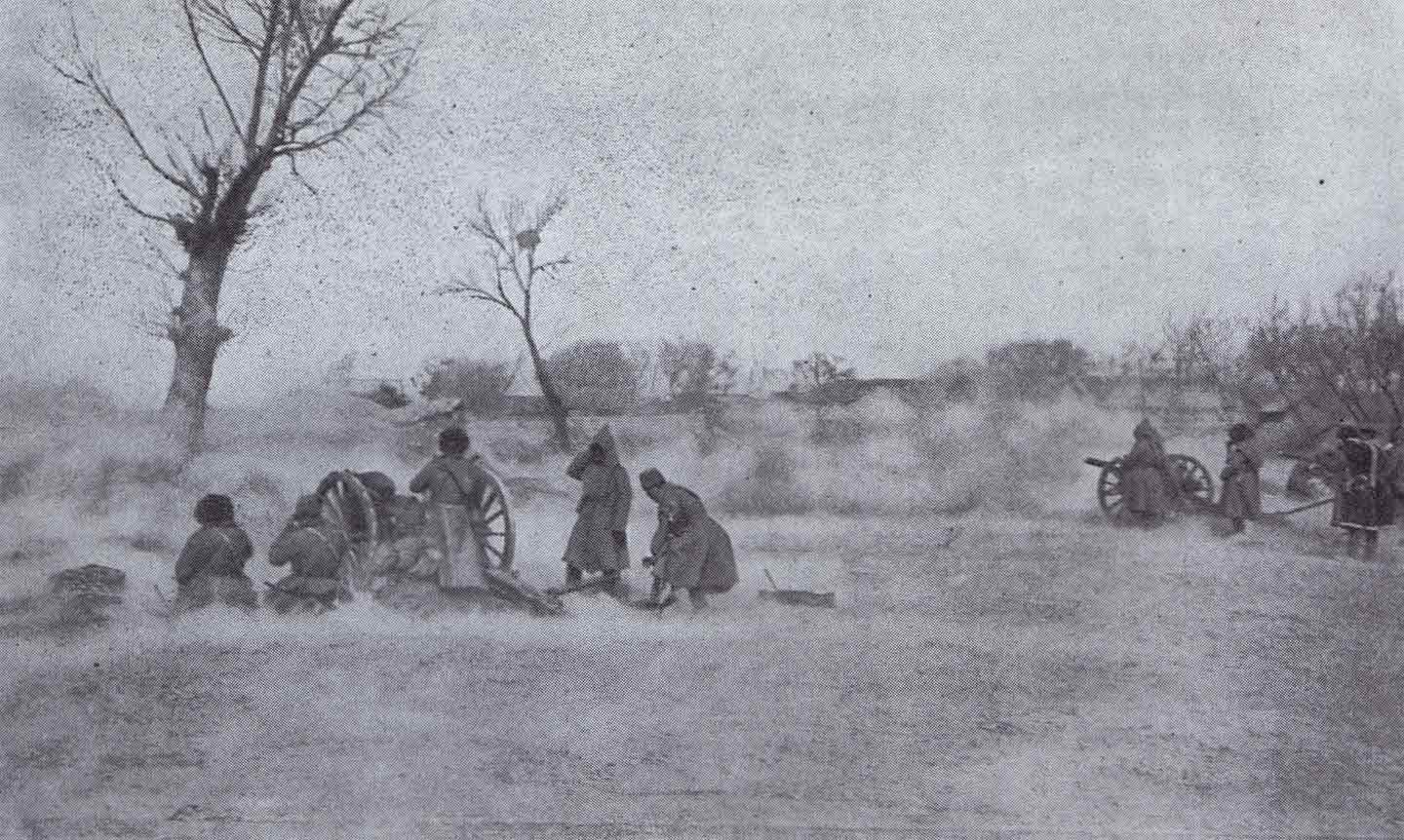
Battle of Mukden
In just over ten days of fighting, the Japanese army alone fired 20.11 million rifle and machine gun rounds and 279,394 artillery shells. The Russians fired even more. That ammunition expenditure matched what the German army had used in the entire 191-day Franco-Prussian War and exceeded what the British had fired during the whole of the Second Boer War. The Battle of Mukden, fought from 20 February to 10 March 1905, involved 610,000 soldiers and produced 164,000 casualties. It was the largest battle the modern world had ever seen, a rehearsal for the industrialized slaughter that would define World War I a decade later.
Two Exhausted Empires
By February 1905, both sides were approaching the limits of their endurance. The Russian army under General Aleksey Kuropatkin had been beaten at Liaoyang, fought to a stalemate at the Shaho River, and failed in its counter-offensive at Sandepu. Reinforcements from European Russia were constrained by the unfinished Trans-Siberian Railroad and diverted by the Bloody Sunday uprising and the revolutionary unrest spreading across the empire. The Japanese were in no better shape. The capture of Port Arthur by General Nogi Maresuke had freed up the 3rd Army, but by the time it marched north to Mukden, Japan's manpower reserves were effectively drained. Marshal Oyama knew this was his last chance to destroy the Russian force outright, before his own army disintegrated from exhaustion.
The Crescent Closes
Oyama's plan was elegant in conception and savage in execution. He would form his armies into a crescent around Mukden, cutting off the possibility of Russian escape. The newly formed Yalu River Army, consisting mainly of Port Arthur veterans and reservists, attacked the Russian eastern flank on 20 February as a diversion. Kuropatkin took the bait, convinced that the main Japanese thrust would come from the mountainous east. Meanwhile, Nogi's 3rd Army began a wide sweeping movement to the northwest, threading behind the Russian lines. By 7 March, Kuropatkin realized the danger and began shifting forces from east to west, but the redeployment was so poorly coordinated that his 1st and 3rd Manchurian Armies dissolved into chaos.
The Frozen River
Luck favored the Japanese in an unexpected way. A late thaw left the Hun River frozen solid, removing what should have been a natural obstacle on the Russian left flank. When Oyama changed his orders from "attack" to "pursue and destroy," Japanese troops poured across the ice. They encountered fierce resistance from forces under General Paul von Rennenkampf, taking heavy casualties before finally securing the northern bank. The Russian defense lines collapsed and the far edge of their left flank was partially severed from Kuropatkin's main body. A salient formed just 15 kilometers west of Mukden, and the Japanese were in position to complete the encirclement. At 18:45 on 9 March, Kuropatkin gave the order to retreat north. By 10:00 the next morning, Japanese forces occupied Mukden.
The Shock That Reached St. Petersburg
Russian casualties approached 90,000. Kuropatkin's army, though battered and demoralized, remained largely intact and fled north toward the Sino-Russian border. Oyama's overstretched supply lines prevented him from completing the destruction he had planned. But the battle's significance transcended its tactical outcome. When the news reached the palace in St. Petersburg, Tsar Nicholas II was stunned that Japan, an island nation comprising roughly two percent of Russia's landmass, could inflict such a decisive defeat. The victory confirmed the Japanese army as the world's sixth largest military force and shattered the assumption, held across Europe, that European armies were automatically superior to those of other nations. The battle's techniques -- massive artillery bombardments, entrenched defensive lines, coordinated flanking movements across fronts stretching dozens of miles -- would become the standard grammar of warfare in 1914.
From the Air
Located at 41.78°N, 123.43°E, centered on present-day Shenyang (formerly Mukden), the capital of Liaoning Province. The Hun River, which played a crucial role in the battle, is visible running through the southern part of the city. The 90-mile front extended across the flat Manchurian plains to the south and west. Shenyang Taoxian International Airport (ZYTX) is approximately 20 km south of the city center. The former South Manchurian Railway line still runs through the area.