Battle of Muraki Castle
The defenders of Muraki Castle heard them before they saw them. On January 24, 1554, ships appeared from the direction of Atsuta port, thirteen miles up the coast of Ise Bay, carrying soldiers armed with arquebus firearms that had been in Japan for barely a decade. When the guns opened fire, the castle's garrison surrendered on the first call. It was the kind of warfare nobody in Owari Province had seen before, and the twenty-year-old commander who orchestrated it was the same young lord his enemies still dismissed as a fool. Oda Nobunaga had arrived.
A Province Torn Apart
By the spring of 1552, the seventeen-year-old Nobunaga had inherited his father's estates in southwestern Owari Province, centered on Nagoya Castle. The picture around him was grim. His cousins, the Oda branch at Kiyosu Castle, controlled the southern reaches of the province. To the east, the Imagawa clan under Imagawa Yoshimoto held a vast domain spanning three provinces: Suruga, Totomi, and Mikawa. Imagawa's vassals, the Matsudaira clan who would later become the Tokugawa, added further pressure from Mikawa. Nobunaga's humiliating defeat at the Battle of Akatsuka in 1552 had emboldened his enemies and driven more retainers toward defection. He needed a victory, and he needed it to be spectacular.
Gunpowder on the Water
Nobunaga's plan was audacious by any standard of the era. Rather than march overland into contested territory where he could be intercepted, he loaded arquebus-armed troops onto ships at Atsuta port, south of Nagoya, and sailed thirteen miles down Ise Bay. The arquebus had only arrived in Japan in 1543, imported by Portuguese traders on the island of Tanegashima, and most commanders still treated firearms as curiosities rather than battlefield weapons. Nobunaga had been obsessively practicing with them since his youth, one of the few habits his retainers had noted during his supposedly wasted teenage years. Now that practice paid off. His ships landed southwest of Ogawa Castle, and the concentrated gunfire from the water proved devastating. The defenders, terrified by the ferocity of the barrage, surrendered without a prolonged fight.
Fire and Consequence
Nobunaga moved fast. The day after taking Ogawa Castle, he turned on nearby Terumoto Castle and overwhelmed it with the same tactics. But this time there was no mercy. He burned Terumoto Castle to the ground and executed its owners, a calculated act of brutality designed to send an unmistakable message to every wavering vassal in Owari: betrayal would be answered with annihilation. His ally in this campaign was Ando Morinari, a general serving under Nobunaga's father-in-law, Saito Dosan of Mino Province to the north. Dosan's reinforcements helped secure the victories, and after the fighting concluded, Morinari and his troops withdrew back to Mino. Nobunaga himself returned to Nagoya Castle. It is recorded that he wept at the carnage, as at least 400 of his own retainers and soldiers had been killed in the fighting.
From Fool to Conqueror
The twin victories at Muraki transformed Nobunaga's standing in Owari overnight. The lord whom retainers had openly mocked now commanded genuine fear and respect. With the Imagawa threat checked on his eastern flank, Nobunaga turned his attention to his internal rivals. Three months after the battle, he seized Kiyosu Castle by treachery from his cousin Oda Nobutomo, uniting the southern half of Owari under a single command. It was the first step in a career that would carry Nobunaga to dominance over central Japan. The tactics he pioneered at Muraki Castle, the emphasis on firearms, the willingness to use naval mobility, the ruthless enforcement of loyalty, would become hallmarks of his military revolution. Six years later, at the Battle of Okehazama in 1560, he would destroy Imagawa Yoshimoto's massive army in a surprise attack that remains one of the most celebrated upsets in Japanese military history.
From the Air
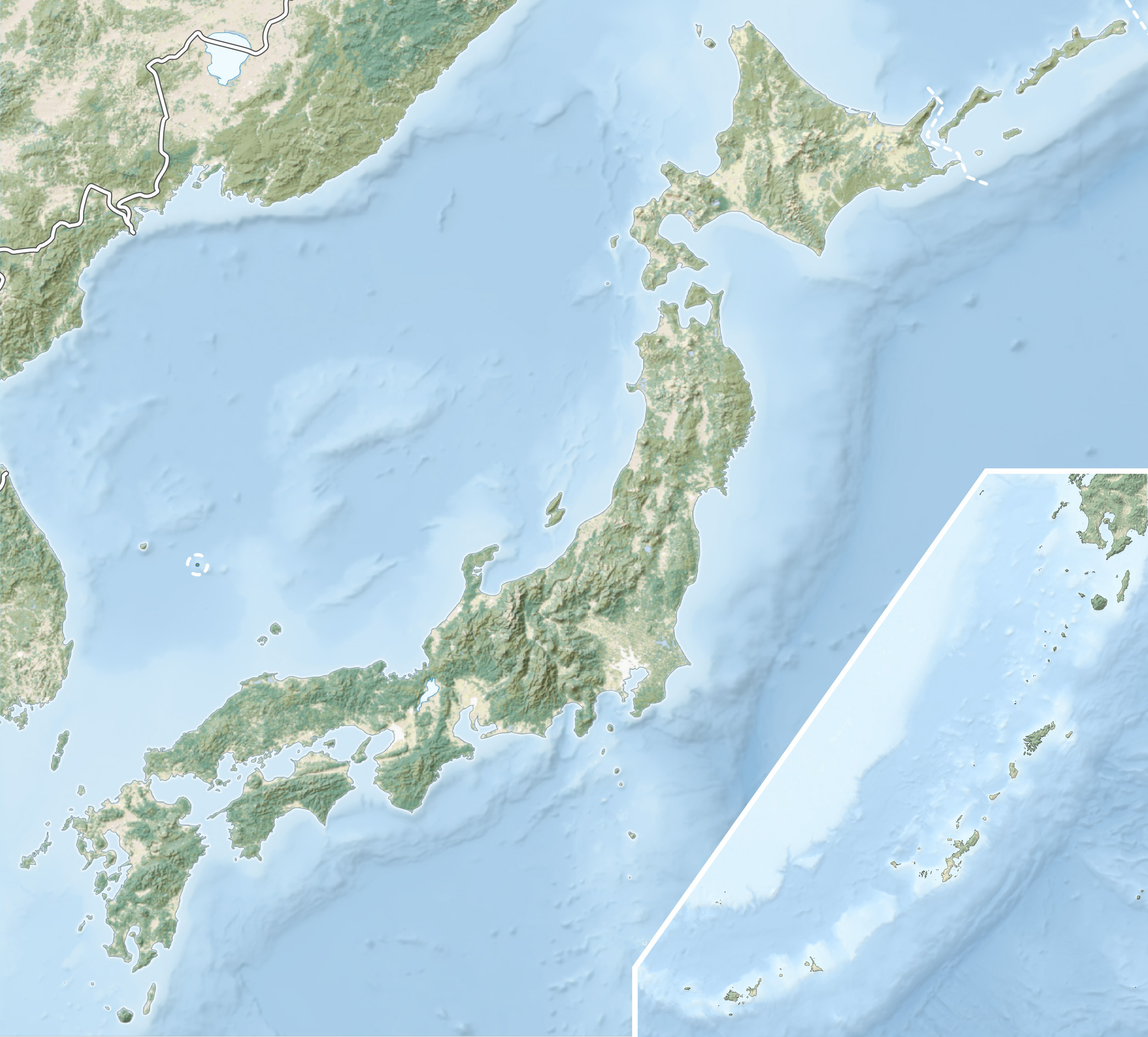
The Battle of Muraki Castle took place at approximately 34.9967N, 136.9689E, near the present-day coast of Ise Bay in what is now southern Aichi Prefecture. From the air, the coastline along Ise Bay south of Nagoya is clearly visible, with the flat Owari plain stretching inland. The ships sailed approximately 13 miles south from Atsuta port (near central Nagoya) along the bay's western shore. Chubu Centrair International Airport (RJGG/NGO), built on an artificial island in Ise Bay, lies roughly 15 km to the southwest. Nagoya Airfield (RJNA/NKM) is about 25 km to the north. Recommended viewing altitude: 5,000-8,000 feet to trace the coastal route the ships would have taken from Atsuta south along the bay.