Battle of Nalapani
Eighty-four soldiers signed the pledge. Their fort's walls had been razed to rubble, their water supply cut off for two days, their cannons silenced. The British forces surrounding them numbered in the thousands, backed by reinforced artillery batteries. Yet when Captain Balbhadra Kunwar asked his remaining men to commit to fighting to the last, eighty-four stepped forward and made their marks. What happened next -- a breakout charge through a full siege -- would define the reputation of the Gurkhas for the next two centuries and earn the enduring admiration of the very army they were fighting against.
A Fort in the Doon Valley
The fort at Nalapani, also called Kalunga, sat on a hill near what is now Dehradun in Uttarakhand. In 1814, it was garrisoned by roughly six hundred Nepali troops under Captain Balbhadra Kunwar as part of the Gorkha Empire's western territories. When the Anglo-Nepalese War began, the British East India Company dispatched forces under Major General Rollo Gillespie to take the fort and open the road into the Doon Valley. Gillespie was a veteran of colonial campaigns, confident in his superior numbers and artillery. The fort was small. The garrison was modest. By every conventional measure, Nalapani should have fallen quickly.
A Month Under Siege
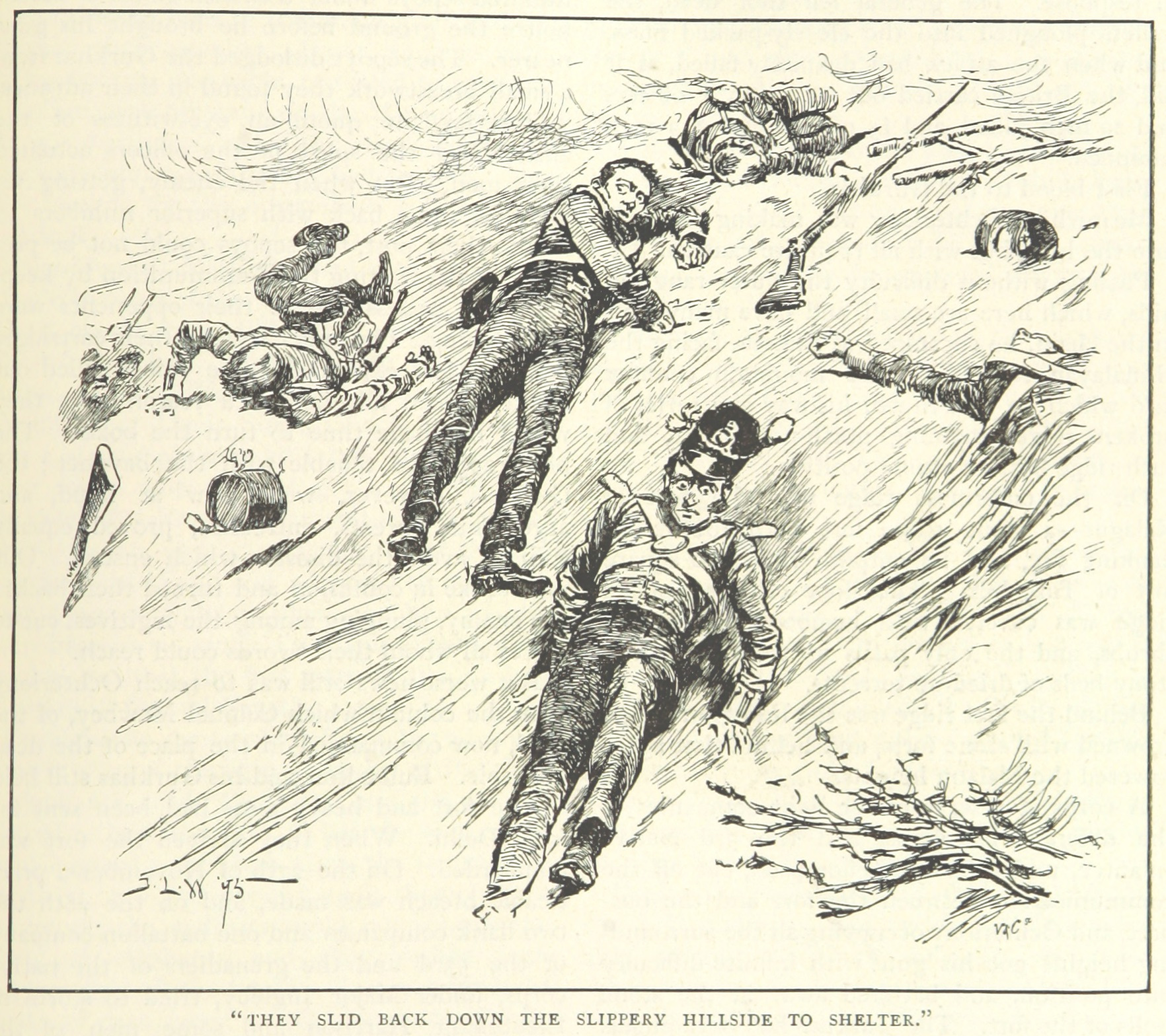
It did not fall quickly. The initial British assault was repulsed with significant losses, and Gillespie himself was killed leading an attack -- one of the highest-ranking British officers to die in the entire war. The defenders fought from behind the fort's stone walls with a discipline and ferocity that stunned the attackers. British reinforcements arrived, and the bombardment resumed on November 25, 1814. For three consecutive days, artillery pounded the fort. At noon on November 27, a large section of the northern wall collapsed. British troops charged the breach twice that day and were thrown back both times, spending two hours pinned outside the wall under heavy fire before withdrawing with severe casualties. The garrison that was supposed to crumble in days had held for over a month.
Water and Stone
What finally broke the siege was not courage or firepower but thirst. Colonel Mawbey, who had assumed command after Gillespie's death, sent scouts to locate and sever the fort's external water source. His gunners destroyed roughly a hundred earthen vessels stored in a portico -- the garrison's water reserve. By November 29, two days after the walls had been breached, the water was gone. The eastern and northern walls lay in ruins. The Nepali troops had no cannons left to return fire, and casualties mounted among soldiers now exposed to the open sky. The fort had become an open wound on a hilltop, indefensible by any military logic. Balbhadra gathered his surviving men.
The Charge Through the Siege
Balbhadra Kunwar refused to surrender. With approximately seventy survivors -- out of the original six hundred -- he led a breakout charge directly through the British siege lines. They fought their way clear and escaped into the hills. The British found upwards of ninety dead inside the fort and sent the wounded to their hospitals. Then they razed what remained of Nalapani to the ground. The British chronicler Fraser wrote that the garrison's "determined resolution" in holding the post for over a month "must surely wring admiration from every voice," especially considering "the dismal spectacle of their slaughtered comrades, the sufferings of their women and children thus immured with themselves, and the hopelessness of relief." He noted that the defenders had shown "a generous spirit of courtesy towards their enemy" -- no cruelty to the wounded, no poisoned arrows. The Gurkhas had fought with a ferocity matched by an unexpected chivalry.
A Reputation Forged in Defeat
The Battle of Nalapani was a military defeat for the Nepali garrison, but it became the foundational legend of Gurkha martial identity. More than any other engagement of the Anglo-Nepalese War, it established in British minds a deep respect for Gurkha soldiers -- a respect that led, within a few years, to the recruitment of Gurkhas into the British Indian Army. That tradition continues: Gurkha regiments serve in the British and Indian armies to this day, their reputation tracing directly back to the hilltop where Balbhadra's men signed a pledge and charged through an encirclement rather than accept defeat. Two memorials stand at the site now -- one erected by the British in honor of their own fallen, including Gillespie, and another honoring the Nepali defenders. The Gurkhas' enemies built their monument first.
From the Air
Located at 30.39°N, 78.09°E on a hillside near Dehradun in Uttarakhand, at the edge of the Doon Valley where the Shivalik Hills meet the plains. The fort site (also known as Kalunga) is on elevated terrain southeast of Dehradun city. Nearest airport is Jolly Grant Airport (VIDN) in Dehradun, approximately 20 km to the north. The Himalayan foothills and the Doon Valley provide dramatic terrain visible from altitude, with the Tons and Yamuna rivers as navigational landmarks.