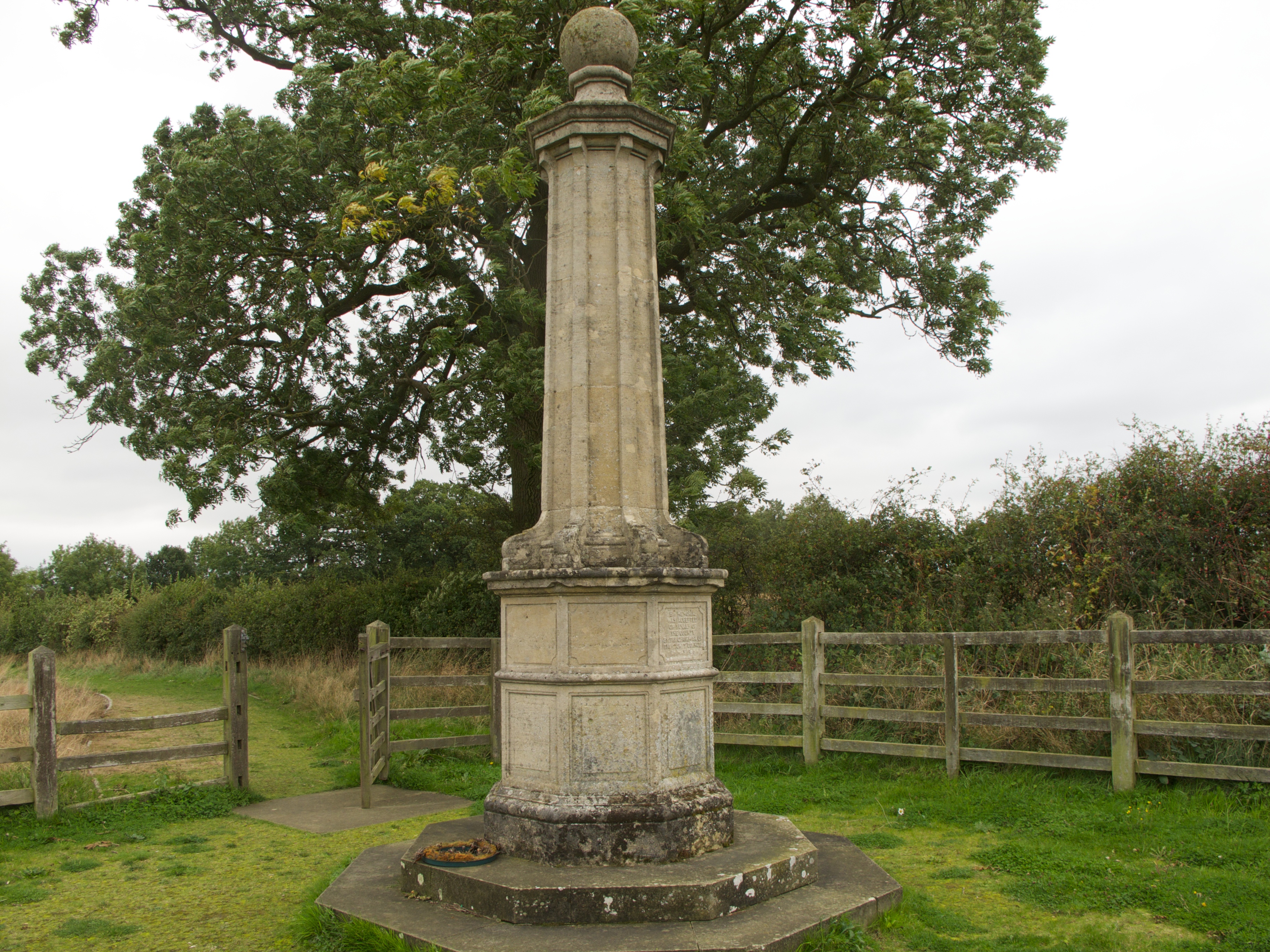
Battle of Naseby
"Would you go upon your death, Sire?" The Earl of Carnwath seized the bridle of Charles I's horse and pulled the king away from the fighting. It was 14 June 1645, and on the rolling farmland near the village of Naseby in Northamptonshire, everything the king had fought for was collapsing. His veteran infantry were surrounded and throwing down their arms. Prince Rupert's cavalry had galloped off the field chasing fleeing Parliamentarians instead of rallying to save the centre. Oliver Cromwell's horsemen were wheeling into the Royalist rear. By the time the afternoon shadows lengthened, Charles had lost not just a battle but any realistic hope of winning the war.
Two Armies on a Ridge
The battle was the first major test of Parliament's New Model Army, a professional centralised force created in the winter of 1644-45 to replace the patchwork of regional armies that had produced indecisive results. Sir Thomas Fairfax commanded, with Cromwell leading the cavalry on a temporary commission that would be renewed again and again. Against them stood Charles I and Prince Rupert with roughly 8,600 men -- outnumbered nearly two to one, but eager for a fight. Lord Digby had convinced the king that retreat would be bad for morale, overruling Rupert's instinct to withdraw. The fog that morning prevented the two armies from seeing each other across the ridgeline. When it lifted, the Royalists found themselves committed to an engagement they could not escape.
A Battle of Two Halves
The clash began with a ferocious infantry engagement so close that there was time for only one volley of musket fire before men fought hand-to-hand with swords and musket butts. Sir Philip Skippon, commanding the Parliamentarian foot, took a bullet under the ribs but stayed in the field to prevent panic. On the Parliamentarian left, Henry Ireton's cavalry repulsed their opponents, but Ireton himself was unhorsed, wounded in the face and leg, and captured. Rupert's cavaliers then broke through -- and kept going, riding all the way to the Parliamentarian baggage train at Naseby village, where the escort refused to surrender and drove them off. It was a catastrophic failure of discipline. While Rupert chased the baggage, Cromwell dismantled the opposite flank, routing Langdale's Northern Horse who were forced to charge uphill through bushes and a rabbit warren. Unlike Rupert, Cromwell kept half his cavalry in reserve and turned them against the exposed Royalist centre.
The Bluecoats' Last Stand
Trapped between Cromwell's cavalry and Okey's dragoons -- who mounted their horses and charged from the Sulby Hedges -- the Royalist infantry began surrendering. One regiment refused. Rupert's Bluecoats stood their ground against every attack, an eyewitness recording that they "stirred not, like a wall of brasse." It took Fairfax personally leading his own regiment of foot and horse to break their resistance. Archaeological evidence from recovered musket balls places this final stand near Long Hold Spinney, about a kilometre behind the original Royalist positions. The Bluecoats' courage could not change the outcome. Over 1,000 Royalists died and more than 4,500 infantry were captured and marched through the streets of London. In the battle's grim aftermath, Parliamentarian soldiers killed at least 100 female camp followers, reportedly believing them to be Irish, though the women were likely Welsh.
The King's Cabinet Opened
The military defeat was devastating enough, but what the victors found in the king's captured baggage may have been more damaging still. Charles's private correspondence revealed his attempts to bring Irish Catholic forces and foreign mercenaries into the war. Published as a pamphlet titled The King's Cabinet Opened, these letters destroyed any remaining public sympathy for the Royalist cause and convinced Parliament to fight the war to a decisive finish. Charles never fielded a comparable army again. He spent the next year trying to rebuild from Welsh recruits and hoped-for Irish reinforcements, but after Naseby it was simply a matter of Parliamentarian forces mopping up the last pockets of resistance. Within a year the First English Civil War was over. Within four years, the king who had been pulled from the fighting at Naseby would lose his head on a scaffold at Whitehall.
From the Air
The battlefield lies near 52.42°N, 1.00°W, between the villages of Naseby and Clipston in Northamptonshire. The terrain is gently rolling farmland crossed by hedgerows. From altitude, look for the monument obelisk on the ridge. East Midlands Airport (EGNX) is approximately 25nm to the northwest, and Sywell Aerodrome (EGBK) lies about 15nm to the south.