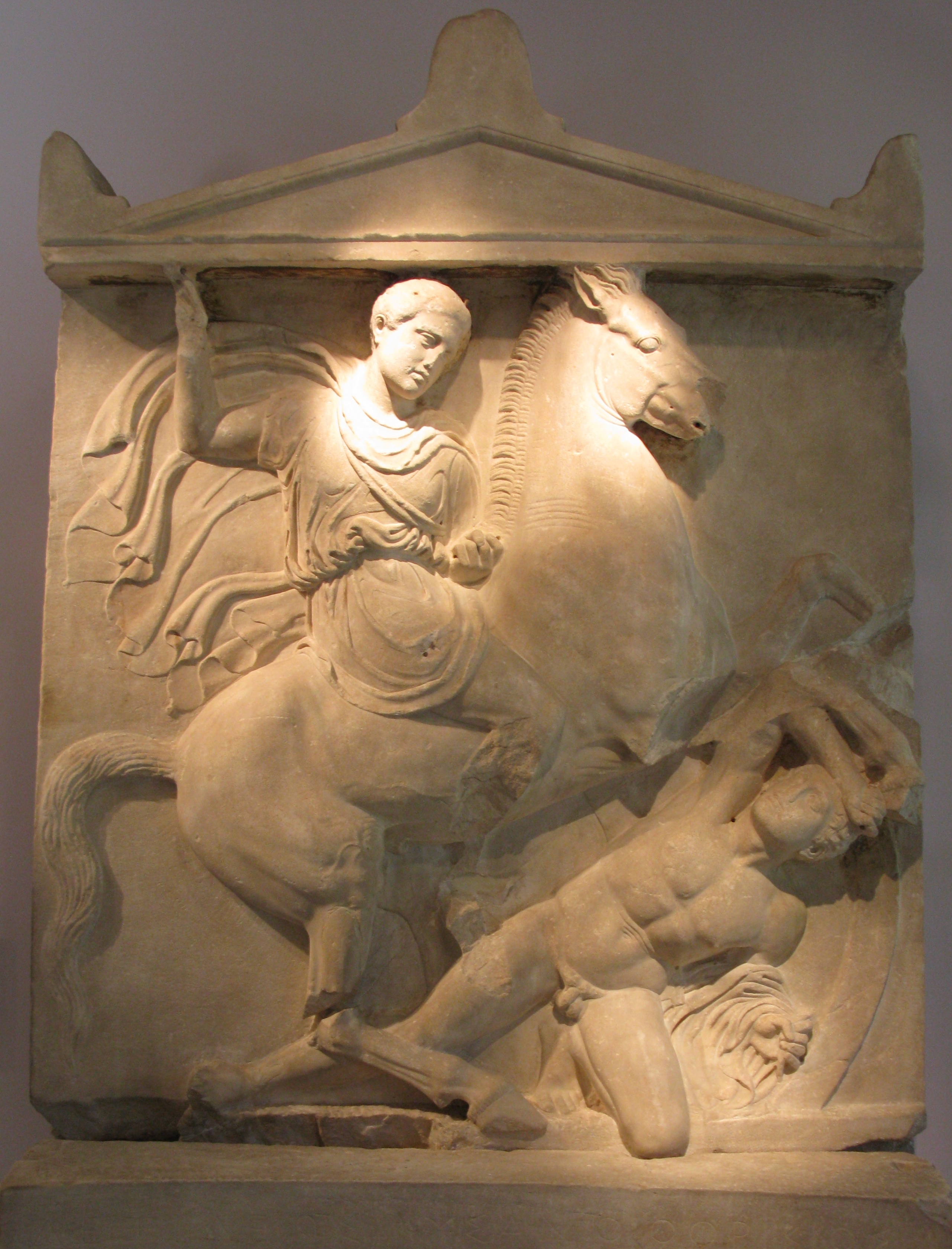
Battle of Nemea
Hoplites carried their shields on the left arm. This is a small detail and a decisive one. As two Greek phalanxes advanced toward each other, every man in each line drifted slightly to the right, instinctively seeking the shelter of his neighbor's shield. By the time the lines met, both had slid past their opponent's left flank. The right wings of both armies usually won. The left wings of both usually lost. In 394 BC, by the dry bed of the Nemea river in Corinthian territory, that geometry was put through one of the largest tests in Greek history - and Sparta, on the right, was very good at exploiting it.
How an Alliance Got Itself to the River
The Corinthian War had been simmering for a year by then. Athens, Thebes, Corinth, and Argos had finally combined against Sparta, the regional superpower whose hegemony after the Peloponnesian War had grown intolerable. Their council of war met at Corinth and produced a quarrel about who would command. While the council debated, a Spartan army under Aristodemus - regent for the boy-king Agesipolis - marched into Corinthian territory, burning farms as it came. The allies finally moved out to meet them. The two forces found each other near the Nemea river, where the bed was dry that summer.
The Numbers
It was a remarkable concentration of force. The Spartan side fielded roughly 18,000 to 19,000 hoplites - 6,000 of them Spartan, the rest from the cities of the Peloponnesian League: Sicyon, Elis, Triphylia, Epidaurus, Troezen, Hermione. There were 600 cavalry, 300 Cretan archers, and at least 400 slingers. The allied side was larger: about 24,000 hoplites, with 6,000 from Athens under Thrasybulus, 7,000 from Argos, 5,000 Boeotians, and contingents from Corinth and Euboea. There were 1,500 cavalry between them. Two great walls of shields, more than forty thousand men in total, lined up along a dusty Greek riverbed in late summer.
An Argument Over Position
Before the battle there was a quarrel on the allied side about who would hold the right - the place of honor in a Greek battleline. The Athenians wanted it. The Boeotians demanded it. The Boeotians won the argument, which meant the Athenians went to the left, opposite Sparta. This was a poor exchange. The Spartans on the right were the most disciplined hoplites in Greece. By the rules of right-drift, both armies were going to extend past their enemy's left flank, but the wing that did this best, and turned inward most quickly, would win.
The Battle by the Geometry
The Spartans broke the Athenians on their right almost immediately. On the other end of the line, the Boeotians broke the Spartan allies. So far the day was a draw. What happened next is where Spartan discipline mattered. Instead of pursuing the routed Athenians off the field, the Spartans turned and rolled along the rear of the allied line. The allied right wing - Argives, Corinthians, Boeotians - had pushed too far forward chasing the Spartan allies, and now found a Spartan phalanx hammering them in the flank. The Argives went first, then the Corinthians, then the Boeotians. Diodorus says Sparta and its allies inflicted 2,800 casualties while losing only 1,100. Xenophon claims the Spartans themselves lost only eight men, which is almost certainly only the count of full Spartiate citizens; the bulk of Sparta's army was made up of perioikoi, helots, and allies whose deaths the Spartiate historian seems not to have bothered to count. Twenty-eight hundred Greeks died. Thirty-seven hundred were wounded or worse. They fell on a field that had been a working farmland a few weeks earlier.
What the Battle Bought
Sparta held the field at sunset, but it could not break through Corinth and march into central Greece. The allied army withdrew, regrouped, and fought again later that year at Coronea, also without decisive result. Nemea would turn out to be one of only two large land battles of the entire Corinthian War, which lasted until 386 BC. The hoplite phalanx, the institution Greek city-states had built their wars around for two centuries, was beginning to look exhausted as a tool of policy. Within a generation Iphicrates would humiliate a Spartan regiment near here at Lechaeum, and Epaminondas at Leuctra would invert everything. The dry riverbed of the Nemea is still there, a quiet place that contains, beneath the centuries of plowing, the bones of nearly three thousand men who died in service to one Greek city's quarrel with another.
From the Air
Battle site near the Nemea river at 37.81N, 22.71E, in the Corinthian plain about 25 km southwest of ancient Corinth. The site is also near the sanctuary of Nemea, home of the ancient Nemean Games and modern winery country. Athens International (LGAV) lies 95 km east-northeast; Araxos (LGRX) is to the west on the Gulf of Patras. From cruise the Acrocorinth massif rises sharply to the northeast and the Saronic Gulf is visible to the east. Best viewing 6,000-10,000 ft on a clear day.